Portable vs Standby Generator Oregon: Which Is Right for You?
Heavy winter ice storms in Oregon often cut power to thousands of local homes for many days. Finding the right backup system ensures your household stays warm and safe during these power outages.
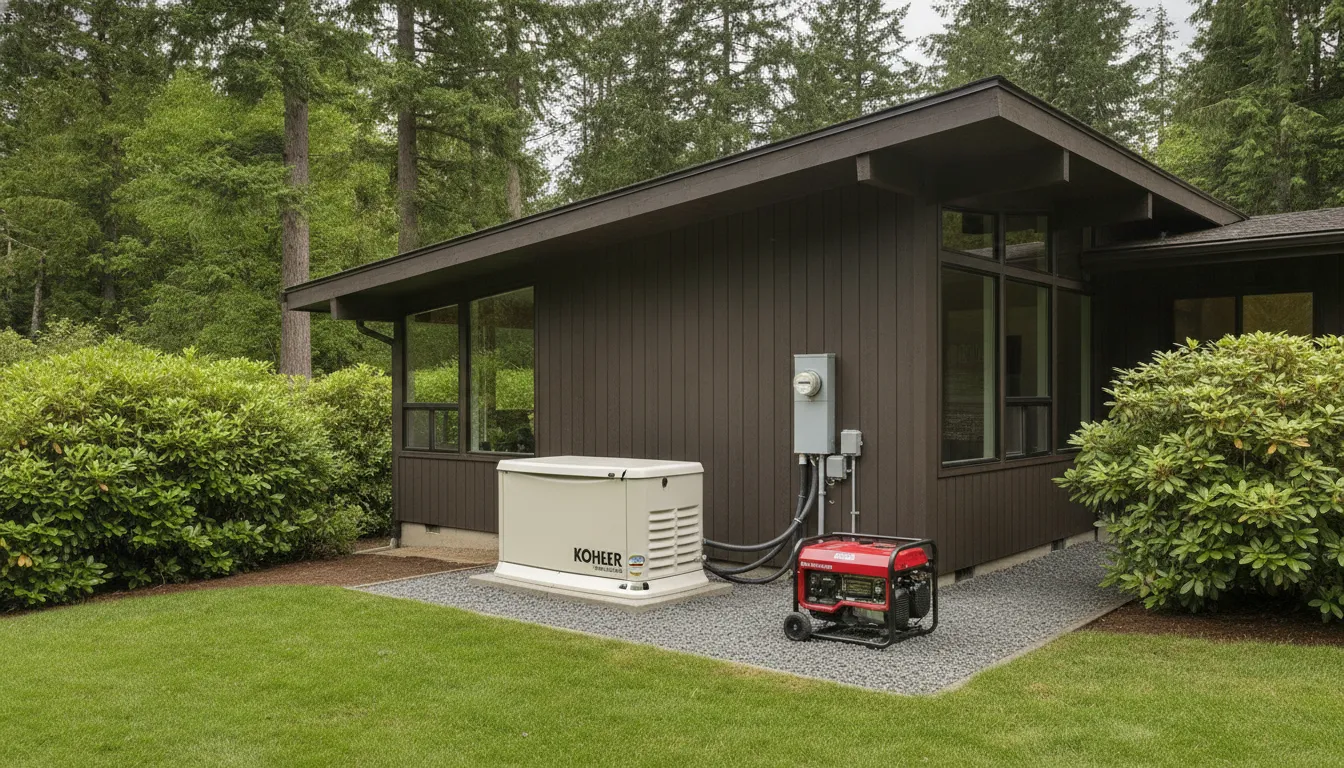
Your portable vs standby generator Oregon choice comes down to your budget, power needs, and how much manual work you want to do during an outage. Portable models are cheaper upfront and back up a few main appliances. However, they need manual starting, multiple extension cords, and up to twenty gallons of gas each day. Whole-home systems cost more upfront but restore your power on their own within seconds of a blackout. These whole-house units run on your home’s natural gas or liquid propane supply, so you never have to refuel them in a storm. Our backup power guide for Oregon homeowners shows how both options keep your home safe during a storm.
To make the best choice for your family, you must first understand how each backup option works in real life. Let’s start by answering a key question: What Is a Portable Generator and How Does It Work for Oregon Homes? The breakdown begins with
What Is a Portable Generator and How Does It Work for Oregon Homes?
Fuel and power basics
Oregon has seen a clear increase in generator use by homeowners after recent bad winter storms. Many people start by looking at a portable system as they read our backup power guide for Oregon homeowners. These units give you a quick, short-term way to keep your lights on when the local grid goes dark.
A portable generator uses an engine to turn fuel into power. Most portable models run on standard gas. Consumer Reports notes these units consume 12 to 20 gallons of fuel per day based on the load. Storing, moving, and pouring that much fuel by hand during a storm is a major chore.
You must also run these units outdoors. They must stay at least twenty feet away from doors and windows to keep bad fumes outside. When the power goes out, you must go outside in the cold and pull a starter cord in the dark. This manual step is a key point to think about as you choose your system.
Connecting to your home
To use a portable unit, you can run heavy extension cords from the generator outside into your house. This works for a few small items like a fridge or some lamps. But if you want to power hardwired items like a well pump, you need a different setup. Understanding how generators provide home power helps you see why a manual transfer switch is a better choice.
A manual transfer switch lets you connect the generator directly to your main power panel with a single cord. This switch changes where your home gets its power. It keeps your house separate from the main power lines. Under the Oregon Electrical Specialty Code, you must use a transfer switch or other approved safety device for these connections.
Critical safety rules
Without a proper switch, some people try to plug a generator directly into a wall outlet. This is an unsafe practice known as backfeeding. Backfeeding can send high voltage out of your house and back into the main power lines. When comparing a portable vs standby generator Oregon state guidelines warn that this presents a severe risk.
Oregon safety guides show that poor wiring puts people in danger. If backfeeding occurs, downed power lines can become energized and harm workers and the public. To avoid these risks, you must have a licensed electrician install your backup switch. This ensures your home meets all local safety laws.
What Is a Whole-Home Standby Generator?
A standby generator is a built-in power system for your house. Unlike a portable unit, a standby generator sits on a concrete pad outside your home. It connects straight to your main panel. It runs on your home fuel lines, using either natural gas or liquid propane.
There is no need to add fuel by hand during a storm. The unit sits outside your house year-round, always hooked up and ready to run. This gives you a steady supply of power without any effort on your part.
How standby generators work
A standby generator is built to restore power by itself. When grid power goes out, the unit detects the loss. It starts up and sends power to your home in seconds. This means you have steady power for your lights, heat, and food storage.
The system is always on guard, even when you are away. This is helpful during cold Oregon winters when ice and heavy snow knock down power lines for days. You will not have to worry about frozen pipes or spoiled food.
The role of the automatic transfer switch
The automatic transfer switch is the brain of the backup power system. This switch links the generator to your home wiring. When grid power drops, the switch shifts your home load to the generator.
It also stops power from backfeeding into the power lines. Backfeeding is a major safety risk that can harm line workers. It works on its own without any human action. You do not have to flip switches in the dark or plug in heavy cords.
For this reason, safety laws are strict in Oregon. The Oregon Electrical Specialty Code requires a transfer switch for all generator setups. Using a switch keeps your home safe and meets local building codes.
It lets you get backup power without running long extension cords in the rain. An expert crew must install this switch to make sure your system is safe. This work ensures that everything runs well when a storm hits.
Leading standby generator brands
When you choose a system, you want a brand that is proven to work. At Pro-Tech-Power, we focus on generator installs that last. We are an authorized dealer for Kohler and Cummins.
Kohler is our lead brand because of its great track record. If you need a second brand, Cummins is a great choice. Both brands build strong, lasting systems that can handle cold weather. They offer different sizes to fit the power needs of your home.
We can help you with choosing a standby generator brand that fits your budget. Please note that our team only handles whole-home generator installation. We do not service generators. To learn more about your backup options, read our backup power guide for Oregon homeowners.
Portable vs Standby Generator Oregon: Side-by-Side Comparison
Choosing between a portable unit and a standby model is a big choice for Oregon homes. Each option has clear benefits based on your power needs and your budget. Let us look at how they compare side-by-side before we look at the details.
| Feature | Portable Generator | Whole-Home Standby Generator |
|---|---|---|
| Fuel Type | Gasoline or liquid propane | Natural gas or liquid propane |
| Upfront Cost | Low upfront cost | High upfront cost |
| Installation Requirements | None or manual transfer switch | Professional setup and permits |
| Power Capacity | Small to medium (2 kW to 10 kW) | High capacity (10 kW to 26 kW) |
| Runtime | Limited by fuel tank size | Continuous run with utility line |
| Operation Method | Manual setup and pull start | Automatic startup in seconds |
| Safety Features | Manual monitoring needed | Automatic safety shutdown |
| Noise Level | Moderately loud to loud | Quiet with soundproof cabinet |
| Lifespan | About 2,000 to 3,000 hours | About 15 to 20 years |
Key features and fuel options
Power output and fuel needs are major points of contrast. Portable models run on fuel you must buy and store in advance. Standard portable units run on gas, burning through 12 to 20 gallons of gasoline per day based on the load. This means you must store heavy gas cans in your garage during a bad winter storm. Standby models connect directly to local fuel lines.
A standby system is a permanent unit that connects to your home natural gas or propane line. These systems sit outside like an air unit and turn on when the grid goes dark. Because they connect to utility lines, you do not have to refuel them by hand during an outage. If you want a standby model, choosing a standby generator brand is a key first step.
Cost differences and setup needs
Cost is another big difference when planning for backup power. Portable units have low upfront costs but offer limited power. These whole-home systems are permanently set up to restore home power on their own. While the initial equipment cost is higher, it adds long-term value to your home.
You should also look at the professional fees when checking backup generator installation cost factors. Portable units do not need professional setup unless you connect them to your panel. If you connect a portable unit to your house, you must use a transfer switch. Doing this keeps utility workers safe from backfeeding power lines during a storm. The state rules for these safety switches are on the Oregon Building Codes Division website.
Daily use and long-term lifespan
Daily use is the third area to compare. When the power fails, a portable unit must be rolled out, filled with gas, and started by hand in the cold. A standby system turns on on its own within seconds of a power drop. This gives you instant power without any effort. It keeps your lights, fridge, and heat running without a break.
In terms of lifespan, standby models last much longer than portables. A quality standby system can last twenty years or more. Pro-Tech-Power installs top standby brands like Kohler and Cummins to help you get the best backup system for your home. We focus on professional installation to ensure your system meets all local codes. Please note that we do not offer generator service or maintenance.
How to Choose the Right Generator for Your Oregon Home
Power outages can happen at any time. Choosing the right setup for a portable vs standby generator Oregon home backup plan will help keep your lights on. You need a safe, steady way to keep your family warm during a storm. To find the best option for your home, you must look at key details like power needs, fuel types, and safety codes.
Key Sizing Factors
When choosing a generator for your home, you must first think about your specific goals. Some homes only want to keep the lights on, while others must run big heat pumps. Sizing your system is the most critical step before you buy. If you want to study these details, our guide on choosing a generator for your home is a great place to start.
Step-by-Step Decision Plan
Comparing your options does not have to be hard. You can follow a clear path to find the right system for your home and budget. Each decision you make brings you closer to peace of mind. Taking these steps prevents costly mistakes later.
- Assess your power needs. Add up the watts of the items you must run. This tells you if you need essential backup or whole-house power.
- Set your budget. Portable units cost from $500 to $2,000. Fixed standby systems run from $2,500 to $7,500 or more, plus the cost of professional setup.
- Consider fuel access. Portable units run on gasoline which you must store. Standby models connect to your gas line for a constant fuel supply.
- Check setup space. Standby models need a clear, flat space outside. They also need a fixed connection to your gas line and main electric panel.
- Decide on automatic start. Manual units require you to go outside and pull a cord. Automatic standby models turn back on within seconds of a power loss.
- Talk to a licensed pro. A qualified expert can check your electric panel and calculate your exact load. They will also handle all needed local permits.
Local Electrical Code Compliance
Safety is the most important part of setting up any backup power source. Under the Oregon Electrical Specialty Code, you must use a transfer switch or other approved safety device for any generator connection. A proper transfer switch prevents backfeeding power into power lines, which can hurt line workers. This device keeps everyone safe during a blackout. Knowing the backup generator installation cost factors helps you plan for this needed work.
Why Oregon Homeowners Trust Kohler Standby Generators
When power grid failures strike, you need a backup source you can trust. Kohler standby systems sit quietly outside your home. They run on your local natural gas or propane line. If you are comparing a portable vs standby generator Oregon winter storms can help make your choice clear. A permanent setup keeps your home safe and fully powered when the weather gets bad.
Premium Build for Pacific Northwest Storms
Oregon winter storms are harsh and can easily knock out local power lines for days at a time. According to the Oregon Building Codes Division, generator use among local homeowners has risen after recent severe storms. During winter freezes, a portable unit requires you to go outside and add gas in the pouring rain. Kohler standby units turn on by themselves within seconds of an outage, keeping your entire home warm and safe without any effort on your part.
These units use strong commercial engines designed for heavy workloads during long power outages. They are built to last and can run for days at a time if a winter storm damages the regional power grid. Since they connect directly to your home fuel line, you do not need to store messy gasoline in your garage. This automated setup keeps your family warm, safe, and secure through the coldest seasons of the year.
High-Quality Power with Clean Output
When you choose a backup system, the quality of the power matters as much as the overall amount. Many appliances and devices have sensitive electronic parts that can be damaged by grid surges. Kohler standby generators use smart voltage control to yield steady power that is safe for sensitive gear. When you are choosing a standby generator brand, this clean output is a key factor to consider.
Professional Installation for Peace of Mind
A whole-home generator is a complex machine that must tie directly into your main electrical panel. Pro-Tech-Power is a Tigard electrical contractor serving residential homes across the Willamette Valley. We focus on whole-home generator installation to make sure your backup power setup is safe and meets all Oregon codes. Our professional crew manages the full installation, but please note that we do not maintain or service generators.
Frequently Asked Questions
Should I buy a portable or standby generator in Oregon?
Your choice depends on your power needs and budget. A portable generator costs less upfront but needs manual setup and constant refueling. According to Consumer Reports, portable models burn 12 to 20 gallons of fuel daily. A whole-home standby generator costs more but starts on its own during a storm. If you want easy backup power, a standby system is the best fit.
What are the disadvantages of a standby generator?
The main drawback of a standby generator is the upfront cost. These systems cost more to buy and install than portable units. They also need a permanent spot in your yard and a hookup to your gas line. However, they provide automatic power and long-term safety. Since they are permanent, you must hire a professional electrical contractor to install them.
What is the 80% rule for generators?
The 80% rule means you should not load your generator past 80% of its maximum capacity for long periods. If your generator is rated for 10,000 watts, you should only run up to 8,000 watts continuously. Keeping your load below this limit prevents the unit from overheating. It also extends the life of your equipment and ensures a steady flow of safe power.
Can I install a generator myself in Oregon?
In Oregon, you should not install a permanent backup generator yourself. The Oregon Building Codes Division requires an electrical permit for permanent installations. The Oregon Electrical Specialty Code also requires a transfer switch to prevent dangerous backfeeding. Wiring a standby system is complex and presents high safety risks. You must hire a licensed electrical contractor to ensure your system is safe and fully compliant.
How much does a Kohler standby generator cost installed in Oregon?
The total cost to install a standby generator in Oregon typically depends on the size of your home and your power needs. Prices vary based on the generator model, electrical panel upgrades, and gas line work. For accurate local pricing, you can view our guide on backup generator installation cost factors. Scheduling a professional site visit is the best way to get a precise quote.
Ready to Choose the Best Backup Generator for Your Oregon Home?
When a severe winter storm strikes Oregon, a sudden power outage can leave your entire household in the cold and dark. Planning your home backup power system now ensures that you avoid the stress of empty fuel tanks and manual setups during a blackout. Our local team is always ready to help you prepare before the next severe weather arrives. As a trusted local Tigard-based Kohler and Cummins dealer, we provide safe, reliable generator installation services to protect your home.
Do not wait for the next winter storm to catch you unprepared. Ready to secure your home backup power? Call (503) 780-6207 to schedule a free generator consultation today.