How Does a Generator Work? A Homeowner’s Guide
A generator can seem like a complex metal box, but its core function is surprisingly straightforward. Many people think these machines create electricity from nothing, but that’s a common myth. In reality, a generator is an expert at energy conversion. It takes one form of energy, like the mechanical power from an engine, and transforms it into the electrical energy that runs your home. To make a confident decision about backup power, it helps to understand exactly how does a generator work. We’ll break down the science, look at the essential parts, and explore the different types so you can see what’s happening under the hood.
Key Takeaways
- Generators convert energy, they don’t create it: Your main decision is choosing between a portable generator for a few essential items or a standby generator for automatic, whole-home power.
- Carbon monoxide is the biggest risk: Never run a generator inside your home, garage, or any enclosed area. Proper outdoor placement, at least 20 feet from your house, is the only way to operate one safely.
- Match the generator to your needs: Correctly sizing your generator prevents damage to your electronics, and for a standby unit, professional installation of a reliable brand like Kohler or Cummins is essential for automatic and safe operation.
What Is a Generator?
When the power goes out, a generator can feel like a magical box that brings your home back to life. But what’s actually happening inside? Understanding the basics helps you appreciate how these machines work and why choosing the right one is so important for your home or business. A generator is your personal power plant, ready to step in when the grid can’t. It provides peace of mind, ensuring that your lights, appliances, and essential systems stay on, no matter the weather.
What a generator actually does
Let’s start with the basics. A generator is a machine that converts mechanical energy into electrical energy. It’s a common misconception that generators create electricity out of thin air. Instead, think of a generator as something that gets electricity moving. It works by using motion, like from an engine, to move magnets near coils of wire. This movement pushes the tiny particles in the wire, called electrons, causing them to flow. This flow of electrons is exactly what we know as electricity. So, a generator doesn’t make power from scratch; it simply provides the push needed to create a current and light up your home during an outage.
The biggest myth about generators
The most common myth we hear is that generators create electricity. As we just covered, they actually convert one form of energy to another. But a more dangerous misunderstanding is about how to use them safely. Generators produce a significant amount of deadly carbon monoxide gas, which you can’t see or smell. Because of this, you should never, ever run a generator inside your home, garage, shed, or any enclosed space. Not even with the doors and windows open. Proper placement and ventilation are non-negotiable for keeping your family safe while you keep the lights on.
How Do Generators Create Electricity?
It might seem like magic, but the way a generator produces power is based on a fascinating and reliable scientific principle. A generator doesn’t actually create electricity out of thin air. Instead, it cleverly converts one form of energy into another. It takes mechanical energy, like the power from a running engine, and transforms it into the electrical energy that runs your home. Think of it less as a creator and more as an expert converter. This entire process hinges on the fundamental relationship between magnetism and electricity. Let’s break down exactly how your generator performs this amazing feat.
The basic science involved
At the heart of every generator is a principle called electromagnetic induction. While the name sounds technical, the core idea is quite straightforward. When you move an electrical conductor, such as a copper wire, through a magnetic field, it causes electrons within that wire to move. This organized flow of electrons is what we know as an electric current. Your generator isn’t inventing these electrons; they are already present in its wiring. The generator’s main job is to provide the consistent “push” needed to get those electrons moving. This push is created by using the engine’s mechanical energy to drive the interaction between the wires and a magnetic field.
Turning magnets into current
So, how does a generator create that push we just talked about? It all comes down to the interplay between magnets and wire. Picture a powerful magnet spinning rapidly right next to a large, stationary coil of copper wire. As the magnet rotates, its magnetic field continuously sweeps across the wire. This constant motion excites the electrons in the copper, compelling them to flow in a single, organized direction. This directed flow is the electrical current that can power your lights, refrigerator, and other essential appliances. It’s a beautifully simple and effective way to generate power on demand, all by just spinning a magnet.
Converting mechanical to electrical power
Putting it all together, a generator is an energy conversion machine. Its primary function is to change mechanical energy into electrical energy. The generator’s engine, which typically runs on a fuel like natural gas or propane, creates the mechanical energy in the form of rotational power. This power is used to spin the magnet inside the coils of wire. This spinning motion is the key that produces the electrical current in the wires. By continuously converting the engine’s power into a moving magnetic field, a standby generator from a trusted brand like Kohler or Cummins can produce a reliable stream of electricity to keep your home running smoothly during an outage.
Anatomy of a Generator
At first glance, a generator can look like a big, complicated metal box. But once you get to know its main parts, it all starts to make sense. A generator isn’t one single piece of machinery; it’s a team of key components working in perfect harmony to create power for your home. Understanding how these parts function together helps you appreciate what makes a high-quality standby generator such a reliable investment. From the engine that creates the power to the control panel that acts as the brain, each piece has a critical role. Let’s take a look under the hood and break down the essential parts of a generator.
Engine
Think of the engine as the powerhouse of your generator. It’s the component that does the physical work, burning fuel to create the mechanical energy needed to produce electricity. The size of the engine directly relates to how much power the generator can produce, which is why it’s so important to choose a unit that can handle your home’s specific needs. Just like a car, it runs on a fuel source, typically natural gas or propane for standby models. The quality of the engine is a huge factor in reliability, which is why we trust brands like Kohler to power the systems we install.
Alternator
If the engine is the heart, the alternator is where the real magic of making electricity happens. This clever component takes the mechanical power created by the engine and transforms it into electrical power you can actually use in your home. It does this using a stationary part (the stator) and a spinning part (the rotor). As the engine makes the rotor spin, it creates an electrical current within the stator. It’s a fascinating process of physics that provides a powerful result: consistent, usable electricity for your home when the main power grid goes down.
Fuel System
The fuel system is all about delivery. It’s a network of parts, including a fuel line, pipes, and pumps, that ensures the engine gets a steady, uninterrupted supply of fuel to keep running. For a standby generator, this system is often connected directly to your home’s natural gas line or a large, dedicated propane tank. This professional setup is a game-changer because it allows the generator to run for days on end without you ever having to worry about refueling. It’s this continuous fuel supply that provides true peace of mind during an extended outage.
Voltage Regulator
Think of the voltage regulator as your generator’s dedicated traffic cop. Its one and only job is to make sure the electricity flowing out of the generator is at a constant, stable voltage. Without it, the power could surge or dip, which is bad news for your sensitive electronics like computers, smart TVs, and modern kitchen appliances. This small but mighty component is crucial for delivering “clean” power, which is a steady stream of electricity that won’t fry the circuits of your valuable devices. It ensures the power is not just on, but safe.
Control Panel
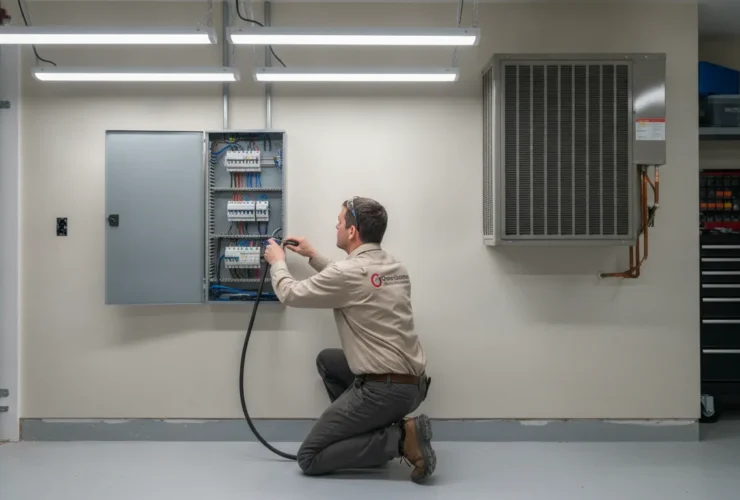
The control panel is the brain of the entire operation. This is what allows a standby generator to be so wonderfully hands-off and automatic. The panel constantly monitors the electrical current coming from the utility company. The moment it detects an outage, it signals the generator to start and automatically transfers your home’s power source from the grid to the generator. A professional electrical installation ensures this system is perfectly integrated with your home’s main panel. It’s the smart tech that makes backup power seamless.
Cooling and Exhaust System
Just like any hardworking engine, a generator produces a lot of heat while it’s running. The cooling system is there to keep everything from overheating, typically using a powerful fan and vents to dissipate that heat and keep all the components running efficiently. At the same time, the engine produces exhaust fumes that need to be directed safely away from your home. The exhaust system funnels these gases out, which is a key reason why proper placement and ventilation are non-negotiable parts of a safe and professional generator installation.
Putting It All Together: How a Generator Works
Okay, so we’ve looked at the engine, the alternator, and all the other key components. Now, let’s connect the dots and see how they team up to bring your power back on during an outage. It’s a pretty neat process that happens in just a few seconds.
It all starts with the engine. Think of it as the heart of the operation. When your power goes out, the generator’s engine kicks on, using fuel like natural gas or propane to create mechanical energy. This isn’t about creating electricity out of thin air; it’s about converting one form of energy into another. The engine’s main job is to spin a rotor inside the alternator. As the alternator spins, it uses magnets to create a magnetic field and pushes electrons through wires. This movement is what generates an electric current, a principle known as electromagnetic induction.
But the raw electricity created isn’t quite ready for your home’s sensitive electronics. That’s where the voltage regulator comes in. It acts like a gatekeeper, ensuring the power is clean, stable, and at the correct voltage before it leaves the generator. From there, the power flows to your home’s transfer switch, which safely disconnects you from the grid and connects you to the generator’s power. The result? Your lights come back on, your refrigerator keeps running, and life continues without interruption. For homeowners with a standby unit, this entire sequence happens automatically, giving you true peace of mind. The best part is that reliable brands like the Kohler and Cummins generators we install are designed to handle this process seamlessly every time.
What Are the Different Types of Generators?
When you start looking into generators, you’ll find there are a few different types to choose from, and it’s not a one-size-fits-all situation. The right generator for you depends entirely on your specific needs: what you want to power, your budget, and how much convenience you’re looking for during an outage. Think of it like choosing a vehicle: a small car is great for city errands, but you’d want a heavy-duty truck for hauling big loads. Making the right choice means the difference between keeping a few lights on and living your life almost uninterrupted when the grid goes down.
Here in the Pacific Northwest, we know that storms can leave us without electricity for hours or even days. That’s why it’s so important to understand your options before you need one. The main categories you’ll encounter are portable, inverter, and standby generators. Each has its own set of strengths and weaknesses. Portable models offer flexibility at a lower price point, while standby units provide seamless, whole-home power without you having to lift a finger. Inverter generators fall somewhere in between, offering a specific kind of power for sensitive devices. Understanding these basic differences is the first step in preparing your home for a power outage and finding the solution that gives you the most peace of mind.
Portable generators
Portable generators are likely what first come to mind for many people. They are smaller, self-contained units that you can move to where you need power. Typically running on gasoline, they are the most affordable option upfront and are great for powering a few essential items, like a refrigerator and some lights, during a short-term outage.
However, that portability comes with a trade-off. They require manual setup every time you use them, which means wheeling the unit outside, running extension cords into your house, and refueling it as needed. They can also be quite loud and don’t produce the “cleanest” electricity, which can be a risk for sensitive electronics like computers and modern TVs. They’re a solid choice for temporary needs but aren’t designed for whole-home backup.
Inverter generators
Inverter generators are a more advanced type of portable generator. Their main claim to fame is producing clean, stable electricity, similar to what you get from your utility company. This makes them the ideal choice for safely powering sensitive electronics like laptops, smartphones, and televisions without risking damage from power fluctuations.
They are also significantly quieter than traditional portable models and are more fuel-efficient, automatically adjusting their engine speed to match the power demand. The downside is that inverter generators generally have a lower power output and come with a higher price tag for the amount of electricity they produce. They are a fantastic option for camping or tailgating, but most models don’t have the capacity to power an entire house.
Standby generators
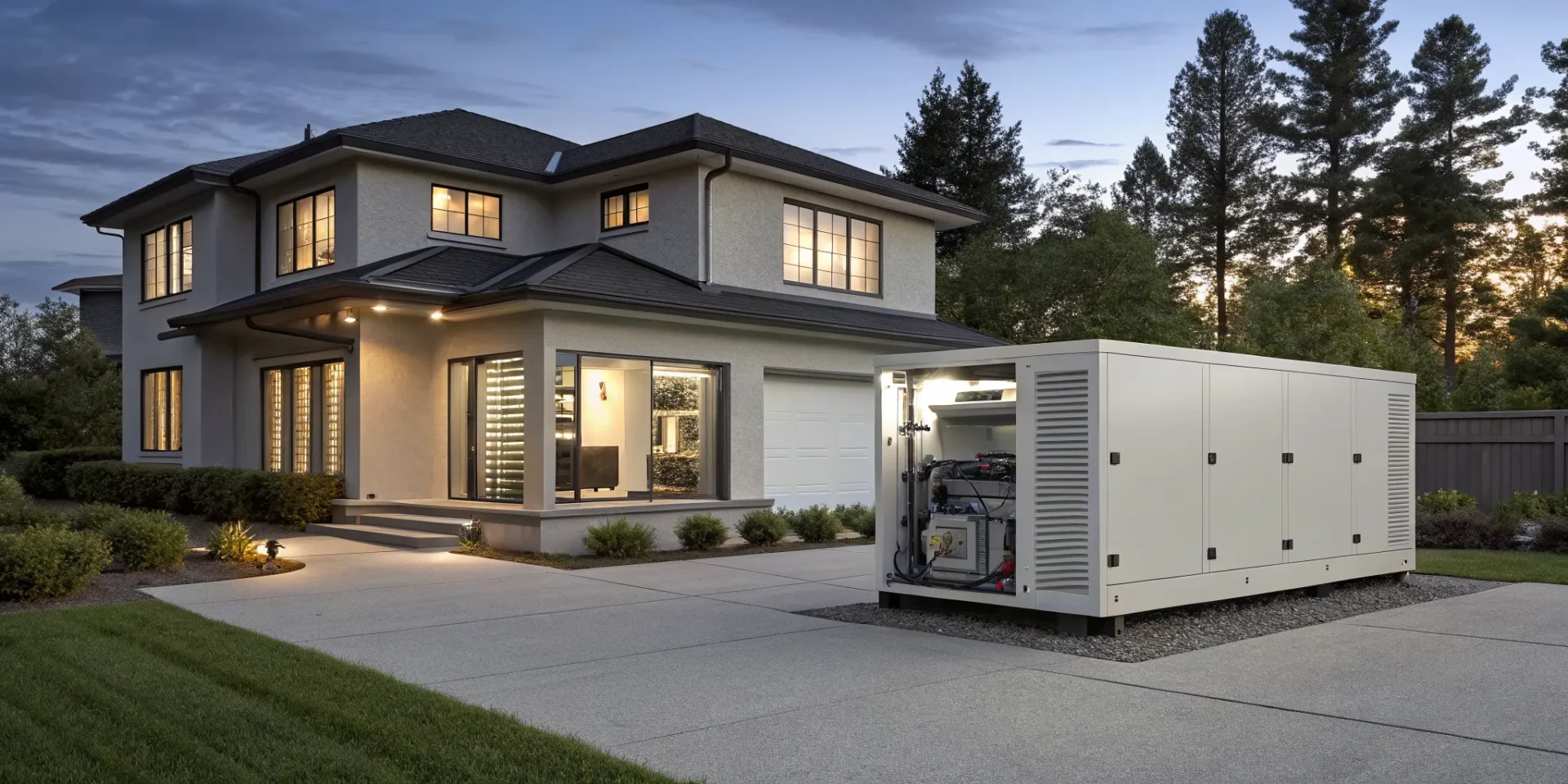
For a truly seamless and comprehensive power solution, a standby generator is the gold standard. These are permanent installations, placed on a concrete pad outside your home and connected directly to your electrical panel. Unlike portable options, they run on a continuous fuel source like natural gas or propane, so you never have to worry about refueling in the middle of a storm.
The best part is their automatic operation. A standby generator constantly monitors your home’s power, and the moment an outage is detected, it automatically kicks on within seconds. You might not even notice the power went out. They have the capacity to power your entire home, from the lights and HVAC system to your appliances and home office. While they are a bigger initial investment, a standby generator provides unmatched reliability and peace of mind.
Standby vs. Portable: Which Is Right for You?
Choosing between a standby and a portable generator is one of the biggest decisions you’ll make when preparing for a power outage. The right choice really comes down to your specific needs, your home’s power requirements, and the level of convenience you’re looking for. A portable generator might be enough to keep your fridge cold and your phone charged, but a standby generator offers a completely different level of security and comfort.
Think about what happens when the power goes out. Do you just want to power a few essentials, or do you want life to continue as normal? Answering that question is the first step. Let’s compare the two options across the most important factors so you can feel confident in your decision.
Power output
The most significant difference between these two types of generators is how much power they can provide. A standby generator is a powerful, permanent solution that’s installed outside your home, much like an AC unit. It can be sized to power your entire house, from the lights and appliances to your heating system and home office equipment. This means you can continue your day without interruption.
A portable generator, on the other hand, is smaller and provides much less power. You’ll need to run extension cords to select appliances, and you’ll have to choose what’s most important to keep running. While they are a more affordable entry point, portable generators are best for temporary or partial power, not for running your whole home. The types of home generators available vary widely in output, so it’s crucial to match the machine to your needs.
Fuel source
How your generator gets its fuel is a major factor in its convenience and reliability, especially during a widespread outage. Standby generators typically run on natural gas or liquid propane. This is a huge advantage because the fuel source is piped directly to the unit. You never have to worry about refueling it in the middle of a storm or finding an open gas station.
Portable generators almost always run on gasoline, which you have to purchase and store safely on your property. This requires you to keep fresh fuel on hand and be prepared to refill the tank every few hours, day or night. During an extended outage, finding gasoline can become a serious challenge, which can leave your portable generator useless when you need it most.
Automatic vs. manual start
Imagine the power goes out while you’re away from home or in the middle of the night. A standby generator is connected to your home’s electrical system through an automatic transfer switch. This switch detects the power outage, automatically starts the generator, and switches your home to generator power, usually within seconds. You don’t have to do a thing. This seamless transition is the main reason many homeowners opt for a standby generator.
A portable generator requires a completely manual process. You have to go outside, wheel the generator to a safe location (at least 20 feet from your house), check the fuel, and start it up, often with a pull cord. Then, you have to run heavy-duty extension cords into your home to power your chosen devices. It’s a hands-on process that can be stressful and difficult, especially in bad weather.
How Much Power Do You Really Need?
Choosing the right size generator is one of the most important decisions you’ll make. Think of it like packing for a trip; you need to know what you want to bring before you can pick the right suitcase. A generator that’s too small won’t be able to power your essentials, while one that’s too large can be an unnecessary expense. Sizing your generator correctly ensures you have reliable power for everything you need during an outage, without any guesswork.
Getting this right from the start is key to a successful installation and a stress-free experience when the lights go out. It’s all about matching the generator’s output to your home’s specific demands. Let’s figure out exactly what your home needs to stay comfortable and secure.
How to calculate your power needs
To determine your power needs, start by making a list of the appliances and devices you absolutely want to run during an outage. Think about essentials like your refrigerator, freezer, sump pump, and furnace fan, as well as key lights and outlets for charging phones. Each appliance has a specific wattage requirement, which is the amount of power it needs to run. You can usually find this information on the appliance’s label or in its owner’s manual. Add up the wattage for everything on your list to get a baseline for your total power needs.
The problem with undersizing your generator
It might be tempting to choose a smaller, less expensive generator, but this can cause serious problems. If a generator can’t handle the electrical load you place on it, it can struggle or shut down completely, leaving you in the dark. More importantly, an overloaded generator can produce unstable power, which can damage sensitive electronics like your computers, TVs, and even your refrigerator’s control board. As a rule of thumb, it’s best to use only up to 80% of your generator’s maximum capacity. This buffer prevents overloading and helps your generator run safely for years to come.
Common Uses for Generators
Generators are incredibly versatile, providing power in all sorts of situations. While many people think of them for blackouts, their uses extend far beyond just keeping the lights on at home. From rural farms to active construction sites, generators provide crucial power where and when it’s needed most.
Home backup power
When a storm hits and the power goes out, a home backup generator provides security and peace of mind. It keeps your essential systems running, from the refrigerator to your heating and cooling. For anyone who works from home or relies on powered medical equipment, having an uninterrupted power source is non-negotiable. A standby generator kicks in automatically the moment an outage is detected, so your daily life continues smoothly and safely, no matter what the weather is doing outside.
Farms and rural properties
If you live on a farm or a large rural property, you know that you can’t always count on the main power grid. Generators are a game-changer in these settings, allowing you to create your own electricity independently. This is critical when a power outage could affect your livestock, crops, or well pump. A reliable generator means your operations can continue without a hitch, protecting your livelihood and ensuring the well-being of your animals, even when you’re miles from the nearest town.
Outdoor events and recreation
Generators aren’t just for emergencies. Portable models are perfect for bringing power to the great outdoors. Think about running lights and speakers for a backyard party, a coffee maker on a camping trip, or a TV for a tailgate. These smaller, mobile units make it easy to enjoy modern comforts even when you’re off the grid. They are a popular choice for recreational use, making any outdoor gathering or adventure a bit more comfortable and convenient for everyone.
Commercial and construction sites
On a busy construction site, a lack of power means a complete work stoppage. Generators are fundamental for powering tools and equipment, from saws to lighting, especially on new builds before the site is connected to the grid. For general contractors, this means projects stay on schedule and on budget. A reliable power source ensures that work can proceed efficiently, preventing costly delays and keeping the team productive.
Essential Generator Safety
Having a generator gives you incredible peace of mind, but operating one safely is your most important job. These machines are powerful, and respecting that power is key to keeping your home and family safe during an outage. Think of these rules as non-negotiable. Following them ensures your generator is a helpful tool, not a hazard. We’ll walk through the three biggest areas of generator safety: carbon monoxide, placement, and fuel handling.
Understanding carbon monoxide risks
The single most critical danger of any fuel-powered generator is carbon monoxide (CO). Generators produce high levels of this deadly gas, which you can’t see, smell, or taste. This is why you must NEVER run a generator inside your home, garage, basement, or even a shed. Opening doors and windows is not enough to prevent a fatal buildup of CO. The only safe place is outdoors. As an essential backup, every home with a generator should have working carbon monoxide detectors with battery backups on every level and near all sleeping areas. Think of them as your first line of defense against this invisible threat.
Proper placement and ventilation
Because of the carbon monoxide risk, where you place your generator is everything. Always operate a generator outdoors on a stable, level surface. Position it far away from your house, especially keeping it clear of all doors, windows, and vents that could draw the exhaust inside. A good rule of thumb is at least 20 feet. Make sure you point the engine exhaust away from your home and any neighboring homes. When you have a standby generator professionally installed, we handle all of this for you. Our expert team ensures your Kohler or Cummins generator is situated to meet all safety codes and manufacturer guidelines, giving you one less thing to worry about.
Handling fuel safely
Gasoline is highly flammable, and a running generator is a hot piece of machinery. The two should never meet. Before you even think about refueling, turn the generator off completely and let it cool down for at least 15 minutes. Refueling a hot or running engine is a serious fire hazard. You should also store your fuel properly. Keep gasoline in an approved safety can, and store it in a cool, well-ventilated area outside of your home, like a detached shed, and away from any potential heat sources like a furnace or water heater. Safe fuel storage is a simple step that prevents a world of trouble.
Is a Standby Generator Worth It?
Deciding to install a standby generator is a big step, but for many homeowners, the peace of mind is invaluable. When the power goes out, a standby generator ensures your lights stay on, your food stays cold, and your life continues without interruption. It’s an investment in your home’s security and your family’s comfort, especially during the unpredictable weather we see in the Pacific Northwest. But before you make a decision, it’s important to understand the costs, what makes a generator reliable, and why choosing the right brand from the start makes all the difference.
What affects the final cost
The price of a standby generator system is more than just the unit itself. The total investment includes the generator, the automatic transfer switch, and professional installation. While the average cost can vary, a complete whole-home system typically falls in the range of $17,000 to $22,000. The final price tag depends on a few key factors: the generator’s power capacity (measured in kilowatts), the fuel type you choose (like natural gas or propane), and the specific requirements of your home’s electrical system. A larger home with more appliances will need a more powerful generator to keep everything running smoothly.
Features of a reliable generator
The single most important feature of a modern standby generator is the automatic transfer switch (ATS). This is the component that truly provides seamless power. The ATS constantly monitors the electricity coming from the utility. The moment it detects an outage, it automatically disconnects you from the grid and signals the generator to start, restoring power to your home in seconds. You don’t have to do a thing. Beyond the ATS, you should look for best standby generators that are built for durability and backed by a strong manufacturer’s warranty. A solid warranty is a good sign that the company stands behind its product’s quality and longevity.
Why we trust Kohler and Cummins
At Pro-Tech-Power, we exclusively install Kohler and Cummins generators. After years of experience, we’ve found their reputation and performance to be unmatched. These aren’t just brand names; they are leaders in engineering and reliability. Kohler generators are known for their quiet, efficient operation and robust construction that stands up to the elements. Cummins, a giant in engine technology, builds incredibly powerful and dependable generators with advanced features. By focusing on these two top-tier brands, we ensure our clients receive a high-quality, long-lasting solution for their home’s backup power needs. We handle the entire installation process, from selecting the right size to integrating it perfectly with your home.
Related Articles
- How to Use a Whole House Generator Sizing Calculator USA – Pro-Tech-Power
- Whole House Generator Sizing: What Size Do You Need?
Frequently Asked Questions
How “automatic” is a standby generator, really? It’s completely hands-off, which is the best part. A standby generator is connected to an automatic transfer switch that constantly monitors the power coming into your home. The moment it detects an outage, it signals the generator to start and seamlessly switches your home’s power source over. The whole process happens in seconds, often so quickly you might only notice a brief flicker of the lights before everything is back on.
Can a standby generator actually power my entire house? Yes, it absolutely can. The main benefit of a standby unit is its ability to handle your whole home’s electrical load, from the refrigerator and HVAC system to your lights and home office. The key is choosing the right size generator from the start. During a consultation, we determine your specific power needs to ensure the model we install can comfortably run everything you want without interruption.
Are standby generators noisy? This is a common concern, but modern standby generators are much quieter than you might think. High-quality units from brands like Kohler and Cummins are designed with sound-dampening enclosures that keep noise levels low, often comparable to a standard central air conditioning unit. Proper placement during installation also helps direct the sound away from your living spaces and your neighbors.
What’s the difference between using natural gas and propane for fuel? The choice usually comes down to what’s available at your property. If your home already has a natural gas line, that is a wonderfully convenient option because the generator has a continuous, unlimited fuel supply. For homes without access to natural gas, a large propane tank is installed on the property. This provides a dedicated fuel source that can power the generator for days or even weeks, depending on the tank size.
What does the installation process look like? A professional installation is a comprehensive process that ensures your generator is safe and reliable. It starts with finding the perfect spot on your property and pouring a concrete pad for the unit to sit on. From there, we connect the generator to your chosen fuel source, either your home’s natural gas line or a new propane tank. The final step is integrating the automatic transfer switch with your home’s main electrical panel, which is what makes the whole system work seamlessly.