Emergency Electrician for Farms: Fast Rural Repairs
On a farm, an electrical problem can affect far more than a single outlet. A failed circuit may interrupt barn operations, equipment, storage, or other work that depends on dependable power. Because agricultural environments expose wiring and equipment to demanding conditions, waiting can turn a repair into a safety and operational emergency.
An emergency electrician for farms can identify dangerous wiring, power failures, equipment connections, and overloaded circuits, then make the repair safely and in accordance with applicable electrical codes. If you see smoke, sparks, exposed wiring, or a sudden loss of power, keep people and animals away from the hazard and seek qualified help. OSHA identifies electrocution as a quick, deadly, and often overlooked farm-work hazard: review its electrical safety guidance.
The right response starts with understanding why farm operations are especially vulnerable to electrical downtime, and why prompt attention matters before a minor fault disrupts the whole property.
Why Farms Cannot Afford to Wait on Electrical Repairs
Electrical trouble on a farm is more than an inconvenience. It can interrupt the systems that keep livestock cared for, food and other temperature-sensitive products protected, buildings ventilated, and essential equipment operating. Barns, milking parlors, machine shops, and storage buildings all depend on dependable power to support daily agricultural work. When that power fails, every hour of uncertainty can create additional safety and operational pressure.
Electrocution is also one of the most overlooked hazards of farm work, according to OSHA. The risk is not limited to an obvious fire or a visibly damaged wire. Farm workers may encounter energized equipment, overhead lines, and electrical components while moving machinery or responding to an outage. Treating a suspected electrical problem as routine can put people in danger before the underlying fault is even identified.
Agricultural electrical systems operate in conditions that are harder on equipment than many residential environments. Moisture, dust, corrosive chemicals, and physical abuse can compromise wiring, connections, panels, and equipment over time. The University of Maine Cooperative Extension notes that electrical systems need proper installation and protection from overloading and physical abuse to remain reliable. A system that appears to be working may still require professional attention when its environment has exposed it to repeated stress.
That is why a prompt response matters. A failed circuit or damaged connection can affect livestock areas, refrigeration, ventilation, pumps, lighting, and production equipment at the same time. Farms cannot always pause operations until a convenient appointment becomes available. If you need an emergency electrician for farms and rural properties, a qualified professional can assess the hazard, identify the source of the failure, and determine the safest path toward restoring service. Fast action helps protect people, animals, facilities, and the equipment your operation relies on every day.
When to Call an Emergency Electrician for Farms
Some electrical problems should not wait for a convenient service appointment. Call an emergency electrician for farms when a warning sign suggests an immediate risk to people, livestock, buildings, or essential equipment. A complete power outage can disrupt barn operations and other time-sensitive work. But a partial failure may be just as serious if it points to overheating, damaged wiring, or an overloaded circuit.
Warning signs that need immediate attention
- Flickering or dimming lights: Repeated changes in brightness can indicate a loose connection, failing component, or unstable circuit. Do not assume the problem is limited to a light fixture.
- Recurring breaker trips: A breaker that trips again after being reset may be responding to an overload or fault. Repeatedly resetting it can increase the risk of heat damage or fire.
- A burning smell, smoke, or heat: Shut down power only if it is safe to do so, keep people away, and call for professional help. If there is an active fire, leave the area and contact emergency services.
- Exposed, chewed, wet, or physically damaged wiring: Barns, sheds, and other agricultural buildings can expose electrical systems to moisture, dust, chemicals, animals, and equipment impact. Do not touch or cover damaged wiring yourself.
- Equipment that will not start or operates abnormally: A failed motor, pump, ventilation system, or other critical unit may reflect a supply problem rather than a defective piece of equipment.
When uncertainty is enough reason to call
You do not need to identify the exact fault before requesting help. The University of Maine Cooperative Extension advises having a licensed electrician inspect a farm whenever there is doubt about the circuits, wiring, or equipment. That guidance applies to unusual buzzing, shocks, unexplained outages, warm panels, damaged outlets, and any circuit that behaves differently after rain, cleaning, or equipment use. Review the farm electrical safety guidance for additional inspection considerations.
A farm emergency action plan should put safety first. It should identify who can shut off power safely, who contacts the utility or emergency services, and how workers and animals are moved away from danger. Typical farm electrical emergencies include outages, electrical fires, overloading, and equipment failures linked to poor maintenance. When the cause is uncertain, stop using the affected circuit or equipment and get a licensed inspection instead of improvising a repair.
Common Electrical Emergencies on Agricultural Properties
Farm electrical emergencies can begin with a routine equipment move, a damaged panel, or environmental wear that has gone unnoticed. Because agricultural properties combine tall machinery, exposed wiring, dust, moisture, and demanding electrical loads, a small problem can quickly become a serious safety issue or interrupt essential work.
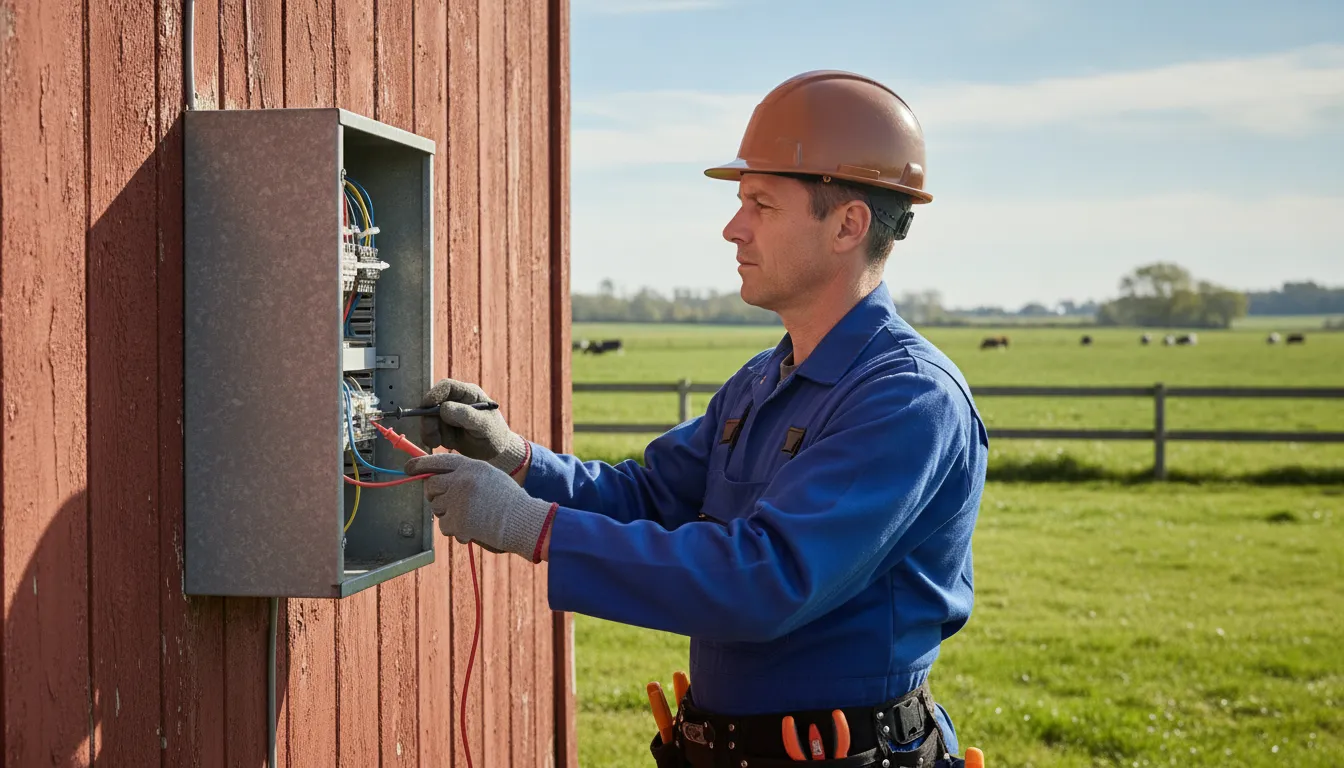
Overhead power lines deserve particular caution. According to OSHA farm safety guidance, portable grain augers, oversized wagons, large combines, and other tall equipment are common sources of accidental contact. A line may be difficult to see from the operator’s position, especially when equipment is being moved near barns, bins, or field edges. Treat every overhead line as bare and uninsulated, even if it appears to have a protective covering.
- Stop work immediately if equipment may have contacted an overhead line. Keep people away and contact the utility company. Do not touch the equipment and the ground at the same time.
- Call for professional help when a panel trips repeatedly, wiring is damaged, or equipment produces smoke, heat, sparks, or a burning odor.
- Do not bypass a protective device or improvise a fuse replacement to keep equipment running.
The main panel and shut-off provide a critical point of control during an emergency. A farm’s electrical system should use the correct fuse or circuit breaker for each panel and circuit. Installing a larger fuse or breaker can allow excessive current to continue flowing, increasing the risk of overheating and fire. The University of Maine Cooperative Extension recommends using the correct fuse for the panel and having a licensed electrician inspect questionable circuits, wiring, and equipment.
Agricultural environments also place constant stress on electrical components. Moisture, dust, corrosive chemicals, and physical abuse can compromise equipment and connections over time. If a failure occurs in a barn, shop, storage building, or equipment area. Shut down power only if it is safe to do so, keep employees and animals clear of the hazard, and arrange a professional inspection. Prompt service from an emergency electrician for farms and rural properties can identify the immediate fault and help prevent the same emergency from returning.
How Agricultural Electrical Work Differs from Residential Service
A farm electrical system supports more than a home. It may serve barns, storage buildings, workshops, livestock facilities, and equipment connections across a larger property. Agricultural property owners therefore need specialized electrical infrastructure designed around farm buildings and agricultural equipment, not a residential setup simply extended with more outlets.
The working environment also changes the installation requirements. Agricultural electrical systems can face dust, moisture, corrosive substances, physical abuse, and demanding equipment use. Those conditions make durable equipment selection, protected wiring, sound connections, and proper load planning important parts of the work. When a fault affects a critical building or equipment connection, an commercial electrical contractor with agricultural experience can assess the broader system instead of treating the problem as an isolated household repair.
| Residential electrical service | Agricultural electrical service |
|---|---|
| Typically serves a dwelling and its household circuits. | May support multiple farm buildings, agricultural equipment, and operational areas across a property. |
| Common concerns include household wiring faults, overloaded circuits, and equipment needs inside a home. | Installations must account for dust, moisture, corrosive conditions, physical abuse, and equipment-related hazards. |
| Equipment is generally limited to residential appliances, lighting, and home systems. | Equipment hookups and specialized infrastructure must be planned around agricultural buildings and farm equipment. |
| Work must meet applicable residential electrical requirements. | A qualified farm electrician must follow the National Electrical Code and Oregon electrical code requirements. |
Pro-Tech Power is a full-service electrical contractor serving residential, commercial, and agricultural properties throughout the region. That range matters when a farm includes both living spaces and operational buildings. The goal is not merely to restore power, but to complete the work safely, correctly, and in compliance with the NEC and Oregon code.
Steps to Stay Safe During a Farm Electrical Emergency
Electrical contact emergencies require distance, restraint, and immediate communication. Do not assume a line is harmless because it is hard to see, appears insulated, or is not sparking. The Occupational Safety and Health Administration advises treating every overhead power line as bare and uninsulated. Use these steps while waiting for the utility or a qualified professional to make the area safe.
- If equipment contacts an overhead line, stay on the equipment. Warn others to keep away from the machine, the line, and the surrounding ground. Have someone immediately contact the local utility and request that the area be de-energized. Do not climb down or try to move the equipment unless the utility gives appropriate direction. OSHA power-line safety guidance explains why remaining on the equipment is critical.
- Do not touch the equipment and the ground at the same time. An energized machine can create a dangerous path through your body if you bridge the equipment and ground. Keep workers, visitors, and livestock away from the scene. No one should approach to help until the utility confirms that the danger has been removed.
- If fire forces you to leave, jump clear. Jump as far away from the equipment as possible, landing with both feet together. Do not step down normally or allow one foot to touch the equipment while the other touches the ground. This reduces the chance of bridging different voltage zones.
- Shuffle away in small steps. Once you land, keep your feet together and shuffle away without taking large strides. A long step can place each foot in a different voltage zone, creating a dangerous electrical path through your body. Continue moving away until you are well clear, then wait for emergency responders or the utility.
- Prevent the next contact before moving tall machinery. Pre-plan travel routes for combines, augers, loaders, and other tall equipment. Choose routes that avoid overhead lines, and communicate the route to operators before equipment moves. Planning is safer than trying to judge clearance during a rushed farm emergency.
These steps are for immediate protection, not a substitute for professional evaluation. After the scene is secured, have damaged wiring, equipment, and electrical infrastructure inspected before returning them to service.
Emergency Electrical Service for the Willamette Valley
Farm electrical problems rarely wait for a convenient appointment. A failed circuit, damaged wiring, or loss of power can interrupt equipment, affect livestock areas, and bring essential work to a halt. Pro-Tech Power provides emergency repairs and troubleshooting for agricultural properties, with same-day or next-day capability for Tier 1 service calls when scheduling and conditions allow.
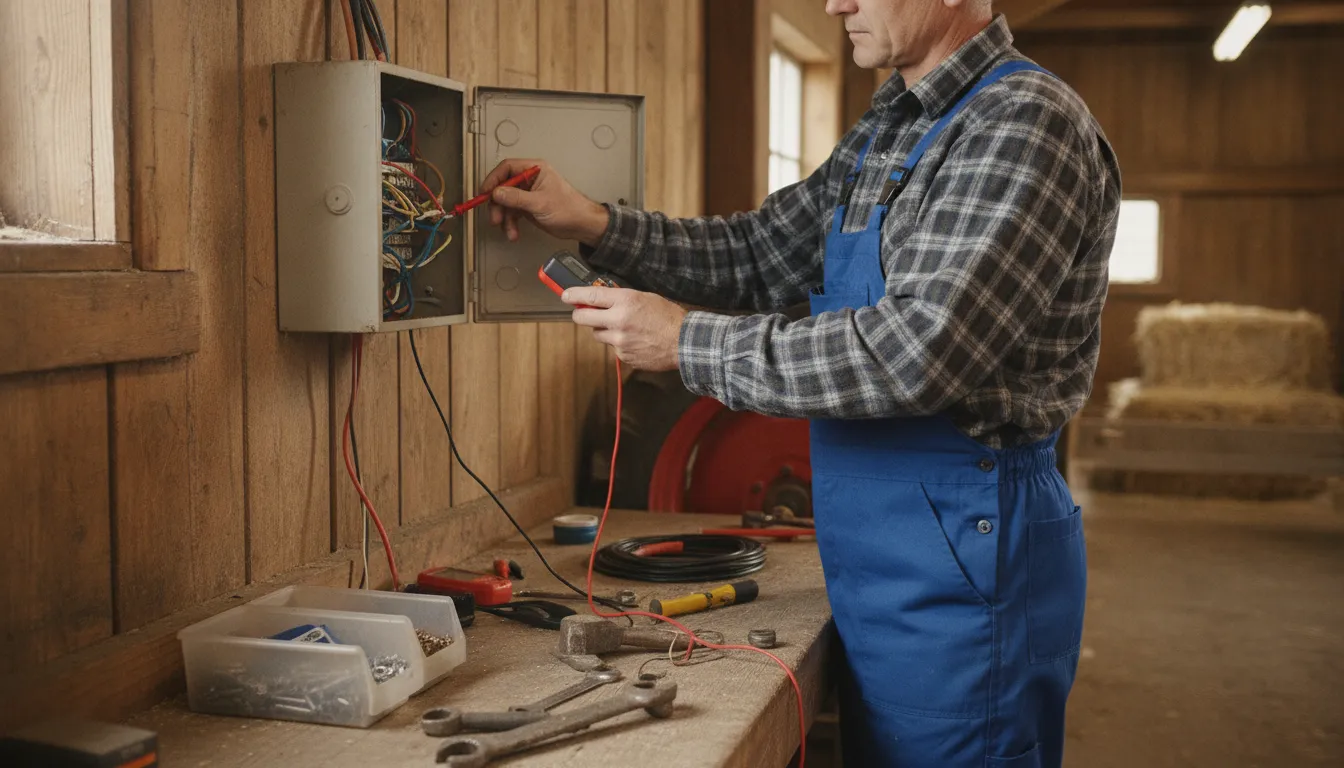
Pro-Tech Power is a full-service electrical contractor serving the broad Willamette Valley and Portland Metro region. The company is based in Tigard, but it is not Tigard-exclusive. Its agricultural service area extends within a 25-mile radius, reaching rural properties and agricultural buildings throughout the surrounding region. That regional coverage gives farm owners a practical option when they need an emergency electrician for farms, rather than a general contractor unfamiliar with agricultural infrastructure.
Support for rural agricultural properties
A dedicated farm electrician understands that rural properties may include barns, shops, outbuildings, equipment areas, and other structures spread across a larger site. When an urgent issue occurs, Pro-Tech Power can troubleshoot the electrical problem, identify immediate safety concerns, and determine the appropriate repair path. The goal is to restore dependable operation safely, not to apply a temporary fix that creates another failure later.
If you are facing an active electrical hazard, move people and animals away from danger and contact the utility or emergency services when appropriate. Do not handle exposed wiring or attempt a repair beyond your training. For emergency electrical troubleshooting and service in the Willamette Valley, contact Pro-Tech Power or call 503-780-6207. Share the property location, what stopped working, and any visible damage so the team can understand the situation before arrival.
Frequently Asked Questions
When should I call an emergency electrician for my farm?
Call when an outage, burning odor, sparking, damaged wiring, repeated breaker trips, or equipment failure affects safety or operations. Do not troubleshoot wiring you do not understand. The University of Maine Extension recommends having a licensed electrician inspect farm circuits, wiring, and equipment whenever there is doubt: farm electrical safety guidance.
What are common electrical emergencies on agricultural properties?
Common problems include power loss to barns or other essential buildings, overloaded circuits, electrical fires, failed equipment connections, and damage caused by moisture, dust, chemicals, or physical impact. Contact with overhead lines is another serious risk, especially when moving augers, combines, loaders, or other tall equipment. Treat every overhead line as bare and uninsulated, as OSHA agricultural safety guidance advises.
How do emergency electrical repairs differ for farm operations?
Farm repairs must account for more than a single building circuit. The electrician may need to evaluate power serving barns, livestock areas, shops, storage buildings, and specialized agricultural equipment, then prioritize the repair that restores safe operation. The work should also follow the National Electrical Code and applicable Oregon requirements. A clear diagnosis matters because a temporary reset may leave an overloaded or damaged system in service.
Do I need a specialized electrician for farm electrical issues?
You need a licensed electrician who understands agricultural buildings, equipment infrastructure, and the environmental demands of working around moisture, dust, chemicals, and machinery. Pro-Tech Power is a full-service electrical contractor serving residential, commercial, and agricultural properties across the Willamette Valley. With emergency repairs and troubleshooting available through its Tier 1 service calls.
What should I look for in an emergency electrician for farm repairs?
Look for licensing, clear emergency response, experience with agricultural facilities, safe troubleshooting, and a commitment to code-compliant work. Ask how the electrician will protect people, livestock, equipment, and the rest of the electrical system while diagnosing the problem. Choose a contractor who explains the immediate repair and identifies underlying hazards that could cause another outage or emergency.
Ready to Get Help With a Farm Electrical Emergency?
Electrical problems on agricultural properties can affect buildings, equipment, livestock areas, and the safe continuation of daily work. Pro-Tech Power provides calm, safety-first electrical support for farms and rural properties across the region. If you are facing an urgent issue, call 503-780-6207 to speak with the team and explain what is happening. You can also contact Pro-Tech Power through the online contact page to request emergency farm electrical service. Sharing clear details about the outage, damaged equipment, unusual sounds, smoke, or other warning signs can help the team understand the situation and determine the safest next step. Do not approach exposed wiring or energized equipment while waiting for guidance.