EV Charger Installers Near Me: Hiring Guide
EV Charger Installers Near Me: How to Choose a Licensed Electrician
Searching for EV charger installers near me usually means you are ready for faster home charging, but you do not want guesswork around panel capacity, permits, wiring, or safety. The right licensed electrician should do more than mount a charger on the wall. They should evaluate your home, match the charger to your vehicle and driving habits, confirm code requirements, and explain the project before any wire is pulled.
Ready to plan a safe home charging setup? Request a quote from Pro-Tech-Power for EV charger installation in Tigard, Portland, Beaverton, Lake Oswego, Tualatin, and nearby Oregon communities.
A home EV charger is a high-demand electrical load. According to the U.S. Department of Energy’s Alternative Fuels Data Center, most EV drivers charge at home with Level 1 or Level 2 equipment, and Level 2 charging requires a 240-volt circuit for faster overnight charging. The same resource notes that charging equipment must comply with local and state codes, permits may be required, and electricians can confirm whether the home has adequate electrical capacity.
That is why the best installer choice is not simply the lowest bid. It is the electrician who checks the right items up front, communicates clearly, and builds the installation around your home instead of forcing a one-size plan.
Quick Answer: What Should an EV Charger Installer Check?
A licensed electrician should check your electrical panel capacity, available breaker space, existing 240-volt loads, charger amperage, wiring route, parking location, indoor or outdoor rating, permit requirements, and whether a panel upgrade or load management device is needed.
For a typical Level 2 charger, the installer should also confirm whether the charger will be hardwired or connected through a receptacle, whether the equipment is listed by a recognized testing lab, and whether the final setup matches manufacturer instructions. If the installer skips the panel review or says a permit is never needed without looking at your jurisdiction, keep looking.
Why Local EV Charger Installers Matter
Home charging is local work. A Tigard home built in the 1970s, a Portland home with a detached garage, and a newer Beaverton home with a short garage wire run can all require different installation plans. Local EV charger installers understand regional permitting expectations, common home layouts, local utility realities, and the practical details that affect installation cost.
Pro-Tech-Power is based in Tigard and works across the Portland metro area and the Willamette Valley. The company has helped homeowners with residential electrical projects since 2013 and holds ESB License No. 13068 and CCB License No. 198878. For homeowners comparing options, those credentials matter because EV charging work ties directly into the home’s electrical system.
If you are still deciding what type of charger fits your home, start with this guide to Level 2 charger installation requirements. If budget is your main question, review the breakdown of Level 2 EV charger installation cost in Oregon.
Check 1: Electrical Panel Capacity
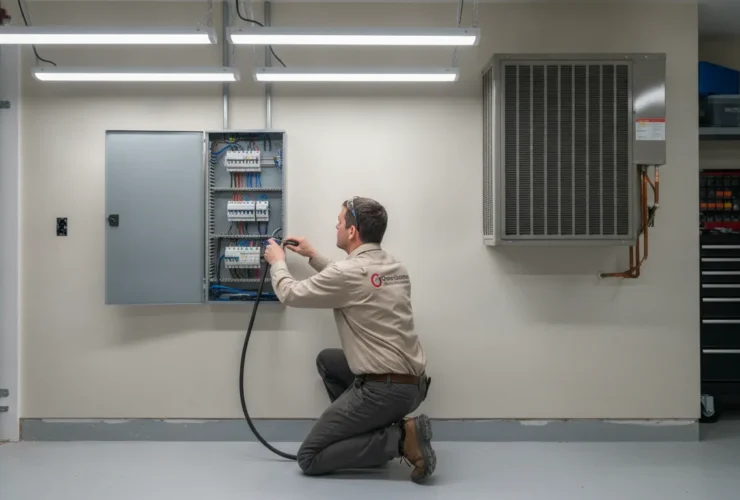
The panel review is the first serious test of an installer. A Level 2 charger can draw substantial current for a long period, so the electrician needs to determine whether your panel and overall electrical system can support it safely.
A proper review should look at:
- Main panel amperage
- Available breaker spaces
- Existing large loads such as HVAC, range, dryer, hot tub, or other 240-volt equipment
- Panel age and condition
- Whether a load calculation is needed
- Whether the charger can be set to a lower amperage if capacity is limited
Do not assume a panel has room just because there is an open slot. Capacity is not only about physical breaker space. The electrician has to consider the home’s total load and the charger demand. In older homes or homes with several major electrical loads, an electrical panel upgrade in Portland or nearby communities may be part of the conversation.
Check 2: Charger Type and Amperage
Not every driver needs the fastest possible charging speed. A good electrician should ask what vehicle you drive, how many miles you usually drive each day, where you park, and whether you expect to add another EV later.
Many home chargers can be configured at different amperage levels. Higher amperage may charge faster, but it can also require larger wire, a larger breaker, more panel capacity, and a higher project cost. Lower amperage may still refill the battery overnight for many households while reducing electrical demands.
The right installer will explain tradeoffs in plain language. The goal is not to oversell the biggest charger. The goal is to create a safe, reliable charging setup that fits your actual use.
Check 3: Hardwired Charger vs. Receptacle
Many homeowners ask whether they should install a hardwired wall charger or a 240-volt receptacle. The answer depends on the charger, local code, location, and how the equipment will be used.
| Option | Best fit | What to ask |
|---|---|---|
| Hardwired wall charger | Permanent home charging setup | Is the charger rated for the selected amperage and location? |
| 240-volt receptacle | Portable charging equipment when allowed and appropriate | Is the receptacle, breaker, GFCI protection, and enclosure suitable? |
A qualified electrician should not treat the choice casually. Receptacle type, equipment rating, weather exposure, manufacturer instructions, and inspection requirements all matter. If you drive a Tesla, this Tesla charger installation in Portland guide explains additional planning points.
Check 4: Wiring Route and Parking Location
The charger location affects cost, convenience, and long-term satisfaction. A short, open route from panel to garage wall is usually simpler than a long run through finished walls, across an attic, around a driveway, or to a detached garage.
Before giving a final quote, the installer should review:
- Where the vehicle parks every night
- Where the charging port is located on the vehicle
- Whether the cable can reach without crossing a walkway
- Whether the charger needs outdoor-rated equipment
- Whether conduit will be visible
- Whether trenching or a detached structure is involved
Small location decisions can create daily frustration. A charger mounted on the wrong side of the garage may still work, but the cord may be stretched, awkward, or in the way. The installer should help you plan for real use, not just code minimums.
Planning a charger for a garage, driveway, or detached structure? Get a home-specific quote from Pro-Tech-Power before buying equipment or choosing a charger location.
Check 5: Permits, Inspection, and Code Compliance
EV charging work is not the place for shortcuts. The National Electrical Code treats EV charging as a continuous load, and local permitting rules can apply to residential charger installations. A licensed electrician should know how to approach permits and inspections for your area.
Ask who pulls the permit, what inspection is expected, and how the installation will be documented. If an installer says permits are unnecessary in every case, ask them to explain why. The answer should be specific to your city, county, and project type.
For more detail on the code side of the work, read Pro-Tech-Power’s guide to EV charging station code requirements.
Questions to Ask EV Charger Installers Near You
When comparing EV charger installers near you, use direct questions. The answers will tell you quickly whether the electrician is thinking through the full project.
- Are you licensed for electrical work in Oregon?
- Will you review my panel before giving a final quote?
- Will you perform or document a load calculation if needed?
- What amperage do you recommend for my driving habits, and why?
- Do you recommend hardwired equipment or a receptacle for my setup?
- Who handles the permit and inspection?
- What happens if my panel does not have enough capacity?
- Will the installation follow the charger manufacturer’s instructions?
- How will the charger cable reach my vehicle?
- What is included in the quote, and what could change the price?
You should feel comfortable with the answers. If the installer rushes the evaluation, avoids licensing questions, or gives a firm price without seeing the panel or wire route, that is a warning sign.
Red Flags When Choosing an Installer
Some warning signs are obvious. Others sound convenient until they create risk later. Be cautious if an installer:
- Does not ask about your panel or existing electrical loads
- Recommends the highest amperage charger without explaining capacity
- Discourages permits without a clear local reason
- Cannot explain the difference between hardwired and receptacle options
- Uses vague language about licensing or insurance
- Will not put scope, equipment, and assumptions in writing
- Ignores outdoor ratings for exterior installations
- Does not ask where the vehicle parks and where the charge port sits
A cheaper quote is not always cheaper if it misses a panel limitation, permit requirement, or wiring challenge. The best quote is clear about what is included and what conditions could change the final scope.
What a Strong Installation Quote Should Include
A strong EV charger installation quote should be easy to understand. It should name the charger or charger type, wiring path, breaker size, installation location, permit handling, inspection expectations, and any panel-related assumptions.
For example, a quote may state that the price assumes the panel has adequate capacity and that the charger will be mounted in an attached garage within a defined distance from the panel. If the electrician finds that the panel is full or overloaded, the quote should explain next steps rather than hide the issue.
Homeowners in Tigard, Portland, and Beaverton can also compare local electrician pages for area-specific context: Tigard electrician, Portland electrician, and Beaverton electrician.
How Pro-Tech-Power Approaches Home EV Charger Projects
Pro-Tech-Power focuses on residential electrical work with a practical, safety-first approach. For EV charger installations, that means looking at the home before recommending a setup. The team considers panel capacity, charger requirements, wire routing, parking layout, and the local path to a code-compliant result.
That planning protects the homeowner. It also helps prevent common problems such as nuisance breaker trips, slow charging from the wrong setup, exposed equipment that is not rated for the location, or surprise costs after the project has started.
As a local, family-owned electrical contractor based in Tigard, Pro-Tech-Power works with homeowners across the Portland metro area who want the job done carefully and clearly.
FAQ: EV Charger Installers Near Me
Do I need a licensed electrician to install a Level 2 EV charger?
Yes, a Level 2 charger typically requires a 240-volt circuit and should be installed by a licensed electrician. The work affects your home’s electrical system and may require permits and inspection.
How do I know if my panel can handle an EV charger?
An electrician should inspect the panel, review existing electrical loads, and perform a load calculation when needed. Open breaker space alone does not prove the panel has enough capacity.
Can an EV charger be installed outside?
Yes, outdoor installation can be appropriate when the charger and related equipment are rated for outdoor use and installed correctly. The electrician should review weather exposure, mounting location, and code requirements.
Should I buy the charger before calling an electrician?
It is better to talk with an electrician first. They can help confirm amperage, compatibility, panel capacity, and location before you purchase equipment that may not fit your home.
How close should the charger be to where I park?
The charger should be close enough for the cord to reach the vehicle comfortably without creating a trip hazard or daily inconvenience. The best location depends on your parking spot and charge port location.
Start With a Licensed Local Electrician
The best EV charger installers near you will slow down enough to check the details that matter: panel capacity, load, charger type, wiring route, location, permits, and inspection. That careful review is what turns a charger purchase into a reliable home charging setup.
Need help choosing the right EV charger setup for your home? Request a quote from Pro-Tech-Power for licensed EV charger installation in Tigard, Portland, Beaverton, and nearby Oregon communities.