Tesla Charger Installation in Portland
Tesla Charger Installation in Portland: What Homeowners Need to Know
Buying a Tesla solves one problem and creates a new one: how do you charge it at home without guessing about permits, panel capacity, wiring, or where the charger should go? For many homeowners, Tesla charger installation Portland questions come down to one practical goal: wake up to a charged vehicle without creating electrical risk or surprise project costs.
Ready to plan your home charging setup? A Portland EV charger electrician can evaluate panel capacity, permitting, and installation routing. Request a quote from Pro-Tech-Power for EV charger installation in Portland, Tigard, Beaverton, Lake Oswego, Tualatin, and nearby communities.
A Tesla Wall Connector looks simple once it is mounted, but the installation has to fit your home. The best setup depends on your electrical panel, where you park, how fast you need to charge, local permit requirements, and whether the route from the panel to the charger is straightforward or complex. Portland homes also vary widely. A newer garage in Bethany, an older Southwest Portland home, and a detached garage in Sellwood can each require a different plan.
This guide walks through the decisions Portland-area homeowners should make before installation. It focuses on Tesla Wall Connector and Level 2 charging, but the same planning principles apply if you are preparing for future EVs that use the North American Charging Standard or a J1772 adapter.
Quick Answer: What Does a Portland Tesla Charger Installation Involve?
A typical home Tesla charger installation in Portland includes checking the electrical panel, selecting the right charger location, installing a dedicated 240-volt circuit, mounting and wiring the Tesla Wall Connector, commissioning the charger, and completing the required electrical permit and inspection process. The project should be handled by a licensed electrical contractor because the charger becomes part of the home’s electrical system.
In Portland, the City notes that a Level 2 charger uses 240 volts and may require an electrical upgrade. Before moving forward with electrical upgrade work for a Level 2 charger, homeowners must apply for an electrical permit through the local permitting office. Oregon also has statewide permit and inspection rules for electric vehicle charging systems, so the installation should be planned with code compliance from the start.
The simplest projects usually have three things in common: open capacity in the panel, a charger location near the panel, and an indoor or protected parking area. More complex projects may involve panel upgrades, trenching to a detached garage, exterior conduit, load management, or coordination with a remodel.
Why Tesla Owners Usually Choose Level 2 Home Charging
Tesla vehicles can charge from a standard 120-volt outlet, often called Level 1 charging, but that option is slow. It can work for some drivers with short daily mileage, long overnight parking windows, and patience. Most homeowners who want predictable charging choose Level 2, which uses a 240-volt circuit similar in concept to other high-demand household equipment.
Portland’s EV guidance says home charging is often the easiest and most affordable option for drivers who have a garage or driveway. A Level 2 charger can charge an EV in a few hours instead of relying on a standard outlet overnight. For a Tesla owner, that difference matters when the vehicle is used for commuting, school drop-offs, weekend trips to the coast, or winter driving when range can be affected by weather.
A hardwired Tesla Wall Connector also keeps the charging setup cleaner. Instead of repeatedly plugging a mobile connector into an outlet, the charger is mounted in a fixed location, connected to a dedicated circuit, and configured for the available amperage. That improves daily convenience and helps the installation match the electrical capacity of the home.
How Much Electrical Capacity Does a Tesla Wall Connector Need?
The Tesla Wall Connector does not have one single power requirement. Tesla’s installation documentation shows that maximum output depends on the circuit breaker size. For maximum output, Tesla lists a standard double-pole 60-amp breaker, which allows up to 48 amps of output and about 11.5 kW at 240 volts. If the electrical supply cannot support that setup, the charger can be configured for a lower amperage.
| Circuit breaker | Max output | Approximate power at 240V | Best fit |
|---|---|---|---|
| 60 amps | 48 amps | 11.5 kW | Fastest common Wall Connector setup when panel capacity allows |
| 50 amps | 40 amps | 9.6 kW | Strong Level 2 charging with slightly lower load |
| 40 amps | 32 amps | 7.6 kW | Common compromise when capacity is limited |
| 30 amps | 24 amps | 5.7 kW | Useful when daily mileage is moderate |
| 20 amps | 16 amps | 3.8 kW | Lower-power option when the panel cannot support more |
The right answer is not always the largest breaker. An electrician should perform a load calculation and evaluate the panel, main breaker size, existing large loads, available breaker spaces, grounding, and wiring route. A 48-amp charger may be attractive, but it is not worth overloading a panel or forcing an unnecessary upgrade if a lower-output configuration covers your daily driving needs.
If your home already has a busy panel, ask about load management. Tesla Wall Connector supports power settings during commissioning, and some homes may use load-management strategies to fit EV charging into the existing electrical system. Pro-Tech-Power also has a deeper guide to Level 2 charger installation requirements if you want more background on circuits, amperage, and panel readiness.
Do You Need a Panel Upgrade Before Installing a Tesla Charger?
Maybe. A panel upgrade is not automatically required, but it becomes more likely when the existing panel is full, undersized, outdated, or already supporting multiple high-demand loads. Homes with electric heat, hot tubs, induction ranges, heat pumps, workshops, or future additions may need a broader capacity discussion before adding EV charging.
Warning signs that the panel needs closer review include limited open breaker space, older equipment, signs of overheating, frequent breaker trips, or a main electrical capacity that cannot support the desired charging output. In some cases, the answer is a new dedicated circuit and proper configuration. In others, the safer long-term solution is an electrical panel upgrade in Portland.
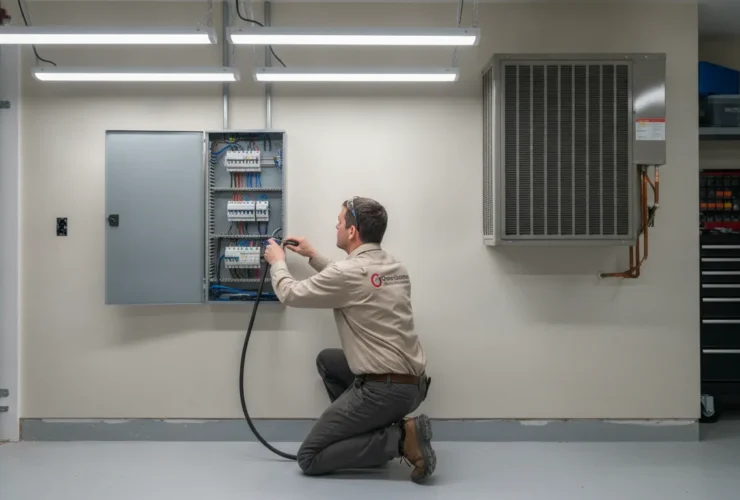
A good contractor should not treat the charger as an isolated device. The charger is one load inside a larger home electrical system. That is why the site visit matters. It gives the estimator a chance to look at the panel, parking location, wiring path, existing loads, and any future plans such as a second EV, garage conversion, battery storage, or generator connection.
Where Should You Install the Charger?
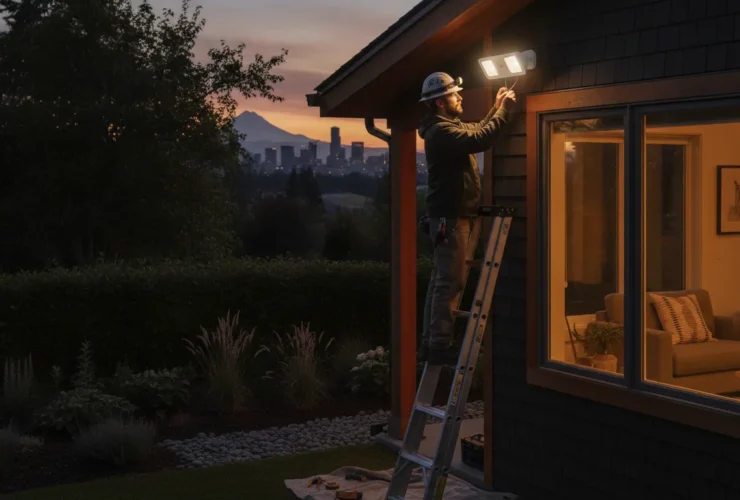
The best location is the one that balances convenience, electrical efficiency, weather protection, and long-term use. In a garage, the charger is often mounted near the Tesla charge port side, high enough for daily use, and close enough that the cable reaches comfortably without dragging across walkways. For outdoor parking, the installation may need weather-rated equipment, exterior conduit, and careful placement to avoid vehicle impact or tripping hazards.
Here are the main location factors to review before installation:
- Distance from the panel: Shorter wiring routes usually reduce labor and material needs.
- Parking pattern: Consider whether you pull in or back in, and where the charge port sits.
- Cable reach: The charger should reach the car without tension or unsafe cord placement.
- Indoor versus outdoor mounting: Outdoor setups need more attention to weather, conduit, and protection.
- Detached garages: These can require trenching, subpanel review, or longer conduit routes.
- Future vehicles: If you may own two EVs later, plan the location and capacity with that in mind.
Do not choose the charger location based only on where it looks best on the wall. A slightly different placement can sometimes shorten the wiring path, avoid finished walls, or make the daily charging experience much cleaner.
What Permits Are Required in Portland?
For a Level 2 Tesla charger, plan on an electrical permit. Portland city guidance explains that before going forward with the electrical upgrade required for a Level 2 charger, homeowners must apply for an electrical permit. Oregon also has a statewide permit and inspection protocol for electric vehicle charging systems.
Permit rules are not just paperwork. They protect the homeowner by requiring the installation to be reviewed against electrical safety standards. That matters for a high-load device that may operate for hours at a time, often overnight and often near a vehicle, garage storage, or living space.
Permit and inspection needs can vary based on whether the home is inside the City of Portland or another local jurisdiction such as Tigard, Beaverton, Lake Oswego, Tualatin, Milwaukie, or Oregon City. A local electrical contractor should confirm the correct authority, submit the right permit path, and install the circuit so it is ready for inspection.
How Much Does Tesla Charger Installation Cost in Portland?
Tesla charger installation cost in Portland depends on panel capacity, circuit amperage, wiring distance, wall access, indoor versus outdoor mounting, permit requirements, and whether the project needs a panel upgrade or trenching. A charger mounted near an available panel is usually much simpler than a charger installed on the far side of a finished garage or in a detached structure.
Common cost drivers include:
- Panel condition and capacity: A panel with room and capacity is simpler than one that needs upgrades.
- Wire run length: Longer runs require more labor, conduit, wire, and planning.
- Finished surfaces: Drywall, exterior walls, crawlspaces, or tight attic access can affect labor.
- Outdoor mounting: Exterior installations may need weather-rated routing and added protection.
- Detached structures: Detached garages may require trenching or subpanel work.
- Permit and inspection complexity: Requirements can vary by jurisdiction and scope.
Pro-Tech-Power does not publish one-size pricing because every home is different. For a more detailed breakdown of the variables, read our guide to Level 2 EV charger installation cost in Oregon. The most reliable way to budget is to request a site-specific quote.
Need a real number for your home? Get a quote from Pro-Tech-Power so an estimator can review your panel, parking location, and installation path.
Can You Install a Tesla Charger Yourself?
Most homeowners should not install a Tesla Wall Connector themselves. This is not a basic plug-in accessory. A hardwired charger requires a dedicated circuit, correct conductor sizing, grounding, breaker selection, proper mounting, commissioning, and permit compliance. Mistakes can create shock risk, fire risk, nuisance tripping, charger faults, failed inspection, or damage to equipment.
Even confident DIY homeowners can miss load calculation issues or local code details. A licensed electrical contractor can evaluate the entire system, not just the charger. That matters when a 240-volt circuit is being added to a home that may already have decades of electrical changes behind the walls.
If you are still comparing options, our guide on hiring an electrician for EV charger installation explains what credentials, questions, and project details to look for before choosing a contractor.
Tesla Charger Installation Checklist for Portland Homeowners
Before you schedule installation, gather the details that help an electrician quote accurately and plan safely. You do not need to solve every technical question first, but you can make the process smoother by knowing the basics.
- Confirm the Tesla model and charging hardware you plan to use.
- Take clear photos of the electrical panel, panel label, and surrounding wall space.
- Measure the approximate distance from the panel to the preferred charger location.
- Decide whether you normally pull in or back into the parking space.
- Note whether the charger will be indoors, outdoors, or in a detached garage.
- List other major electrical loads in the home, such as heat pump, hot tub, range, or workshop equipment.
- Think about whether a second EV could be added in the next few years.
- Ask who will handle the permit and inspection process.
This information helps separate a simple installation from a project that needs more design work. It also helps the electrician recommend the right amperage rather than defaulting to the maximum setting.
Common Mistakes to Avoid
The biggest mistake is buying the charger and assuming the electrical work will be minor. The charger is only one part of the project. The home electrical system determines what is safe, practical, and cost-effective.
Other common mistakes include choosing a charger location before reviewing the wiring path, ignoring permit requirements, assuming a 60-amp circuit is always best, forgetting about outdoor protection, and failing to plan for a future second EV. Homeowners also sometimes compare quotes that are not equal. One quote may include permitting, inspection coordination, and code-compliant materials, while another may leave those details vague.
Ask for a quote that explains the proposed circuit size, charger location, wiring route, permit handling, and any panel limitations. Clear scope protects both the homeowner and the contractor.
Why Work With Pro-Tech-Power?
Pro-Tech-Power is a full-scope electrical contractor based in Tigard and serving Portland-area homeowners throughout the Willamette Valley. The company handles residential electrical projects ranging from EV charger installations to remodels, new construction, electrical updates, and generator systems. Founded in 2013, Pro-Tech-Power brings a local team, licensed electrical expertise, and a values-driven approach to every project.
For Tesla charger installation, that means your project can be reviewed as part of the whole home electrical system. If the panel is ready, the goal is a clean, efficient installation. If the panel needs attention, the team can explain the options clearly before work begins. The same practical approach applies whether you are in Portland, Tigard, Beaverton, Lake Oswego, Tualatin, West Linn, Sherwood, or a nearby community.
You can learn more about Pro-Tech-Power’s broader residential electrical work, then request a quote when you are ready to discuss your home charging setup.
Frequently Asked Questions
How long does Tesla charger installation take?
A straightforward installation can often be completed quickly once the permit path and materials are ready, especially when the charger location is near the panel and the panel has capacity. More complex projects can take longer if they involve panel upgrades, long conduit runs, trenching, exterior routing, or inspection scheduling.
Is a Tesla Wall Connector better than a standard outlet?
For most Tesla owners who drive regularly, yes. A Tesla Wall Connector on a 240-volt circuit provides faster and more convenient charging than a standard 120-volt outlet. The best output level depends on the home’s electrical capacity and the driver’s daily mileage.
Do I need a 60-amp breaker for a Tesla charger?
No. Tesla lists a 60-amp breaker for maximum Wall Connector output, but the charger can be configured for lower amperage when the electrical supply cannot support the maximum setup. An electrician should recommend the circuit size after reviewing the panel and load calculation.
Can a Tesla charger be installed outside?
Yes, a Tesla charger can be installed outside when the equipment, mounting location, wiring method, and protection are appropriate for exterior use. Outdoor installations need careful planning for weather exposure, conduit routing, impact protection, and safe cable placement.
Who handles the permit for a Portland EV charger installation?
Ask the contractor before work begins. For a professional installation, the electrical contractor commonly helps coordinate the electrical permit and inspection process. The correct jurisdiction may be Portland or another local authority depending on the home’s address.
Start With a Home-Specific Plan
The right Tesla charger installation is not just the fastest charger your wall can support. It is the setup that fits your home, your driving habits, your panel capacity, and your local permit requirements. A careful plan up front helps you avoid failed inspections, unnecessary upgrades, and daily charging frustrations.
If you are ready to install a Tesla charger at your Portland-area home, request a quote from Pro-Tech-Power or call 503-780-6207 to discuss your project.