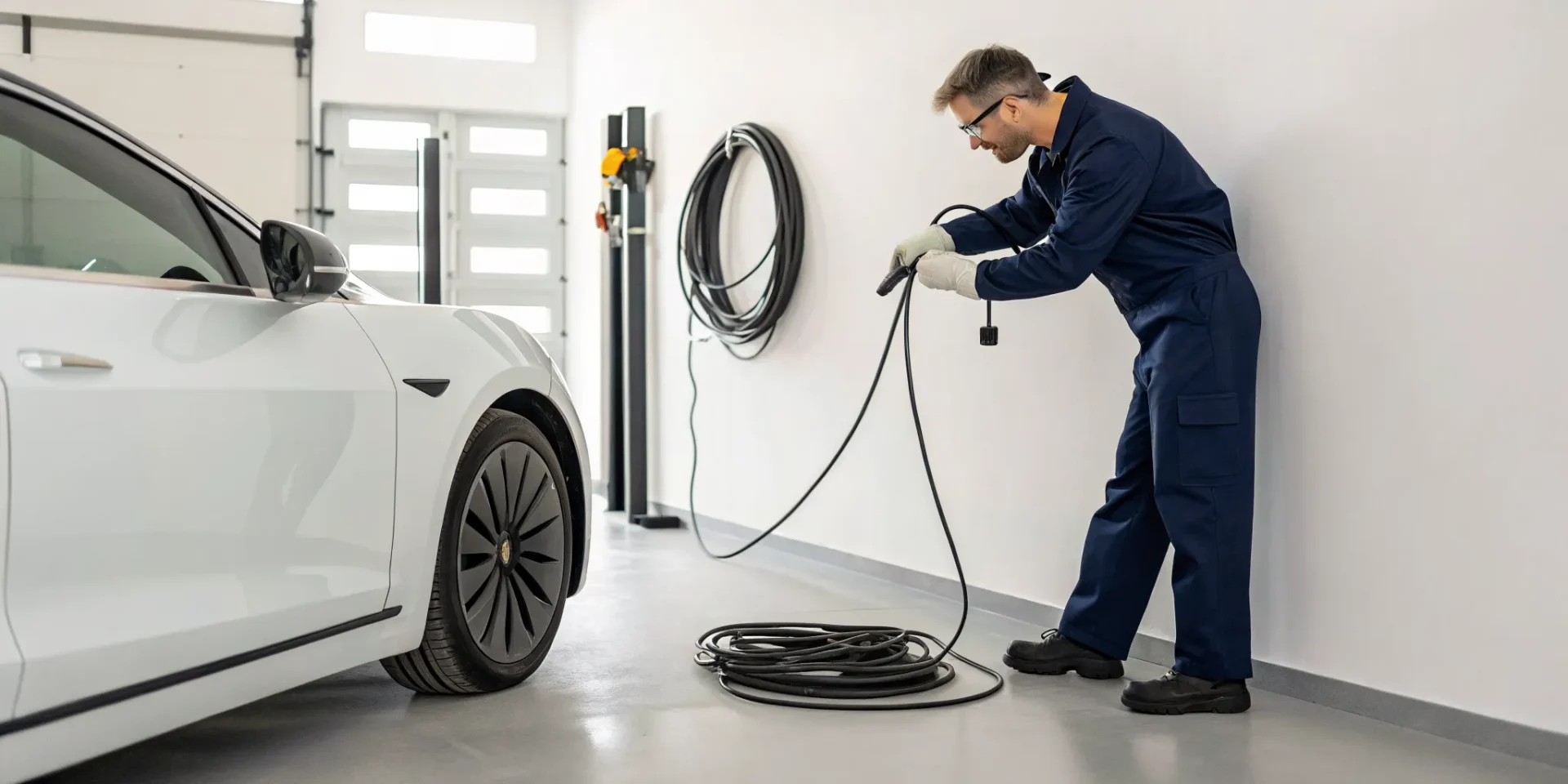
Electrician for EV Charger Installation: A Hiring Guide
Figuring out how to get an EV charger installed at home can feel overwhelming. You’re probably wondering about the cost, whether your electrical panel can handle a Level 2 charger, and what all the different terms like “Level 2” and “hardwired” even mean. It’s easy to get lost in the technical details, but the process doesn’t have to be complicated. We’ve created this comprehensive guide to answer your questions in plain language. We’ll break down everything from costs and permits to the installation process itself. Our goal is to give you the clarity you need to move forward with confidence and find a trustworthy electrician for EV charger installation who can handle the job for you. If you are still comparing service providers, start with our guide to choosing an electric vehicle charging station installer and review the practical Level 2 charger requirements before scheduling the work.
Key Takeaways
- Confirm your electrical system is ready: A Level 2 charger is the most practical choice for home use, but it needs a dedicated 240-volt circuit. Before installation, a licensed electrician must perform a load calculation to ensure your electrical panel can safely handle the added power.
- Choose a qualified and insured installer: This is a specialized job, not a task for a general handyman. Always hire an electrician with a valid Oregon CCB license, proof of insurance, and direct experience installing EV chargers, and be sure to get a detailed written estimate.
- Budget for the full project and find rebates: The total cost includes the charger unit, labor, permits, and possible panel upgrades. You can lower this expense by looking into federal tax credits, Oregon state programs, and local utility company rebates that help cover installation costs.
What Are the Different Types of Home EV Chargers?
Choosing an EV charger for your home isn’t a one-size-fits-all decision. The right one for you depends on your car, your daily driving habits, and your home’s current electrical setup. Think of it like picking the right tool for the job; you want something that’s efficient, convenient, and safe. Understanding the different types of chargers is the first step toward making a smart investment that fits your lifestyle.
Most EV owners find that charging at home is the easiest and most cost-effective way to keep their car ready to go. But to do that, you need the right equipment. The main options you’ll encounter are Level 1 and Level 2 chargers, which offer vastly different charging speeds. Beyond that, you’ll also need to decide between a plug-in model or a hardwired unit. We’ll walk through what each of these terms means so you can feel confident when discussing your options with a professional electrician. Making the right choice from the start ensures your home charging station meets your needs for years to come.
Level 1 vs. Level 2 Chargers
The most basic option is a Level 1 charger. This is the charging cord that typically comes with your electric vehicle and plugs directly into a standard 120-volt wall outlet, just like your toaster or laptop. While it’s convenient because it requires no special installation, it’s also incredibly slow. A Level 1 charger only adds about three to five miles of range per hour, meaning it could take more than a full day to charge your car completely.
For a much faster and more practical solution, most homeowners opt for a Level 2 charger. This type requires a 240-volt outlet, similar to what an electric dryer or oven uses. The difference in speed is significant, with Level 2 chargers providing anywhere from 12 to 80 miles of range per hour. This means you can easily get a full charge overnight, making it the ideal choice for daily use.
Which Charger Fits Your Driving Needs?
Your daily routine is the best guide for choosing a charger. If you have a short commute and can leave your car plugged in for long, uninterrupted periods, a Level 1 charger might seem sufficient. However, for most drivers, its slow speed can be a major inconvenience, especially if you need a quick charge after an unexpected trip.
A Level 2 charger offers the flexibility and peace of mind that most EV owners are looking for. It turns your garage into a personal fueling station, ensuring your car is fully charged and ready every morning. This convenience reduces your reliance on public charging stations, which can be busy and more expensive. A professional installation of a Level 2 charger is a true upgrade to your home and your EV experience, making range anxiety a thing of the past.
Hardwired vs. Plug-In Options
Once you’ve decided on a Level 2 charger, you have one more choice: a plug-in or a hardwired model. A plug-in charger connects to a 240-volt outlet, much like a standard appliance. This option offers a bit more flexibility, as you can easily unplug it and take it with you if you move. The installation is often simpler, as it just requires the proper outlet to be installed.
A hardwired charger, on the other hand, is connected directly to your home’s electrical panel. This creates a more permanent and seamless installation. Hardwired units are often recommended for outdoor setups, like in a carport or driveway, because they are better sealed against the elements. The right choice depends on your specific needs, the location of the charger, and your long-term plans for your home.
What Qualifications Should Your Electrician Have?
Hiring someone to install your EV charger isn’t like finding a general handyman. This is a specialized job that directly connects to your home’s electrical system and your valuable new vehicle. A faulty installation can be inefficient at best and dangerous at worst. That’s why it’s so important to find a professional with the right qualifications.
You’re not just looking for any electrician; you need an expert with a specific skill set. A qualified installer will have the proper licenses to work in your area, direct experience with EV charger installations, and the right insurance to protect you and your home. Taking the time to verify these qualifications is the best way to ensure your charger is installed safely, correctly, and up to code.
Key Licenses and Credentials to Look For
The first thing you should always check for is a valid electrical license. This is non-negotiable. A license proves that the electrician has met state and local requirements for training, testing, and experience. It’s your assurance that they understand electrical theory, safety protocols, and building codes. In Oregon, you’ll want to confirm your contractor holds a license from the Construction Contractors Board (CCB). A safe, reliable setup depends on a licensed professional who is qualified to perform the work. Hiring an unlicensed individual might seem cheaper, but it puts your home, your vehicle, and your family at risk.
Why EV-Specific Experience Matters
Beyond a general license, you need an electrician with specific experience installing EV chargers. This isn’t a standard outlet installation. An experienced installer understands the nuances of different charger brands, power requirements, and how to ensure compatibility between the charger, your car, and your home’s electrical panel. They can help you decide on the best location for the charger, identify if your panel needs an upgrade, and complete the job efficiently. Choosing a qualified installer with a background in EV charging solutions ensures the work is done right the first time, preventing potential damage to your equipment and giving you peace of mind.
Confirm They’re Insured and Bonded
Proper licensing and experience are crucial, but you also need to protect yourself financially. Always hire an electrician who is both insured and bonded. General liability insurance covers any accidental damage to your property during the installation. A bond protects you if the contractor fails to complete the job as promised or doesn’t pay their suppliers. Ask for proof of both before any work begins. A reputable company will also offer a service warranty, which shows they stand behind their workmanship. This commitment to quality and client protection is a key sign of a trustworthy electrical contractor.
How Much Does EV Charger Installation Cost?
Figuring out the budget for your EV charger installation is a top priority. While it’s a valuable home upgrade, the final price tag can vary quite a bit. The total cost depends on the type of charger you choose, the current state of your home’s electrical system, and the complexity of the installation itself.
Think of the total expense in two parts: the cost of the charging unit and the cost of professional labor. The charger itself can range from a few hundred to over a thousand dollars. The installation, however, is where you’ll see the most variation. A straightforward installation in a home with a modern electrical system will cost significantly less than one requiring major upgrades. Understanding these variables will help you get a clear picture of your total investment and ensure there are no surprises along the way.
Breaking Down the Installation Cost
On average, you can expect the total cost for a home EV charger installation to fall somewhere between $800 and $4,500. This range covers both the charging station and the labor provided by a licensed electrician. The charger you select plays a role in this cost, with different brands and models offering various features like Wi-Fi connectivity and smart scheduling.
The bulk of the cost, and the reason for the wide price range, comes from the professional installation. This isn’t a simple plug-and-play setup. It involves a qualified electrician running a dedicated 240-volt circuit from your electrical panel to your garage or driveway. The price reflects the electrician’s time, expertise, and the materials needed to complete the job safely and correctly, ensuring your new charger works efficiently for years to come.
Factors That Influence the Final Price
The single biggest factor that shapes your installation cost is your home’s electrical panel. Many older homes have 100-amp panels, which often don’t have enough capacity to handle the added load of a Level 2 charger alongside your other appliances. A 200-amp panel is typically the standard needed to support EV charging without any issues. An electrician can perform a load calculation to see if your current panel can handle the demand.
Another key factor is the distance between your electrical panel and your desired charger location. If your panel is in the basement on the opposite side of the house from your garage, the electrician will need more wiring and materials to run the circuit. This increases both material costs and labor time. The complexity of the wire run, for instance, whether it goes through finished walls or an unfinished ceiling, also affects the final price of your residential electrical project.
Potential Upgrades and Other Costs
If your electrician determines your current panel can’t support a new charger, an upgrade will be necessary. Upgrading your main electrical panel is a significant job that can add $1,500 to $3,000 to your total project cost. While it’s a considerable expense, it also modernizes your home’s electrical system and prepares it for future needs.
Beyond a panel upgrade, you might encounter other costs. Running the electrical line a long distance, such as 40 to 60 feet, could add another $800 to $1,500. You’ll also need to account for local permits, which are required for this type of electrical work and usually cost between $100 and $500. These permits ensure the installation is done to code and inspected for safety. Discussing these potential costs with your electrician beforehand will help you establish a realistic and comprehensive budget.
Will Your Home Need Electrical Upgrades?
Bringing an EV charger home is exciting, but it’s a bit more involved than just plugging in a new appliance. Your home’s electrical system was designed to handle your needs at the time it was built, and adding a powerful charger often requires a professional look under the hood. Before you can start charging overnight, a qualified electrician will need to assess a few key things to make sure the installation is safe, efficient, and up to code.
The main question is whether your current system can handle the added electrical load. A Level 2 charger, which most EV owners prefer for its speed, draws a significant amount of power. An electrician will check your electrical panel’s capacity, help you find the most practical location for the charger, and handle all the necessary local permits. Taking care of these steps upfront ensures your new charger works perfectly and protects your home’s electrical system. Our team is experienced in all types of residential electrical services and can walk you through the entire process.
Checking Panel Capacity and Circuit Requirements
Think of your electrical panel as the heart of your home’s electrical system. Before adding a major new component like an EV charger, you need to make sure the heart is strong enough for the job. A Level 2 charger requires a dedicated 240-volt circuit, similar to an electric stove or dryer. A licensed electrician will perform a load calculation to determine if your panel has enough available capacity to support this new circuit without overloading your system. If your panel is already maxed out or is an older model, you may need an upgrade to safely accommodate the charger.
How Location Affects Installation
Where you put your charger matters for both convenience and cost. The ideal spot is typically in your garage or driveway, close to where you park your EV. It’s also best to choose a location near your main electrical panel. The farther the charger is from the panel, the more wiring and labor are needed, which increases the installation cost. Your electrician will also make sure the chosen spot is dry, well-ventilated, and meets all safety codes, ensuring your charger is both easy to use and safely installed.
Understanding Local Permits and Codes
Electrical work isn’t something to take lightly, which is why most EV charger installations require a permit. In areas like Portland, obtaining an electrical permit ensures that the work is performed by a licensed professional and complies with local building and safety codes. This step is crucial for your safety and is often required by homeowner’s insurance. Skipping the permit process can lead to failed inspections or issues down the road. A reputable contractor will handle all the permitting for you, giving you peace of mind that the job is done right.
What Should You Ask Before Hiring an Electrician?
Once you have a shortlist of potential electricians, it’s time to ask the right questions. This step is about more than just finding the lowest price; it’s about ensuring you’re hiring a qualified professional who will do the job safely and correctly. A little due diligence now can save you from major headaches down the road. Think of it as an interview where you’re in the driver’s seat, making sure you find the perfect partner for your home project. Here are the key areas to cover before you make your final decision.
How to Verify Credentials and Experience
First things first, confirm you’re working with a licensed and insured professional. In Oregon, electricians must have a Construction Contractors Board (CCB) license. Don’t be shy about asking for their license number and proof of insurance. This protects you from liability if an accident happens on your property. Beyond credentials, ask about their specific experience with EV charger installations. Choosing an experienced installer ensures safety and compatibility between the charger, your vehicle, and your electrical system. You can also ask to see examples of their past projects to get a feel for their work quality. A reputable electrician will be happy to provide this information.
Ask About Warranties and Project Timelines
A professional installation should come with a guarantee. Ask potential electricians about the warranties they offer on their workmanship. A solid service warranty shows that the contractor stands behind their work and gives you peace of mind that your investment is protected. It’s also important to get a clear and realistic project timeline. Ask when they can start the project and how long they expect it to take. Understanding the schedule helps you plan accordingly and minimizes disruption to your daily routine. A clear timeline also sets expectations from the start, ensuring everyone is on the same page before the work begins.
Why You Need a Detailed Written Estimate
Never accept a verbal quote. A professional electrician should provide a detailed, itemized estimate in writing. This document should break down all the costs, including labor, materials, permit fees, and any other charges. A clear estimate helps you understand exactly what you’re paying for and prevents surprise costs when the final bill arrives. It also allows you to accurately compare offers from different contractors, ensuring you’re getting fair value without compromising on quality. Before signing anything, review the estimate carefully to make sure it aligns with the scope of your project and includes all the electrical services you discussed.
How Do You Find and Compare Local Electricians?
Finding the right electrician for your EV charger installation is about more than just a quick online search. You’re looking for a partner who understands the specific demands of these powerful systems and can ensure a safe, reliable setup for years to come. The right professional will not only install your charger correctly but will also perform a thorough assessment of your home’s electrical system to prevent future issues like overloaded circuits. Taking the time to compare your options helps you find someone with the right expertise, fair pricing, and a commitment to quality work. This isn’t a task for a general handyman; it requires a licensed professional who is up-to-date on the latest technology and local electrical codes.
This process involves a bit of homework, from checking credentials to reading what past customers have to say. It’s your chance to ask questions and get a feel for how different companies operate. Think of it like an interview where you’re hiring for an important role. A trustworthy electrician will be transparent about their process, provide a clear estimate, and have a portfolio of successful electrical projects to back up their claims. By being thorough now, you can feel confident that your investment is in good hands and that your home is ready for the future of driving.
How to Research and Vet Your Options
Start your search by looking for local electricians who specifically mention EV charger installation on their websites. Once you have a shortlist, dig a little deeper. Look for a gallery of their past work and see if they have experience with projects similar to yours. While a general electrician might be fantastic at wiring a new kitchen, installing an EV charger requires specialized knowledge. Don’t hesitate to get quotes from several professionals. This isn’t just about finding the lowest price; it’s an opportunity to gauge their responsiveness, knowledge, and how thoroughly they assess your needs before providing a number.
The Importance of Reviews and References
Online reviews on sites like Google are your best friend during the vetting process. They offer honest feedback from previous customers about an electrician’s professionalism, timeliness, and quality of work. While your neighbor might recommend their go-to electrician, it’s crucial to confirm that person has direct experience with EV chargers. A great review for a panel upgrade doesn’t automatically translate to expertise in EV technology. For extra peace of mind, ask potential electricians for references from recent EV charger installation clients. A confident, experienced contractor will be happy to connect you with satisfied customers who can speak to their quality of work.
Red Flags to Watch Out For
As you speak with different electricians, keep an eye out for a few warning signs. A major red flag is any contractor who gives you a quote over the phone without first assessing your home’s electrical panel and wiring. They should be asking about your panel’s capacity to avoid overloading it, a common and dangerous mistake. Be cautious of anyone who seems hesitant to provide their license number or proof of insurance. You should also steer clear of electricians who suggest skipping the permit process to save money. A proper installation is a permitted and inspected process that ensures everything is safe and up to code.
Are There Rebates for EV Charger Installation?
One of the best parts about installing a home EV charger is that you often don’t have to cover the full cost yourself. Several programs are available to help reduce your initial investment, making the switch to an electric vehicle even more affordable. These incentives are available at the federal, state, and even local utility levels, and stacking them can lead to significant savings. Understanding which rebates you qualify for is a key step in planning your installation, and it can make a big difference in the final price tag.
Federal Tax Credits
The federal government offers a tax credit to encourage homeowners to install charging stations. You can claim a credit for 30% of the cost of your EV charger and its installation, up to a maximum of $1,000. It’s important to remember that this is a tax credit, not a cash rebate, meaning it directly reduces the amount of income tax you owe. This incentive can substantially lower your out-of-pocket expenses for the project. For the most current details, you can review the requirements for the Alternative Fuel Vehicle Refueling Property Credit directly with the IRS.
State and Local Incentive Programs
On top of federal credits, many states offer their own programs. Here in Oregon, homeowners can find various rebates and incentives designed to make EV ownership easier. These programs can change, so it’s always a good idea to check for the latest offerings from the Oregon Department of Environmental Quality or other state agencies. These incentives might come in the form of direct cash rebates, grants, or additional tax credits that you can combine with the federal credit. Exploring Oregon’s current clean vehicle rebate programs is a great way to see how much more you could save.
Utility Company Rebates
Don’t forget to check with your local utility provider. Many power companies offer their own rebates to customers who install home EV chargers. In our area, providers like Portland General Electric and Pacific Power often have programs that provide a rebate on the charger itself or the installation cost. Some also offer special electricity rates for charging your vehicle during off-peak hours, which saves you money over the long term. These programs help manage energy demand on the grid while passing savings on to you. Be sure to visit your utility’s website to find out about their specific EV charging incentives.
What Happens During the Installation?
Knowing what to expect can make the EV charger installation process feel much smoother. A professional installation isn’t just about mounting a box on the wall; it’s a multi-step process designed to ensure your charger works efficiently and, most importantly, safely. From the initial look at your home’s electrical system to the final safety checks, every step is handled with precision.
The entire process is managed by a licensed electrician who takes care of everything from securing permits to running new wiring. They will work with you to find the best location for your charger, whether it’s in your garage or on an exterior wall, and make sure the final setup is clean and user-friendly. Let’s walk through the three main phases: the site assessment, the installation day itself, and the final testing that gives you peace of mind.
The Initial Site Assessment
Before any work begins, a qualified electrician will perform a site assessment. Think of this as creating the game plan for your installation. During this visit, they’ll evaluate your home’s current electrical system to see if it can support the new charger. They’ll look at your electrical panel’s capacity and determine if a dedicated circuit is needed, which is almost always the case for a Level 2 charger. This is also when they’ll discuss the best placement for your charger based on where you park and the existing wiring. If your panel needs an upgrade to handle the additional load, they’ll identify that here, ensuring there are no surprises down the road. This initial check is a key part of our residential services.
What to Expect on Installation Day
On the day of the installation, your electrician will arrive ready to get the job done right. First, they will turn off the power to the relevant areas to work safely. Then, they’ll install a new, dedicated circuit breaker in your electrical panel and run wiring from the panel to the charger’s location. Once the wiring is in place, they will securely mount the EV charger to the wall. After connecting the charger to the new circuit, they’ll restore power and make sure everything is working as it should. A professional handles all the technical details, so you can just look forward to the convenience of charging at home. If you have questions about your specific setup, feel free to get in touch.
Final Testing and Safety Walkthrough
The job isn’t finished once the charger is on the wall. Your electrician will conduct thorough testing to confirm the charger is operating correctly and delivering a stable charge to your vehicle. After their own tests, the installation will often need to be inspected by a local building inspector to ensure it complies with all local safety codes and regulations. Our commitment to safety means we never skip this step. Finally, your electrician will walk you through how to use your new charger, answer any questions you have, and offer tips for basic upkeep, like periodically checking the charging cable for any signs of wear.
What Common Installation Mistakes Can You Avoid?
Installing an EV charger is an exciting home upgrade, but a faulty installation can create serious problems. Knowing the common pitfalls helps you get the job done right the first time. Most mistakes fall into three categories: attempting a DIY installation, hiring an unqualified contractor, or skipping a professional electrical assessment. A proper installation protects your vehicle, your home, and your family. Let’s walk through these common errors so you can avoid them and enjoy years of safe, reliable charging.
The Dangers of a DIY Installation
Even if you’re a seasoned DIY pro, installing an EV charger is a project for a professional. This isn’t like hanging a light fixture; it involves complex wiring and a deep understanding of your home’s electrical capacity. An incorrect installation can overload your system, creating a fire hazard or damaging your vehicle’s battery. According to the Electrical Safety Foundation International, thousands of injuries are caused by DIY electrical work each year. Hiring a licensed electrician is the only way to ensure the job is done safely and up to code.
Avoiding Unqualified Contractors
Not all electricians specialize in EV charger installations. Your go-to electrician might be great for other tasks, but they may not have the specific training for this job. An inexperienced contractor could use incompatible equipment or fail to install a dedicated circuit, leading to performance issues and safety risks. It’s important to vet your options and choose an electrician with proven experience installing EV charging stations. Ask about their past projects and if they are familiar with your specific charger model. A qualified professional will ensure every component is installed correctly.
The Risk of Skipping a Professional Assessment
Before any work begins, a qualified electrician must perform a thorough assessment of your home’s electrical system. Underestimating your home’s electrical capacity is a frequent and dangerous error. An EV charger adds a significant load to your panel, and a professional needs to confirm your system can handle it. This assessment determines if your panel has enough capacity or if it needs an upgrade. Skipping this step can lead to tripped breakers or an overloaded system. This initial check is a critical part of our residential services and ensures your new charger will work safely and efficiently.
Why Choose Pro-Tech-Power for Your EV Charger Installation?
Choosing the right team for your EV charger installation is a big decision. You need a partner who combines technical expertise with a commitment to safety and long-term support. At Pro-Tech-Power, we handle every aspect of the process to ensure your home charging station is reliable, efficient, and perfectly suited to your needs. Our focus is on providing a seamless experience from the first call to the final walkthrough, giving you complete confidence in your new setup.
Licensed Oregon Electrical Contractors
Working with a licensed professional is non-negotiable when it comes to your home’s electrical system. Our team is made up of licensed Oregon electrical contractors who manage every step of the installation. We start with a detailed panel assessment and handle the entire project through to completion, ensuring your vehicle charges faster, more efficiently, and most importantly, safely. You can rest easy knowing your installation meets all local codes and is handled by true professionals who are committed to serving clients with excellence.
Our Comprehensive Assessment and Installation
An EV charger installation is more than just hanging a box on the wall. We believe in creating solutions that are smart, safe, and built to last. Our process always begins with a comprehensive assessment of your home’s electrical system to make sure it can handle the new load. From there, we tailor the installation to your specific needs. Whether you need a simple wall-mounted charger in your garage or are looking to set up multi-point charging bays for a commercial property, we have the experience to get it done right. You can see examples of our high-quality electrical work across the Portland area.
Dedicated Local Support
Our relationship doesn’t end once your charger is installed. We’re your local partners for the long haul. As EV technology continues to evolve, you can count on us for dedicated support. We offer ongoing charger servicing, diagnostics to troubleshoot any issues, and practical advice on future-proofing your setup. This means you’ll always be ready for what’s next in the world of electric vehicles. We’re here to answer your questions and make sure your charging station remains a reliable and efficient part of your daily routine. If you ever need assistance, our team is just a phone call away.
Related Articles
- Services – Pro-Tech-Power
- How to Use a Whole House Generator Sizing Calculator USA – Pro-Tech-Power
- Gnome Grown – Commercial Electrician | Pro Tech Power Corp
Frequently Asked Questions
Is a Level 2 charger really necessary, or can I just use the cord that came with my car? While the Level 1 charger that comes with your car is a good backup, it plugs into a standard wall outlet and is very slow, adding only a few miles of range per hour. For daily driving, a Level 2 charger is the practical choice. It provides a much faster charge, easily refilling your battery overnight so you start every day with a full range. Think of it as the difference between refilling a pool with a garden hose versus a fire hose; the Level 2 charger simply makes your EV lifestyle much more convenient.
Why does the installation cost for an EV charger vary so much? The final price depends on your home’s specific electrical setup. The two biggest factors are the capacity of your main electrical panel and the distance from the panel to your garage or driveway. An older home with a 100-amp panel might need an upgrade to safely handle the charger’s power draw, which adds to the cost. Similarly, if your panel is in the basement and your garage is on the other side of the house, the electrician will need more time and materials to run the wiring, which also affects the price.
How do I know if my home’s electrical panel needs an upgrade? The only way to know for sure is to have a licensed electrician perform a professional assessment, often called a load calculation. They will evaluate your panel’s total capacity and determine if it can safely support the consistent power draw of a Level 2 charger alongside your other home appliances. Generally, homes with 200-amp service have enough capacity, but if you have an older 100-amp panel, an upgrade is more likely to be necessary for a safe and reliable installation.
Can I save money by installing the EV charger myself? Even if you are comfortable with other home projects, this is one job you should always leave to a professional. Installing an EV charger involves working with high-voltage wiring and making changes to your home’s main electrical panel. A mistake could lead to serious safety hazards, including fire or electrical shock, and could damage your vehicle’s expensive battery. A licensed electrician ensures the installation is done correctly, safely, and in compliance with all local codes.
What is the most important thing to look for when hiring an electrician for this job? Beyond confirming they are licensed and insured, the most important factor is their specific experience with EV charger installations. This is a specialized skill that not every electrician has. An experienced installer will understand the unique power requirements, be familiar with different charger brands, and know how to properly assess your home’s electrical system for compatibility. Don’t hesitate to ask them about their past EV charger projects to ensure you’re hiring someone with the right expertise.