Level 2 EV Charger Installation Cost in Oregon
For many Oregon homeowners, the real question is not whether a Level 2 charger is worth it. It is what the full project will cost once the charger, wiring, permit, panel capacity, and installation location are all factored in. A simple garage setup can be very different from a detached garage, outdoor pedestal, or home that needs more electrical capacity first.
Ready for a real number instead of a rough guess? Request a quote from Pro-Tech-Power for Level 2 EV charger installation in Tigard, Portland, Beaverton, and nearby Oregon communities.
The short answer: a typical Level 2 EV charger installation cost in Oregon often lands in the low four figures when the electrical panel has capacity and the charger is close to the panel. Projects can climb several thousand dollars higher when the home needs a panel upgrade, long conduit run, trenching, outdoor weather protection, or a more complex permit path. Pro-Tech-Power does not publish one-size pricing because every home is different, but this guide explains the cost drivers so you can read a quote with confidence.
Level 2 EV Charger Installation Cost Oregon: Quick Range
Most Oregon homeowners should plan for a project that includes three separate cost buckets: the charger itself, the electrical work, and any permit or inspection costs required by the local jurisdiction. A basic Level 2 charger unit may cost a few hundred dollars, but the installed price depends mostly on what it takes to safely add a dedicated 240-volt circuit.
| Project scenario | Typical budget range | Why the range changes |
|---|---|---|
| Simple attached-garage installation near the panel | $900 to $2,500 | Short wiring path, available panel capacity, standard wall-mounted charger |
| Longer run across a garage, crawl space, attic, or exterior wall | $1,500 to $3,500 | More conduit, wire, labor, routing, and finish work |
| Detached garage, carport, or driveway location | $2,500 to $6,000+ | Trenching, outdoor-rated equipment, subpanel work, or added protection |
| Home that needs an electrical panel upgrade first | $4,000 to $9,000+ | Panel replacement, utility coordination, larger permit scope, and added labor |
These are planning ranges, not Pro-Tech-Power pricing. The only reliable way to price your home is to have a licensed electrical contractor review the panel, charger amperage, installation distance, wall type, parking location, and local permit requirements.
What Is Included in a Level 2 Charger Quote?
A Level 2 home charger uses a 240-volt circuit. That is the same voltage class used by many large home appliances, but an EV charger is a continuous load. Because of that, the circuit must be sized correctly, installed cleanly, and protected according to Oregon electrical rules and the charger manufacturer instructions.
A complete quote may include:
- Review of your existing panel and available capacity
- Load calculation for the proposed charger amperage
- New dedicated 240-volt circuit
- Breaker, conductors, conduit, fittings, and wall hardware
- Hardwired EV charger connection or a code-compliant receptacle
- Permit filing where required
- Inspection coordination
- Outdoor weather-rated equipment if the charger is outside
- Panel or subpanel changes if your home needs more capacity
Pro-Tech-Power handles residential electrical projects throughout the Portland metro and Willamette Valley area, including electrical car chargers, remodels, new construction, and related home upgrades. That matters because EV charging is rarely just a device on the wall. It is part of the home electrical system.
Cost Factor 1: Panel Capacity
Panel capacity is often the biggest swing factor in a Level 2 EV charger installation cost. Many newer homes have room for an added 240-volt circuit. Older homes, homes with 100-amp panels, and homes with electric heat, hot tubs, large HVAC systems, or other high-load equipment may be much tighter.
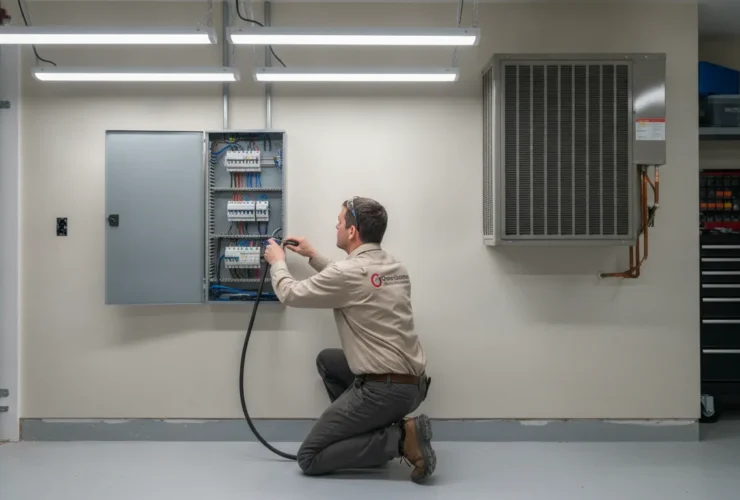
An electrician should evaluate whether your existing panel can support the charger load. That may include a formal load calculation, a review of available breaker spaces, and a check for signs that the panel is outdated or already overloaded. If capacity is available, the quote can stay focused on the new EV circuit. If not, the project may need a panel upgrade, load management equipment, or a different charger amperage.
If your home is already showing warning signs, read Pro-Tech-Power’s guide to an electrical panel upgrade in Portland. Related panel pricing is covered in the article on the cost to replace an electrical panel and wiring.
Cost Factor 2: Charger Amperage and Charging Speed
Level 2 chargers come in different amperage ratings. Common home charging setups may use a 40-amp, 48-amp, or similar circuit design depending on the charger and the vehicle. Higher amperage can add more miles of range per hour, but it can also require larger conductors, different breakers, and more available panel capacity.
For a homeowner, the practical question is not always “What is the fastest charger I can buy?” A better question is, “What charger fits my driving routine and my house?” If you typically charge overnight, a moderate Level 2 setup may be more than enough. If your household has two EVs, long commutes, or plans to add another charger later, it may be worth discussing future capacity during the quote.
For a deeper technical overview, see Pro-Tech-Power’s guide to Level 2 charger installation requirements.
Cost Factor 3: Hardwired Charger vs NEMA 14-50 Outlet
Homeowners often compare two common options: a hardwired wall charger or a plug-in charger connected to a NEMA 14-50 receptacle. Both can be appropriate when installed correctly, but they affect cost, flexibility, and long-term use.
Hardwired Level 2 charger
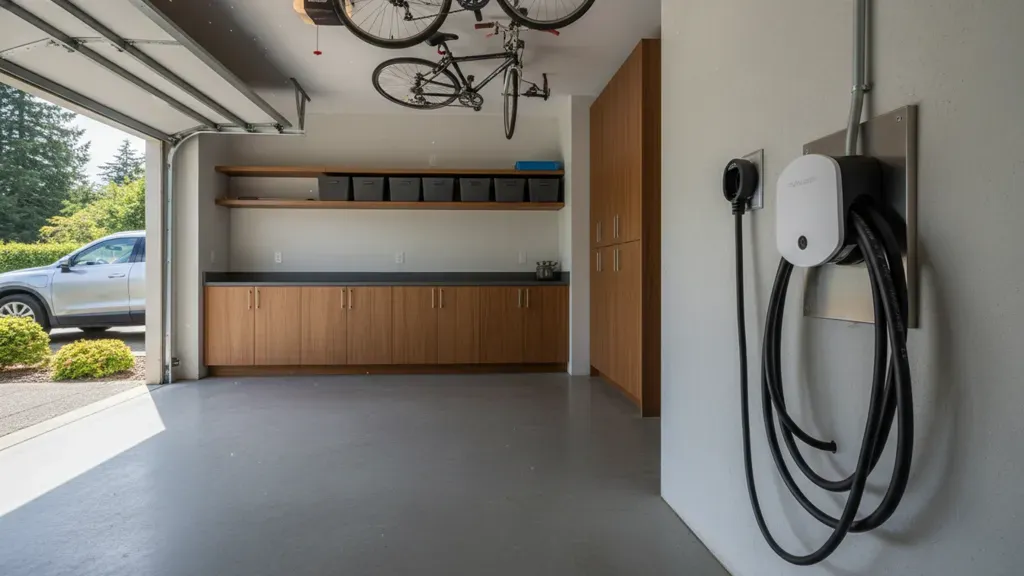
A hardwired charger is permanently connected to the electrical circuit. Many homeowners choose this route for a clean look, strong weather resistance, and support for higher output chargers where allowed. Hardwired equipment can reduce receptacle wear because there is no plug being removed and inserted over time.
NEMA 14-50 receptacle
A NEMA 14-50 setup gives you a 240-volt outlet that can support compatible plug-in chargers. This may appeal to homeowners who want flexibility or who already own a portable charger. The installation still needs the right breaker, wiring, box, weather protection if outside, and code-compliant GFCI protection where required.
The cheaper option on paper is not always the better option for the home. Ask your electrician to compare both paths based on your charger, panel, parking location, and future plans.
Cost Factor 4: Distance From Panel to Parking Spot
The distance between the electrical panel and the charger location can change the quote quickly. A charger mounted a few feet from the panel in an attached garage is usually far simpler than one across the house, outside on a driveway wall, or in a detached garage.
Longer distances can add:
- More copper wire
- More conduit and fittings
- More labor for routing through walls, crawl spaces, attics, or exterior surfaces
- Additional weather protection
- Trenching if the circuit must cross underground
- Repair or finish work if access points are required
This is why photos are helpful but not always enough for an exact price. A site review or detailed consultation lets the contractor see panel location, garage layout, parking location, wall access, and any obstacles that affect the final route.
Cost Factor 5: Oregon Permits and Inspection
Oregon has specific rules for electric vehicle charging systems. Under Oregon Administrative Rule 918-311-0065, a person installing an EV charging system must obtain a permit from the inspecting jurisdiction for the EVSE. The rule also states that EVSE permits include up to two inspections. Local handling may vary by city or county, so the right path depends on where the home is located.
For homeowners in Tigard, Beaverton, Portland, Lake Oswego, Tualatin, and nearby communities, the permit office may be different even when the homes are only a few miles apart. A qualified local electrician should know which jurisdiction applies and how to keep the job moving.
You can also review Pro-Tech-Power’s article on EV charging station code requirements for more context on code, safety, and inspection issues.
Cost Factor 6: Outdoor, Detached Garage, and Driveway Installs
Outdoor chargers can cost more than indoor garage chargers because the installation has to handle weather, physical protection, and safe routing. A driveway charger may need weather-rated equipment, exterior conduit, careful mounting, and added protection from vehicles or foot traffic.
A detached garage can be even more involved. The contractor may need to review whether the garage already has enough electrical capacity, whether a subpanel is present, and whether underground trenching is needed. These projects can be excellent long-term upgrades, but they need more planning than a charger mounted beside the main panel.
How Oregon Homeowners Can Keep Costs Under Control
The goal is not to buy the cheapest installation. The goal is to avoid paying for avoidable surprises. Before requesting a quote, gather a few details that help the contractor price the work accurately.
- Know your EV model and the charger you want to install
- Take clear photos of your electrical panel with the door open
- Measure the approximate distance from the panel to the parking spot
- Decide whether you want a hardwired charger or plug-in setup
- Share whether the charger will be indoors, outdoors, or in a detached structure
- Tell the contractor if you plan to add a second EV later
- Ask whether a panel upgrade, load management option, or lower amperage setup makes sense
If you are ready to compare options, request a Pro-Tech-Power quote. The team can review your home, charger goals, and electrical capacity before recommending the right path.
Should You Install a Level 2 Charger Yourself?
A Level 2 charger is not a basic plug-and-play home project. It involves 240-volt wiring, continuous load calculations, code requirements, permit rules, and safety considerations. Mistakes can create overheating, nuisance breaker trips, failed inspections, or damage to expensive equipment.
Oregon homeowners should use a licensed electrical contractor for Level 2 charger installation. A professional can size the circuit correctly, evaluate panel capacity, select the right materials, obtain the proper permit, and complete the job so it can pass inspection.
If you are still comparing contractors, Pro-Tech-Power’s electrician for EV charger installation guide explains what qualifications to look for and what questions to ask before hiring.
When a Panel Upgrade Changes the Budget
A panel upgrade can turn a simple EV charger project into a larger electrical improvement. That does not mean the charger is a bad idea. It means the home may need more capacity to support modern electrical loads safely.
Panel upgrades may be more likely when:
- The home has an older 100-amp panel
- The panel has no available breaker spaces
- Large electric appliances already use much of the available capacity
- The panel shows age, corrosion, heat damage, or other warning signs
- You plan to add more electrical loads later, such as a heat pump, hot tub, or second EV
In some homes, load management equipment may be an alternative to a full panel upgrade. In others, upgrading the panel is the cleaner and safer long-term choice. A site-specific quote should explain why one path is recommended over the other.
Sample Budget Scenarios
These examples show why two Oregon homeowners can receive very different quotes for what sounds like the same project.
Scenario 1: Attached garage with open capacity
The panel is in the garage, the charger will be mounted nearby, and the load calculation supports the added circuit. This is the scenario most likely to stay near the lower end of the installed cost range.
Scenario 2: Finished garage with a long wiring route
The charger location is across the garage or on a finished wall with limited access. The added cost comes from routing, materials, and labor rather than the charger itself.
Scenario 3: Detached garage
The parking location is not attached to the house. The project may involve trenching, subpanel evaluation, exterior conduit, and more inspection details. This can be a larger investment, but it may be the right long-term solution for daily charging.
Scenario 4: Older home that needs more capacity
The charger cannot be added safely without addressing panel capacity first. The EV charger becomes part of a broader electrical upgrade. This is often the highest-cost scenario, but it can also prepare the home for future electrical needs.
Questions to Ask Before You Approve a Quote
Before you approve a Level 2 charger installation quote, ask for clarity on what is included. A good quote should make the scope easy to understand.
- Is the charger hardware included or supplied by the homeowner?
- What amperage is being installed, and why?
- Does my panel have enough capacity?
- Is a permit included?
- Who schedules the inspection?
- Will the charger be hardwired or plug-in?
- What happens if the inspector requires a change?
- Does the quote include drywall repair, trench backfill, or finish work if needed?
- Is this setup ready for a future second EV?
Clear answers protect your budget and help you compare quotes fairly. A quote that looks cheaper may exclude permit handling, inspection coordination, long conduit runs, GFCI requirements, or panel work.
Why Choose Pro-Tech-Power for EV Charger Installation?
Pro-Tech-Power is a full electrical contractor based in Tigard, Oregon, helping homeowners across nearby communities including Portland, Beaverton, Tualatin, Lake Oswego, Sherwood, West Linn, and the surrounding Willamette Valley area. The company has helped local clients since 2013 and handles residential electrical projects from EV chargers to remodels, new construction wiring, and panel-related upgrades.
For EV charger installation, that broader residential experience matters. The right contractor needs to understand more than the charger. They need to understand load capacity, local code, safe routing, permit requirements, and how the project fits the rest of the home’s electrical system.
Homeowners in the metro area can also explore Pro-Tech-Power’s local pages for Tigard electrician, Portland electrician, and Beaverton electrician support.
Frequently Asked Questions
How much does it cost to install a Level 2 EV charger in Oregon?
A straightforward Oregon home installation often falls around $900 to $2,500 when the charger is near the panel and the panel has capacity. Longer wire runs, outdoor locations, detached garages, trenching, and panel upgrades can push the project several thousand dollars higher.
Does a Level 2 EV charger need a permit in Oregon?
Yes. Oregon rules require a permit from the inspecting jurisdiction for an EV charging system installation. The right jurisdiction depends on where the home is located, such as Portland, Tigard, Beaverton, or another city or county office.
Will I need a panel upgrade for a Level 2 charger?
Not always. Many homes can support a Level 2 charger with the existing panel. Homes with older panels, limited breaker space, or high existing electrical loads may need a panel upgrade or another capacity solution before adding the charger.
Is a hardwired charger cheaper than a NEMA 14-50 outlet?
Not always. The cost depends on the charger, circuit size, GFCI requirements, location, and materials. A plug-in setup can be flexible, while a hardwired charger may be cleaner and better suited for higher-output or outdoor installations.
Can I get an exact Level 2 EV charger quote without a site review?
Sometimes a contractor can provide a preliminary range with photos and details, but an exact quote often requires panel review, distance measurements, charger details, and a look at the installation location.
Get a Level 2 EV Charger Quote in Oregon
A Level 2 charger can make EV ownership much easier, but the safest and most cost-effective installation starts with a home-specific electrical review. The charger, panel, route, permit, and parking location all affect the final number.
For a clear quote in Tigard, Portland, Beaverton, or nearby Oregon communities, contact Pro-Tech-Power today. Tell the team about your EV, charger location, and electrical panel so they can help you plan the right installation.