
Generators
20kW Generator: Is It the Right Size for Your Home?
Pro Tech Power Corp
· 16 Min Read
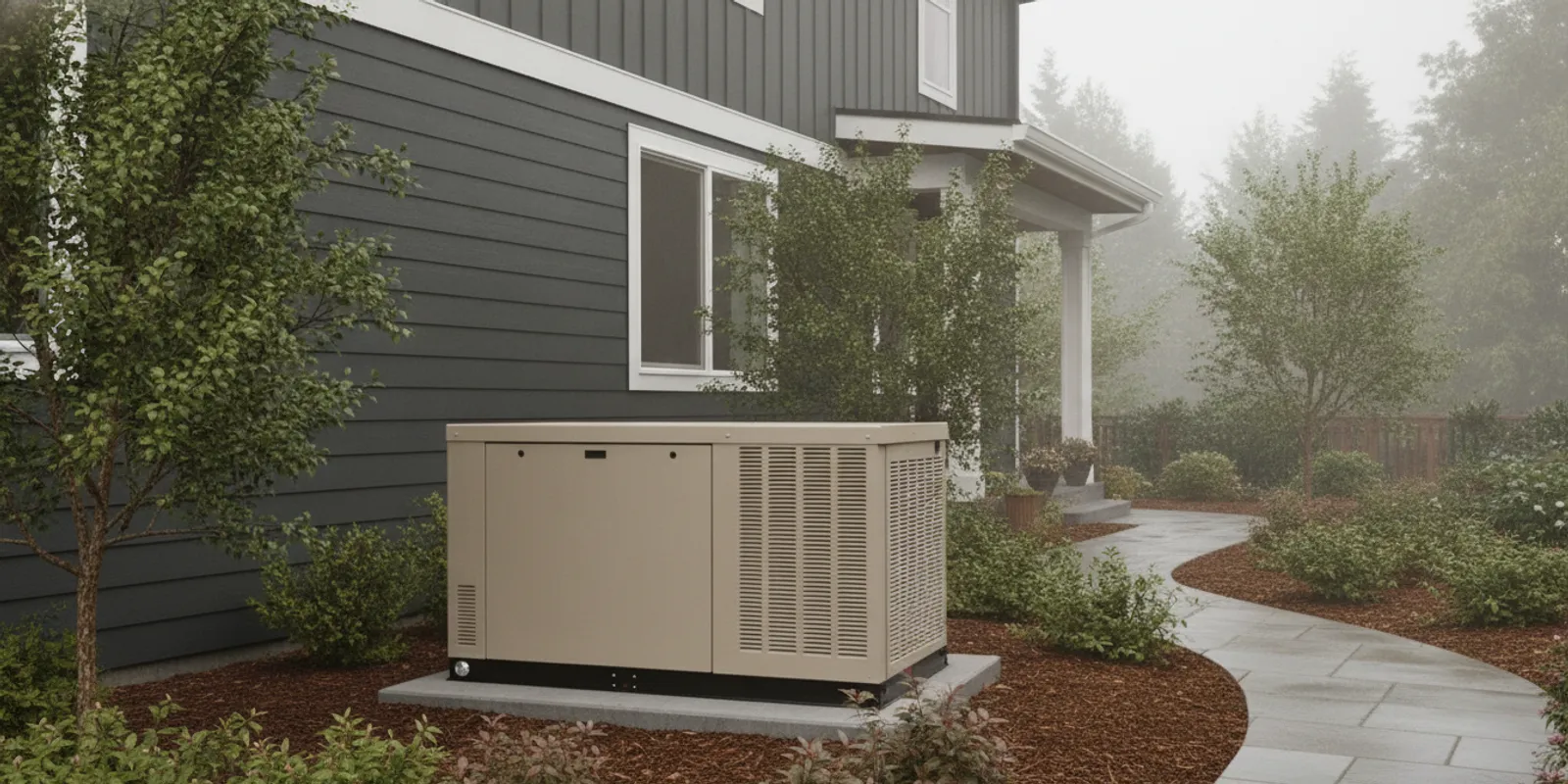
A 20kw generator can be a practical fit for a home that needs more than a few essential circuits, but the number alone does not tell you what it will run. The right choice depends on the loads you want powered at the same time, the starting demand of motors and compressors, your home’s electrical setup, and the available fuel supply. This guide shows how to assess those details before deciding whether 20kW belongs on your shortlist.
Discuss your home’s backup power plan
What does a 20kW generator rating tell you?
A generator rated at 20 kilowatts can produce up to 20,000 watts of electrical power under its specified operating conditions. That rating is a capacity limit, not a promise that every appliance in a home can run at once. Actual output and suitability depend on the specific unit, installation conditions, and the loads connected to it.
It helps to separate two ideas:
- Capacity: The amount of electrical demand the generator can supply at a given moment, within its rating.
- Energy use over time: How much fuel the system consumes while supplying connected loads. Runtime and fuel use depend on the model, fuel source, and how heavily it is loaded.
For a homeowner, the key question is not simply, “Is 20kW a large generator?” It is, “Can a 20kW model support the loads I consider essential, including the brief surge when equipment starts?” A 20kW unit may cover a carefully selected set of household loads, and in some homes it may support a broad share of normal use. It is not automatically a whole-home solution for every house.
Keep the distinction between a broad range of connected circuits and unrestricted simultaneous use in mind. A system can be connected to many of the home’s circuits while still requiring the household to stagger large appliances. An estimate should explain the expected operating plan instead of treating “whole home” as a promise that all equipment can run together without limits.
For a related example of how floor area does and does not predict capacity, see this guide to generator sizing for a 1,500-square-foot home. Square footage is only a starting clue; the appliances and circuits matter more.
Will 20kW run an entire home?
Sometimes, but “entire home” can mean different things. One homeowner may mean keeping heat, refrigeration, lights, internet, and a few outlets available. Another may expect to use electric cooking, multiple heating or cooling systems, laundry equipment, a hot tub, and an electric vehicle charger as if utility power were unchanged. Those plans can create very different peak demands.
A 20kW generator is more likely to meet a home’s needs when major loads are chosen deliberately and the equipment is compatible with the generator’s capacity. It may not support all large electric appliances operating together at full demand. The starting surge of an air conditioner, well pump, or other motor can also affect whether several loads can operate at the same time.
Consider three common planning approaches:
- Essential-load coverage: Select circuits such as refrigeration, lighting, communications, and a limited number of outlets. This can keep a smaller set of priorities available without trying to duplicate every normal household use.
- Managed household coverage: Include more circuits but use load controls, operating limits, or household routines to prevent high-demand equipment from running together.
- Broad whole-home coverage: Connect a wide range of circuits and expect normal use. This requires careful load calculations; the home may need more capacity, load management, or changes to expectations about simultaneous use.
These are planning categories, not a guarantee that any 20kW model will deliver a particular result. The model, transfer equipment, configuration, fuel conditions, and electrical characteristics of the house all matter. An on-site assessment and load calculation are better decision tools than a rule based only on bedrooms or square footage.
A useful way to test your expectations is to imagine an ordinary busy evening. Would the heating or cooling equipment, cooking appliances, refrigerator, lights, and other major items all be active? Which loads could wait for a short period? If your plan depends on everything running at once, tell the contractor before comparing equipment. If you can stagger laundry or another discretionary load, include that in the plan too. The goal is to describe actual priorities, not to guess a wattage from memory.
Which household loads should you count?
Begin with the appliances and systems you want available during an outage. Separate them into must-have loads, useful loads, and loads you are willing to postpone. That list makes the sizing conversation concrete and helps avoid selecting capacity that does not serve your priorities.
| Load group | Examples to review | Question for your plan |
|---|---|---|
| Daily essentials | Refrigerator or freezer, selected lights, internet equipment, basic outlets | Which circuits need to stay on continuously? |
| Comfort and water | Heating equipment, air conditioning, well pump, sump pump, water heating | Which items are electric, and which must operate at the same time? |
| Large appliance loads | Range, clothes dryer, dishwasher, hot tub, workshop equipment | Can use be staggered, or must these operate together? |
| Motor-driven equipment | Air conditioning compressor, pump, garage equipment | What starting demand does each unit create? |
| Future additions | Planned remodel, added cooling, expanded living space, new major equipment | Should the design leave room for a likely change? |
Do not assume that a list of appliance wattages alone is enough. The electrical contractor needs to understand how each item is connected, its nameplate information, and whether its motor or compressor creates a startup surge. When available, gather model numbers or photographs of equipment labels. A professional can use that information, along with panel and circuit details, to develop a more reliable picture.
For an initial inventory, walk through the house and record the equipment you would want available during a multi-hour outage. Note whether an item is gas or electric, whether it has a motor, and whether you would use it at the same time as other major appliances. Add a short reason beside each priority. “Keep food cold” or “maintain heat in occupied rooms” tells the contractor more about your goal than a bare appliance list.
Do not open electrical equipment or remove panel covers to gather information. Leave that work to a qualified professional. You can take label photos from a safe, accessible position if the labels are visible without moving covers or reaching into equipment. If the information is not readily available, make a note of the appliance type and ask the contractor what details are needed.
For a straightforward inventory, sort each item into one of three groups. Group one contains equipment that should remain available most of the time. Group two contains items that are important but can operate in sequence. Group three contains optional loads that can be left off during an outage. This makes tradeoffs visible before the equipment choice is made.
Why do starting loads affect the answer?
Some equipment needs a short burst of additional power when it starts. That initial demand is often called starting or inrush demand. Once a motor is running, its demand can be different from the moment it starts. If several high-demand items start together, the combined peak can challenge a generator even when their normal running loads appear to fit within its rating.
Air conditioning is a useful example. A home may have a cooling system whose running demand looks manageable on paper, yet the compressor’s startup characteristics still need to be considered. Pumps and other motors can raise the same question. Equipment documentation and a proper electrical assessment help establish what the system needs; guessing from the appliance category does not.
Ask whether the planned calculation considers both regular operation and startup. If the proposal includes an air conditioner, pump, or other motor-driven equipment, ask how the equipment’s specific data was reviewed. The answer should refer to the actual system or its documentation, rather than an assumed value for every appliance of that type.
Load management can help coordinate demand. Depending on the design, controls may prioritize certain equipment or prevent selected loads from operating together. That does not create extra generator capacity. It organizes the available capacity so that the household’s important loads can be supported more effectively.
Ask the installer to explain, in plain language, how the proposed setup handles the largest starting loads. Which items could be delayed or temporarily unavailable? What happens if two large loads call for power at once? A useful proposal should address those scenarios rather than relying only on a single headline capacity number.
It is also worth asking what a household member will notice when a load is delayed. Will a control prevent one appliance from starting until another finishes? Will the household need to avoid using two particular items together? The answers help you decide whether the operating arrangement fits your routines. A technically workable configuration is most useful when its limits are clear and acceptable to the people who will use it.
What household details can change the recommendation?
Two homes with similar floor plans can have very different electrical demands. One may use gas for cooking and heat, while another depends on electric equipment for both. A well pump, central cooling, multiple heating zones, a finished basement, or a workshop can shift the load picture. The size of the house gives context, but it cannot replace an inventory of actual electrical loads.
Think through these questions before a site visit:
- What must remain available? Rank needs such as food preservation, heat, water pumping, medical equipment, communications, lighting, and work-from-home essentials. If equipment supports a health need, discuss its electrical requirements with the equipment provider and the installer.
- Which large loads are electric? Identify cooking, water heating, space heating, clothes drying, cooling, and other high-demand equipment. Fuel type affects electrical demand, but any fuel system must also be evaluated for suitable operation.
- What can be scheduled? Decide whether laundry, cooking, or other discretionary tasks can wait while another large load runs. A realistic household plan can affect the needed capacity.
- What may change soon? A remodel, new addition, replacement heating equipment, or another major electrical project can change future demand. Mention planned work before equipment is selected.
- How long do you want to maintain these priorities? The backup plan should reflect the household’s likely needs during a short interruption as well as a longer one.
Think about household members who may have different expectations. One person may assume the kitchen and laundry equipment will remain available, while another may prioritize heat, refrigeration, and communications. Agreeing on priorities before an estimate helps prevent a mismatch between the design and day-to-day expectations.
For broader product-selection considerations beyond capacity, review the standby generator buyer’s guide. This article focuses on whether a 20kW size fits your load plan; model features and installation decisions should be considered separately.
How do fuel supply and installation conditions fit in?
Choosing a generator rating is only one part of planning. The installation must also account for the proposed model’s fuel requirements, the capacity and layout of the available supply, the generator location, the transfer equipment, and the way the generator connects to the home’s electrical system. Those details are specific to the property and selected equipment.
A generator cannot deliver a dependable result if the rest of the installation is not designed for the intended load. Fuel supply should be evaluated for the generator’s requirements and the other equipment that may use the same source. The electrical connection and transfer arrangement must also be matched to the home and generator. A qualified installer can identify the information needed and coordinate these details.
Fuel type is not a shortcut for deciding whether a particular capacity will work. The selected model’s specifications and the actual supply available at the property matter. If the home’s fuel supply is shared with other appliances, ask how the proposed arrangement will be checked for the generator’s needs while those appliances are operating. Keep the discussion tied to the proposed equipment rather than broad assumptions about one fuel type.
Placement is another practical consideration. The unit needs an appropriate outdoor location that accounts for manufacturer instructions, clearances, ventilation, access, sound, and local requirements. Do not choose a spot based only on appearance or convenience. A professional should assess the property and verify what applies to the specific equipment and location. For another planning perspective, read this overview of generator placement considerations.
Permitting and inspection requirements can vary by jurisdiction and project. Ask who will confirm the local requirements and how the planned work will be documented. Avoid relying on a neighbor’s installation as proof that the same arrangement is appropriate for your home.
Pro Tech Power installs whole-home generator systems and is an authorized Cummins Onan dealer. Its generator options are Kohler and Cummins. To understand the product comparison separately from size, read the Kohler and Cummins whole-home generator comparison. Pro Tech Power also works as an electrical contractor for residential and commercial customers; the generator installation is one part of that broader electrical work.
For general consumer safety information, consult the U.S. Consumer Product Safety Commission and look for current guidance relevant to home generators and electrical equipment. Follow the generator manufacturer’s instructions and the direction of qualified professionals for the specific installation.
What should you compare when considering 20kW?
Do not compare proposals by capacity alone. Confirm that each option is based on the same household priorities and assumptions. A proposal that covers a carefully selected set of circuits is not directly equivalent to one that assumes broad whole-home use.
| Planning item | What to confirm | Why it matters |
|---|---|---|
| Load calculation | Which circuits and major appliances were included? | Shows what the capacity recommendation is designed to support. |
| Starting demand | How are compressors, pumps, and other motors accounted for? | Helps reveal whether simultaneous starts could exceed the planned capacity. |
| Load management | Are controls proposed, and which loads may be limited or sequenced? | Sets realistic expectations about how the home operates on backup power. |
| Fuel and connection | What must be verified about the fuel supply, transfer equipment, and electrical connection? | Confirms the installation can support the selected configuration. |
| Property work | What site preparation, placement, permits, or coordination may be needed? | Identifies project conditions beyond the generator unit itself. |
| Future plans | Does the design account for planned changes to the home? | Helps avoid choosing equipment around a load list that will soon be outdated. |
Ask for the expected operating plan in writing. It should identify what is intended to run, what may be restricted, and any assumptions about how household members use large appliances. A clear scope is more useful than an unqualified promise that a particular kilowatt rating will power “everything.”
When comparing two proposals, check whether both use the same list of essential loads and the same assumptions about simultaneous use. If one includes air conditioning and another does not, the capacity figures do not describe the same result. If one assumes load controls and another does not, ask what that changes for the household. A side-by-side comparison should make these differences obvious.
Also separate the equipment choice from the complete installation. Ask what is included in each proposal, what property conditions remain to be checked, and who will confirm any required coordination. The goal is not to compare a generator’s nameplate rating in isolation. It is to understand how each proposed system would meet your priorities at your home.
When could 20kW be too small or more than you need?
A 20kW system could be too small if the home has several large electric loads that the household expects to use simultaneously, particularly when motors or compressors have significant starting demands. The risk is greater when the desired backup plan closely mirrors normal utility-powered use and there is little flexibility to stagger equipment.
On the other hand, a 20kW model could be more capacity than necessary if the homeowner wants only a short list of essential circuits and is comfortable postponing high-demand tasks. That does not mean a smaller unit is automatically the better choice. The total installed design, future needs, model availability, site conditions, and preferred level of convenience all belong in the decision.
Use this decision sequence:
- Define the outcome. Write down what you expect backup power to accomplish, not just the equipment you hope to buy.
- List the loads. Identify essential and optional circuits, with appliance details where available.
- Check simultaneous use. Mark which large items may operate at the same time and which can be sequenced.
- Assess starting demand. Have the equipment and electrical setup evaluated rather than estimating from memory.
- Review the complete installation. Consider the generator, connection, fuel, location, and applicable local requirements together.
- Compare the operating plan. Make sure the proposed capacity matches what you actually want to use during an outage.
If you are still comparing possible sizes, the whole-home generator installation page explains how to begin a project conversation. A 20kW rating should be treated as a candidate to evaluate, not a final answer before the home’s load and site conditions are reviewed.
What should you ask an electrical contractor?
A focused consultation can help you determine whether 20kW belongs on your shortlist. Bring your priority list, photos of equipment labels if convenient, and any known information about the electrical panel or planned home improvements. You do not need to perform electrical measurements yourself.
- What loads does your recommended size support, and which loads are excluded?
- How did you account for motor starting demand and simultaneous use?
- Would load management improve the plan, and what would it control?
- What should we expect when major equipment is running?
- Does the proposed model fit the site and fuel supply?
- What property work or coordination may be required before installation?
- How would a planned remodel or new appliance affect today’s recommendation?
- What details will be included in the written scope and operating instructions?
Answers should connect the recommendation to your household’s actual requirements. If the only explanation is that 20kW is a common size, ask how that conclusion applies to your loads, equipment, and preferred way of using the home during an outage.
It can help to ask the contractor to walk through one or two realistic use cases. For example, ask what happens when the cooling system and a pump start while the refrigerator is running. Then ask how the setup responds if another major appliance is switched on. You are looking for an understandable explanation of the expected system behavior and any limits—not a guarantee that every combination of equipment will work.
Pro Tech Power is an electrical contractor serving residential and commercial customers across the region, in addition to its whole-home generator installation work. You can review its regional coverage information and then contact the team to discuss a home-specific assessment. Other electrical work may also be relevant if an assessment identifies panel or circuit considerations, but those needs should be evaluated for the individual property.
Frequently asked questions
Is a 20kW generator enough for a typical home?
There is no single answer based on the word “typical.” A 20kW generator may support a broad set of household needs when loads are selected and managed appropriately, but the right fit depends on appliances, starting demand, fuel supply, and expected simultaneous use. A load assessment is the reliable way to decide.
Can a 20kW generator run central air conditioning?
It may be possible, but the specific cooling equipment’s electrical requirements and starting characteristics must be reviewed alongside other loads. The generator model and configuration matter too. Ask the installer to explain how the cooling system fits within the proposed load plan and what other equipment may need to be limited while it runs.
Does a 20kW rating mean I can run every appliance at once?
No. The rating describes generator capacity, not unlimited simultaneous use. Large appliances, motors, and compressors can make combined demand higher than expected. Some installations use load controls or household operating limits to manage demand.
Is house size enough to choose a generator?
No. Floor area can provide context, but two homes of similar size can have very different appliances, heating systems, electrical equipment, and usage plans. Start with the loads you need during an outage and have the electrical characteristics reviewed.
What information should I gather before asking about a 20kW generator?
Make a prioritized list of the circuits and appliances you want available. Note which large loads are electric, which may run together, and whether you have planned home improvements. Model numbers or label photos can help, but do not remove panel covers or open electrical equipment to collect information.
Request a generator planning conversation
What is the best next step?
Before selecting a 20kW generator, define your essential loads, decide which high-demand items can be scheduled, and have the home’s electrical demand and installation conditions assessed. That process will show whether 20kW is a sound fit, whether a different capacity makes more sense, or whether a managed-load plan can meet your priorities. A home-specific recommendation is the best basis for a dependable backup-power decision.
A clear load plan makes it easier to choose equipment that matches your home and the way you expect to use it when utility power is unavailable.