
Generators
Generator Placement Requirements Oregon Homeowners Must Follow
Pro Tech Power
· 13 Min Read
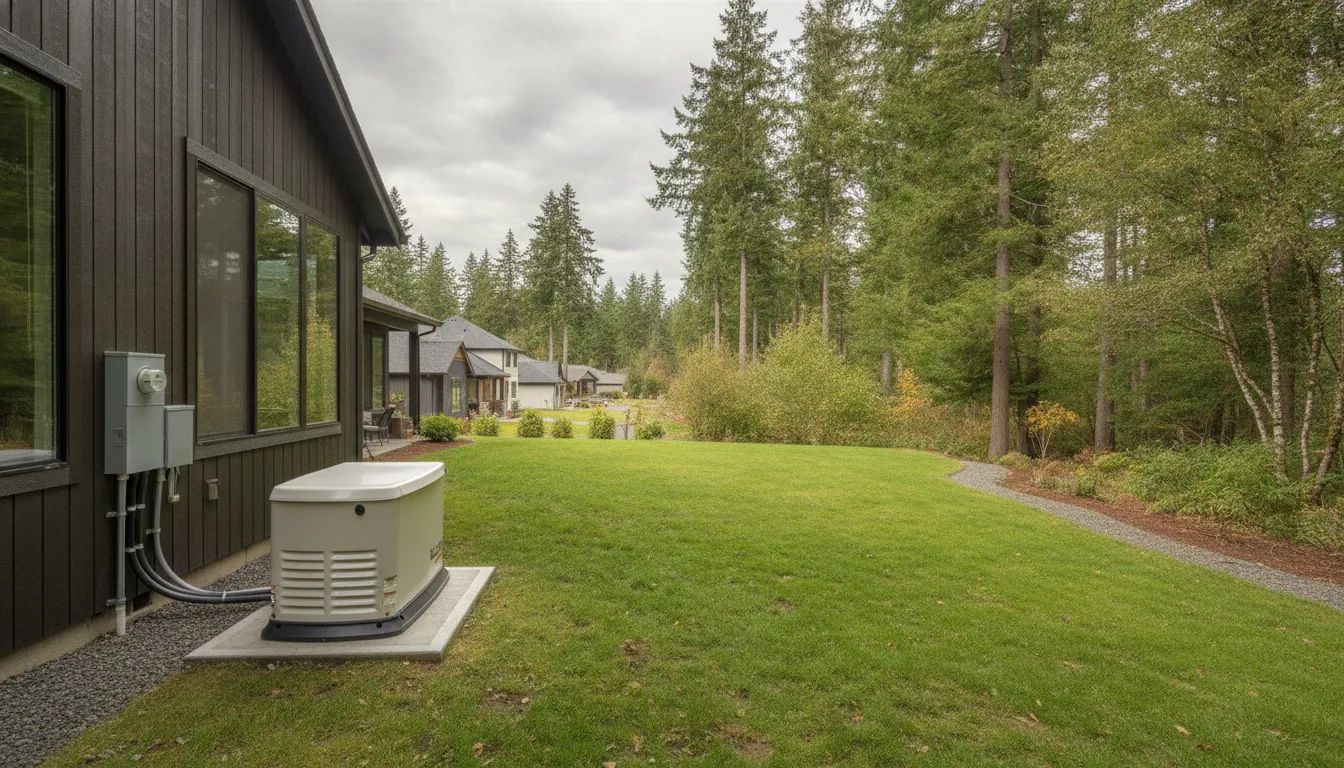
A standby generator can protect your Oregon home during an outage, but safe installation involves more than choosing a location beside the house. Clearances, a stable pad, fuel piping, electrical connections, and local permits all need to work together. The system must be ready to operate before the generator is commissioned.
Generator placement requirements Oregon homeowners should plan for include code-compliant clearance from windows and doors. A level support pad, properly sized fuel and electrical connections, and an approved transfer switch. Oregon also requires an electrical permit for this work, which should be completed by a properly licensed electrician. Oregon Building Codes guidance explains that a transfer switch helps prevent dangerous backfeeding. Backfeeding can energize utility lines during an outage.
Contact Pro Tech Power Corp at 503-780-6207 to discuss your property’s generator placement requirements and schedule a site assessment.
The right placement starts with the property itself. Wall openings, overhangs, decks, grade, and access for installation can all affect the final location. Reviewing those conditions first makes it easier to plan a successful Kohler whole-home generator installation. It will be safe, practical, and ready for inspection.
What Are the General Generator Placement Requirements for Oregon Homes?
Choosing a location for a standby generator involves more than finding an open space beside the house. The site must allow safe exhaust ventilation, access for installation, and enough room for heat to dissipate. Confirming generator placement requirements Oregon homeowners should know begins with a professional site assessment, especially when planning a Kohler whole-home generator.
Oregon’s adopted codes, including NFPA 37, require at least 5 feet between the generator and any window, door, or wall opening. The unit also needs 36 inches of service clearance at the ends and front, and 48 inches above for exhaust and heat dissipation. The equipment must sit on a level, reinforced concrete pad with proper drainage. Every installation is subject to the manufacturer’s specifications and local jurisdictional requirements.
Maintain clearance from openings and structures
NFPA 37 guidance generally requires all parts of a standby generator to be at least 5 feet from windows, doors, and other wall openings. That separation helps keep exhaust away from areas where it could enter the home. The standard is an important reference point, but the equipment manufacturer’s installation instructions and the authority having jurisdiction also matter. Review the NFPA 37 standard with your installer before selecting the final location.
Plan for at least 36 inches of clearance at the generator’s ends and front. The top of the unit should have a minimum of 48 inches from an overhang, wall projection, or other structure. These distances help preserve airflow around the enclosure and leave room for safe installation and inspection. A generator should not be tucked beneath an enclosed deck, where exhaust and heat can become trapped.
| Clearance Type | Minimum Distance | Notes |
|---|---|---|
| Windows, doors, wall openings | 5 feet | NFPA 37 standard for exhaust safety |
| Structure with 1-hour fire-rated wall | 18 inches | Only when equipment is listed for this configuration |
| Generator ends and front | 36 inches | Required for service access and airflow |
| Top clearance from overhang | 48 inches | Prevents heat and exhaust accumulation |
| Shrubs and vegetation | 12 inches or less | Taller plants block airflow and trap heat |
Account for fire-rated walls, landscaping, and airflow
Some approved generator installations may allow placement as close as 18 inches from a structure when the adjacent wall has the required 1-hour fire rating and the specific equipment is listed for that configuration. This is not a blanket rule for every generator or wall. A Kohler installation must follow the exact clearance chart and instructions for the selected model.
Keep shrubs and other vegetation more than 12 inches high away from the generator area. Plants can restrict airflow, collect heat, and make future access difficult. The site should also remain clear enough for the electrician to connect the transfer equipment, route fuel safely, and complete required inspections.
For a coordinated site review, see our whole-home generator installation options. A qualified installer can compare the Kohler unit’s specifications with your lot, wall construction, and openings. They will evaluate the deck layout and local permitting requirements before work begins.
What Concrete Pad Specifications Does a Standby Generator Need?
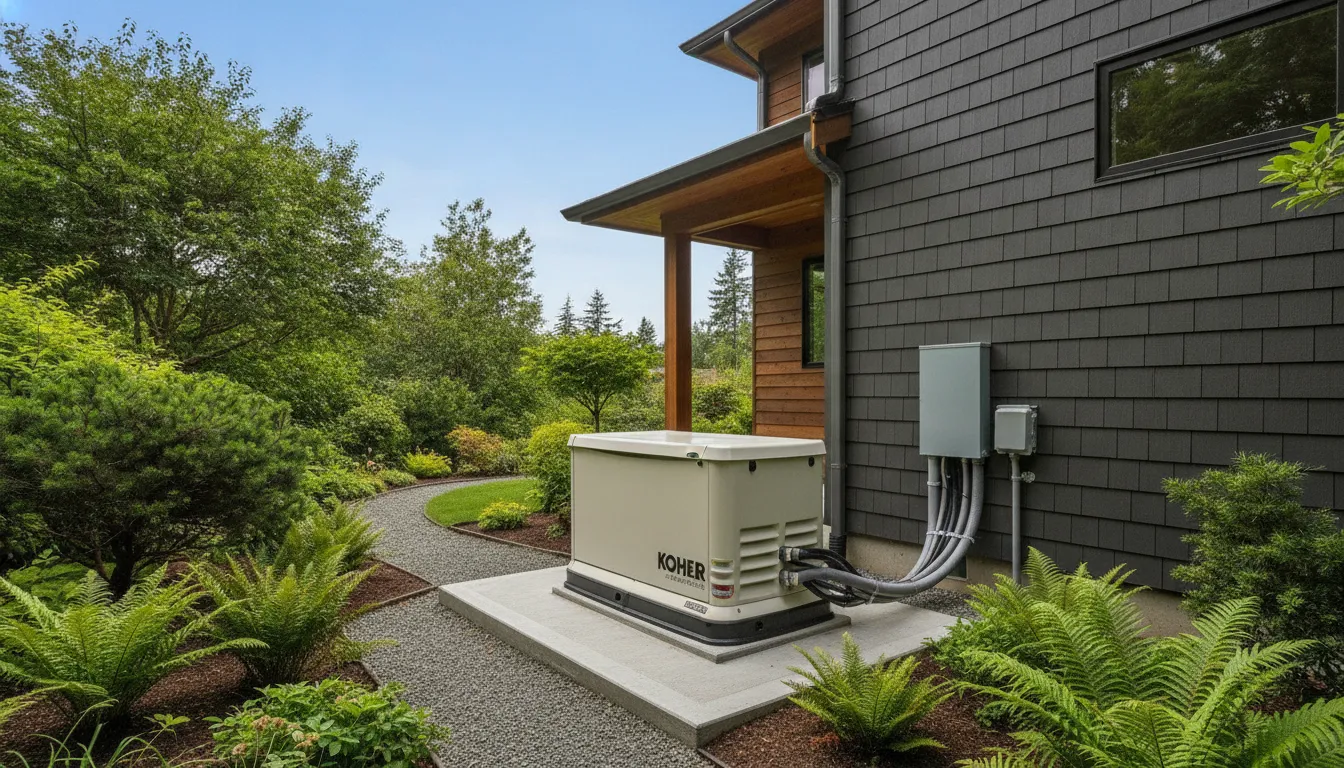
A standby generator needs a stable base that can carry its equipment weight, limit vibration, and keep the enclosure out of standing water. A level, reinforced concrete pad is typically the right foundation for a Kohler whole-home generator. The pad should extend slightly beyond the generator footprint on every side. Leaving enough room for secure mounting and installation access without creating an oversized surface that complicates drainage.
A residential standby generator pad is typically 4 to 6 inches of reinforced concrete, slightly larger than the generator footprint, and raised above surrounding grade to allow drainage. The pad must be level and designed for the generator’s weight and vibration. In Oregon’s climate, the installer should also evaluate frost heave risk and prepare the sub-base accordingly.
Build for weight, vibration, and drainage
For many residential installations, the concrete pad is approximately 4 to 6 inches thick. The final thickness and reinforcement should be selected for the generator model, soil conditions, and site layout rather than treated as a universal measurement. Reinforcement helps the pad resist cracking as the generator operates and as seasonal ground conditions change. The finished surface must be carefully leveled so the generator sits correctly and does not place uneven stress on its frame or connections.
Set the pad above surrounding grade so rainwater can drain away instead of pooling beneath the generator. This matters in the Portland area, where wet conditions can saturate soil around the equipment. A qualified installer should also evaluate the site for frost heave. Expanding and contracting ground can shift an inadequately prepared base, potentially affecting clearances, fuel connections, conduit, and the generator’s level position. Soil preparation, drainage, and any required anchoring should be addressed before concrete is placed.
Coordinate the pad with the complete installation
The pad is only one part of the placement plan. Its position must work with required clearances, the transfer switch, electrical conduit, fuel routing, service access, and local inspection requirements. A licensed electrician can confirm the Kohler generator’s dimensions and weight, coordinate the pad installation, and verify that the finished location supports the complete system. This planning prevents a common problem. Pouring a pad first and discovering later that the generator cannot meet clearance or connection requirements is a scenario best avoided.
For a broader view of the site-planning process, review this generator installation requirements guide. Pro Tech Power Corp can evaluate your property and plan a whole-home generator installation suited to Oregon conditions.
Fuel Supply and Gas Line Routing for Home Generators
Choosing the fuel source is an important part of planning a standby generator in Oregon. Natural gas is often convenient when a home already has a dependable gas service, while propane can be a practical option for properties without a suitable natural-gas connection. For more detail on comparing these fuel options, read our dedicated generator fuel options Oregon guide.
The fuel supply must support at least two hours of continuous full-load generator operation. Gas-line sizing depends on the generator’s BTU demand, pipe length, routing, and existing appliance loads. Natural gas and propane installations each have different pressure and piping requirements. A licensed contractor should size, route, and test the gas connection before the generator is commissioned.
- Confirm the available fuel source. The installer evaluates the natural-gas meter and existing piping, or confirms that a propane tank and regulator can support the generator. The fuel supply must be capable of at least two hours of full-load operation, so the calculation should reflect the generator’s actual demand rather than normal household usage.
- Calculate the gas-line requirements. Gas-line sizing is based on the generator’s BTU load and the total distance from the meter or regulator to the unit. Pipe diameter, routing, fittings, pressure, and the demand of other gas appliances all matter. A line that appears adequate at the meter may not deliver the required pressure at the generator if the run is long or undersized.
- Plan a safe route to the generator. The gas connection should be coordinated with the generator location, clearances, pad, utility routes, and access for inspection. Routing should avoid unnecessary bends and protect the line from physical damage. The final layout also needs to work with the manufacturer’s installation requirements and applicable Oregon codes.
- Install and test the connection professionally. A licensed contractor completes the gas-line connection, confirms fittings and shutoff components, and tests the system before commissioning the generator. Pro Tech Power Corp coordinates the gas-line connection as part of the generator installation, reducing the risk of an unsafe handoff between separate electrical and gas contractors.
Fuel planning should happen before the equipment is ordered. Resolving capacity, distance, and routing issues early helps the installation team deliver dependable standby power without forcing last-minute changes to the site plan.
Electrical Connections and Automatic Transfer Switch Requirements
A standby generator must connect to a home’s electrical system through approved equipment, not through an improvised cable or direct connection to a panel. Oregon’s Electrical Specialty Code requires a transfer switch or another approved safety device for generator connections. The state also warns that improper backfeeding can energize downed utility lines, endangering utility workers and the public. Read Oregon’s generator connection guidance for the underlying safety requirement.
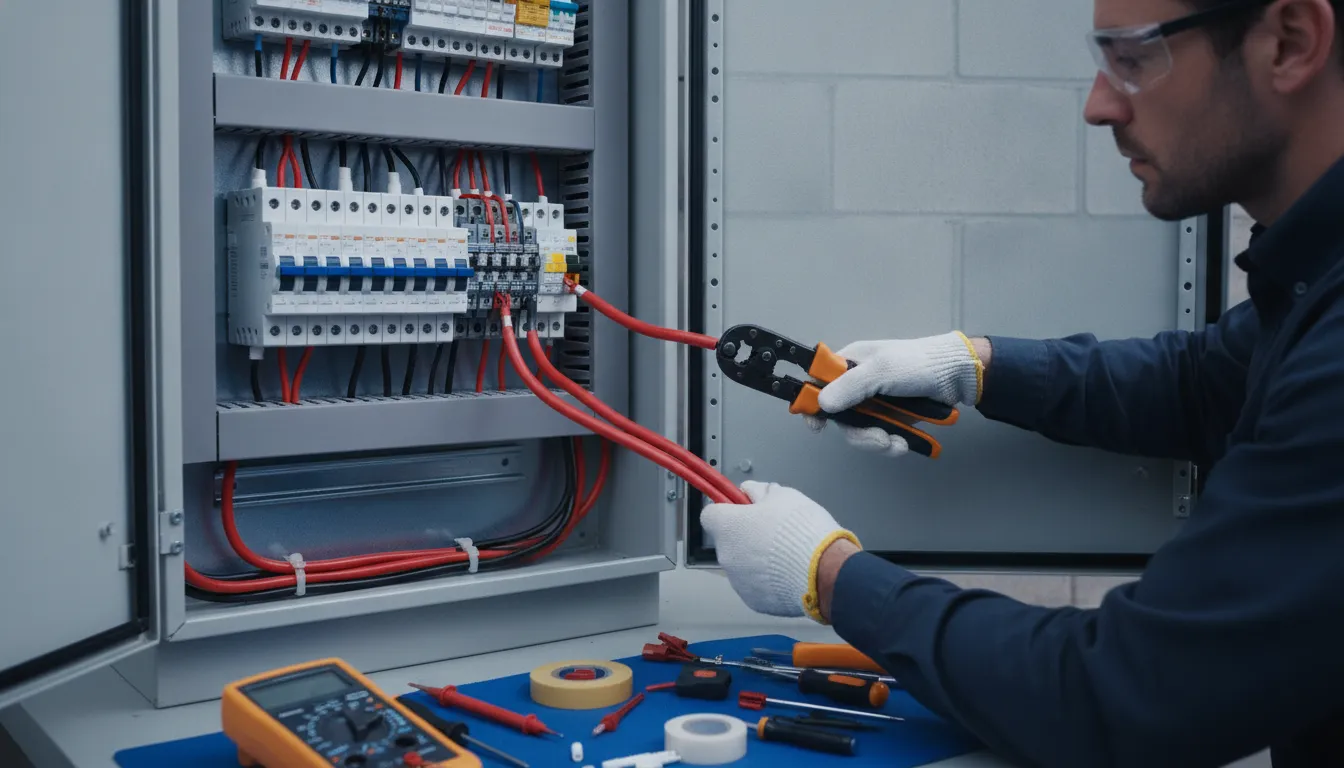
Oregon code requires a transfer switch to isolate the generator from the utility supply when the generator is active. The switch can be automatic or manual, but it must be listed for the application and installed by a licensed electrician. The generator, transfer equipment, conductors, and overcurrent protection must all be sized together as one system to prevent overloads and safety hazards.
How an automatic transfer switch protects the electrical system
An automatic transfer switch (ATS) monitors the utility supply and changes the home’s source of power when an outage occurs. It isolates the generator from the utility before generator power reaches the home’s circuits. When utility power returns, the switch transfers the load back and allows the generator to shut down according to the equipment’s operating sequence. This separation is what prevents generator power from traveling backward into utility lines. For more on how ATS equipment works alongside your home’s system, see our automatic transfer switch guide.
Some installations use a manual transfer switch, depending on the generator and the home’s design. The key requirement is that the equipment provide reliable isolation and be listed for the application. A licensed electrician should select and install the switch rather than treating it as a do-it-yourself panel accessory.
Load sizing, critical-load panels, and disconnects
The generator, transfer equipment, conductors, overcurrent protection, and connected loads must be sized as one system. An electrician evaluates the home’s expected demand, starting loads from motors and pumps, and the generator’s available capacity. Installing a generator that is too small can cause nuisance shutdowns or overloads, while undersized conductors or protection create a serious hazard.
Many homes use a dedicated sub-panel for critical loads such as a refrigerator, heating system, sump pump, medical equipment, or selected lighting and receptacle circuits. This approach keeps the backed-up load within the generator’s capacity. A whole-home system may instead transfer the main service, but that requires equipment and service ratings designed for the full load.
Disconnecting means, grounding and bonding, conductor protection, and panel labeling must also meet the applicable electrical requirements. The exact arrangement depends on the service configuration and generator model. For a broader overview of equipment choices and backup planning, see our backup generator guide.
Oregon requires a permit for this installation work, and the state’s guidance says it should be performed only by a properly licensed electrician. Professional installation helps ensure the transfer switch, sub-panel, disconnects, and load calculations work together safely.
What Permits and Inspections Are Required for Oregon Generator Installation?
Permitting is part of a safe, code-compliant generator installation in Oregon. The Oregon Building Codes Division states that generator connection work requires an electrical permit and should be completed by a properly licensed electrician. The permit is obtained through the local building jurisdiction, so requirements can vary between Portland, Tigard, Beaverton, and other Portland metro communities. See the Oregon Building Codes Division generator connection guidance for the statewide requirement.
Oregon requires an electrical permit for any generator connection work, with additional building, fire, plumbing. Or mechanical permits possible depending on the site and fuel type , especially in Portland where BCG 99-10 may apply. A licensed electrical contractor like Pro Tech Power Corp (CCB#198878) can coordinate permits, schedule inspections, and ensure the installation meets all local requirements.
What the inspector reviews
During inspection, the authority having jurisdiction may verify that the installation follows the Oregon Electrical Specialty Code and approved plans. Typical review points include the generator’s clearances from openings and structures, the automatic transfer switch, grounding and bonding, conductor protection, and fuel connections. The inspector may also check that the equipment is accessible, properly supported, and installed according to the manufacturer’s instructions.
The transfer switch is especially important. Oregon requires a transfer switch or another approved safety device to prevent unsafe backfeeding. Without proper isolation, a generator can energize lines thought to be de-energized, creating a serious hazard for utility workers and the public.
Who can pull the permit?
Generator electrical work and permit responsibilities should remain with a properly licensed electrical contractor. Pro Tech Power Corp performs whole-home generator installation in the Portland-area market and identifies its contractor license as CCB#198878. A licensed installer can coordinate the permit process, schedule inspections, resolve jurisdiction questions, and document that the Kohler system was installed to applicable Oregon and local requirements.
Frequently Asked Questions
How far must a standby generator be from windows and doors in Oregon?
A common placement standard is at least 5 feet from windows, doors, and other wall openings. The unit also needs adequate clearance at its ends, front, and top for airflow, exhaust, service access, and heat management. Confirm the exact clearances in the installation manual for the selected Kohler model and with the local jurisdiction before work begins.
Does a standby generator need a concrete pad in Oregon?
Yes, a standby generator should sit on a level, reinforced concrete pad that supports its weight and resists vibration. The pad is typically several inches thick, slightly larger than the equipment footprint, and raised enough to reduce water pooling. Site conditions, drainage, soil, and the manufacturer’s specifications determine the final pad design.
What electrical permits are required for generator installation in Portland, Oregon?
Oregon requires an electrical permit for generator installation, and the work should be completed by a properly licensed electrician. Portland projects may also require additional building, fire, plumbing, or mechanical permits depending on the equipment and fuel connection. The inspector may review clearances, grounding, transfer-switch installation, and fuel connections. Oregon BCD guidance confirms the electrical permit requirement.
Can I install a whole-home generator near my property line?
Possibly, but a property-line location must satisfy local setbacks, fire-safety rules, utility requirements, and the generator manufacturer’s clearances. A location that fits the lot may still be too close to an opening, overhang, fence, or neighboring structure. Have the installer confirm the proposed site with the local building authority before pouring the pad.
Why is a transfer switch required for a home generator in Oregon?
A transfer switch isolates the generator from the utility supply and helps prevent dangerous backfeeding. Without proper isolation, a generator can energize downed utility lines and endanger utility workers or the public. Oregon electrical guidance requires a transfer switch or equivalent safety device for home generator connections. Oregon BCD generator guidance explains this requirement.
Ready to Schedule Your Generator Installation?
Proper placement, pad preparation, fuel routing, electrical connections, and permits all work together for a dependable whole-home generator installation. Pro Tech Power Corp can review your Oregon home’s requirements and help you plan the next step. Call 503-780-6207 to schedule a generator installation consultation.