

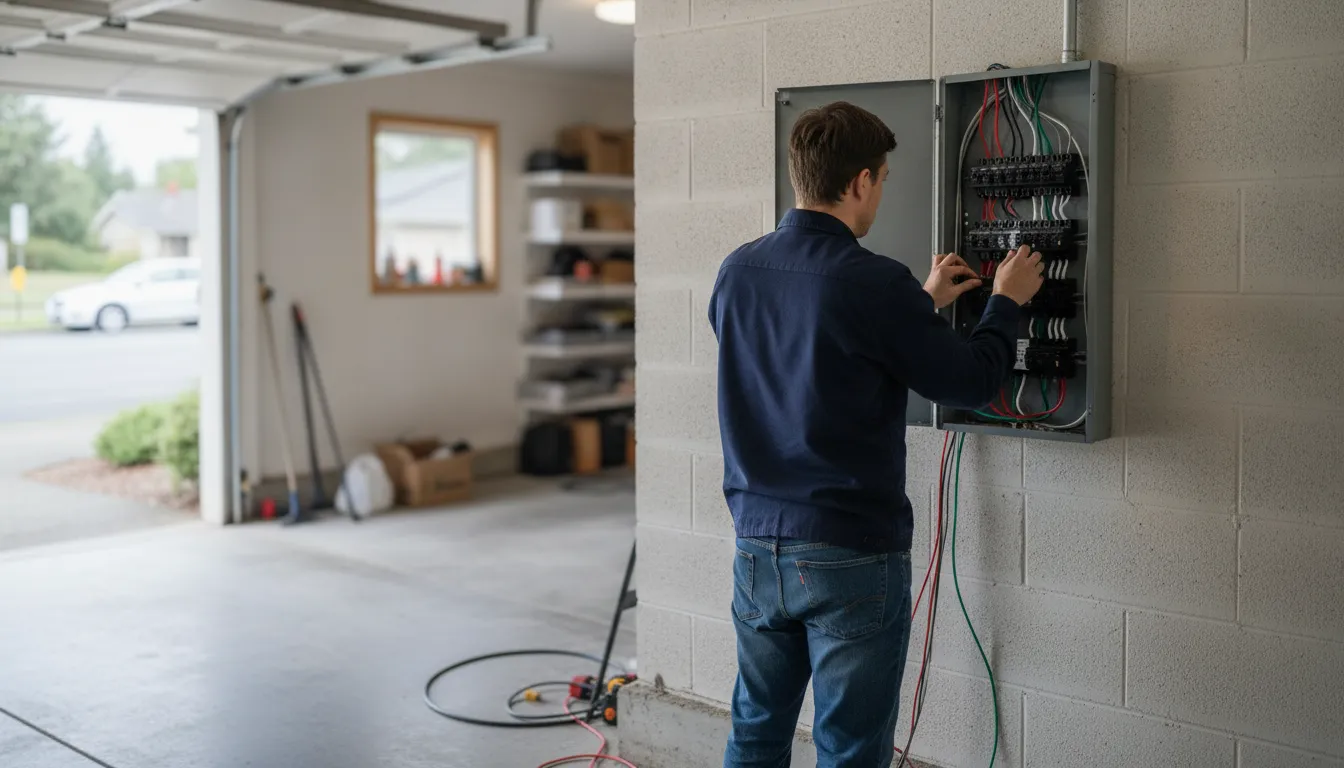
A 200 amp upgrade cost is rarely the price of a new panel alone. The number moves with the path power takes into the house. It also moves with the condition of the meter and mast. The utility has work to do before the power can come back on. Two homes can both need 200 amps and still land on very different quotes.
This guide covers the utility-side pieces that change that price. It also shows how to read a written estimate so you compare the same job. For the broader panel decision, start with panel upgrade planning. That page covers when an older Oregon home is ready for more capacity.
Request a quote for a capacity review, or call (503) 780-6207.
What a 200 amp upgrade includes
A 200-amp upgrade raises the power the utility can deliver to the building. It is not the same job as swapping a worn panel for a new one of the same size. It is also not the same as adding one new circuit.
On a typical house, the work can include all of the following.
- A new 200-amp panel and main breaker.
- A new meter base, if the old one cannot accept the larger rating.
- New utility conductors from the weatherhead or riser to the meter and panel.
- The mast and weatherhead on an overhead run.
- The conduit and trench on an underground run.
- Grounding and bonding brought up to the current Oregon Electrical Specialty Code.
- A permit, an inspection, and a utility disconnect and reconnect.
The quote is really pricing which of those items your house needs. A sound meter and a short, accessible overhead drop make a smaller job. A 1950s fuse panel behind a finished wall, with a short mast, costs more.
Pro Tech Power is an electrical contractor for homes and businesses. The work includes panel upgrades, remodels, patio heaters, and whole-home generator installation. The useful next step is an on-site look at the panel and the overhead run. A single statewide price will not tell you what your house needs.
What changes the price before the panel opens
Most of the swing in a 200 amp upgrade cost happens outside the breaker box. Ask about these items before you compare numbers.
Overhead or underground
An overhead run uses a mast, a weatherhead, and a connection the utility can reach from the pole. A tall, sound mast with a legal attachment point is often the simpler path. A short or rusted mast, or roof work around it, makes the quote grow.
An underground run avoids the mast. It can add conduit, a trench, and coordination with whoever owns the buried lateral. Rocky soil, a long run, or a driveway that must be cut and patched can cost more than the panel. Do not assume underground is automatically the premium option. The length and the surface you cross decide it.
Meter base and utility equipment
Many older meter sockets were built for 100 amps or less. A 200-amp panel usually needs a meter socket rated for that load. Some homes also need a meter-main, which combines the meter and the first disconnect. A cracked, unlisted, or rejected socket gets replaced as part of the upgrade.
That is a different scope from a panel-only change. If you are weighing a combined meter and disconnect against a panel that stays put, read the meter-main panel installation guide. It walks through what that equipment includes.
Where the panel sits
A panel in an open garage or a clear utility room is faster to replace. A closet, a finished wall, or a spot above a stair takes longer. Relocation adds conductor length, wall repair, and sometimes a longer outage. Working space in front of the panel also has to meet code. If the current spot does not, the upgrade may have to move.
Grounding and bonding
Older homes often have a single ground rod or a loose water-pipe bond. Some have no bonding jumper where the code now expects one. An upgrade is the moment those get corrected. The work is usually modest, but it is real scope. A quote that skips it is not the same job as a quote that includes it.
What drives a 200 amp upgrade cost
Use this as a planning checklist, not a price list. Pro Tech Power prices each house from a site visit. These conditions stack, so the same panel size can land at very different totals.
| Cost driver | Usually a smaller addition | Usually a larger addition | What to confirm in the quote |
|---|---|---|---|
| Overhead path | Sound overhead mast and a short overhead drop. | New mast, roof repair, or a long underground run. | Whether the mast, conduit, and trenching are included. |
| Meter equipment | Existing socket already rated for 200 amps. | New meter base or meter-main required. | Who supplies the socket and who schedules the meter swap. |
| Panel location | Open, code-compliant working space. | Relocation, finished walls, or tight clearance. | Whether wall repair and longer conductors are in the price. |
| Utility work | Simple disconnect and reconnect on the existing drop. | The utility must replace its side of the connection. | Which fees are the utility's and which are the electrician's. |
| Grounding and bonding | Existing electrodes and bonds already acceptable. | New electrodes, a water-pipe bond, or a bonding jumper. | That grounding corrections are listed, not assumed. |
| Interior circuits | Existing branch circuits land cleanly on the new panel. | Damaged conductors or new dedicated circuits. | Which circuits are reconnected and which are extra. |
Two line items cause the most surprise. The first is utility work on the utility side of the connection. The electrician does not control that part. The second is anything hidden until the old equipment comes off the wall. That might be a rusted enclosure, a weak mast, or branch wires too short to reach the new breakers.
Permits, inspection, and the utility outage
In Oregon, a panel and meter change falls under the Oregon Electrical Specialty Code. The Building Codes Division adopts that code from the National Electrical Code, with state amendments. The permit is pulled before the work. An inspector looks at the installation before the new panel is approved to stay on.
Plan on three coordination steps, not one appointment.
- The permit should describe a capacity upgrade, not a like-for-like panel swap.
- The utility disconnects power, swaps the meter, and reconnects.
- The inspector reviews the work before the job is closed.
Portland General Electric and other local utilities set their own scheduling windows. They also publish the clearance and equipment rules the new installation has to meet. If the inspector requires a correction, the reconnect can slip to another day.
The outage itself is often a few hours once everyone is scheduled. The calendar around it is longer. The permit, the utility slot, and the inspection have to line up. A quote that names those steps is easier to trust than one that quotes labor hours only.
The Oregon Building Codes Division explains how the specialty code applies to installations and alterations. See its electrical code program page.
How to read the estimate
Ask for the 200-amp upgrade to be broken out. A single round number hides the scope. You should be able to see whether you are paying for a panel, a new path from the pole, or both.
A useful written estimate names each of these items.
- The amp rating, and whether the meter, mast, and utility conductors are included.
- Overhead or underground, plus any trench, conduit, or roof work.
- Grounding and bonding corrections.
- Permit fees, and who schedules the utility.
- Which existing circuits are reconnected, and which new circuits are extra.
- What is excluded, such as drywall, paint, or utility charges billed to you.
If one bid is far below the others, check the overhead path first. A low number sometimes prices a panel swap only. It leaves the mast, the meter, and the grounding for a change order. That is a different project, even when both bids say 200 amp.
Capacity inside the house is a separate question. Open breaker spaces do not prove the panel has room left. A 200-amp panel can still need a new circuit for a range, a shop, or a heat pump. The guide to adding circuits to a panel covers that difference. A new 240-volt circuit has its own steps in the 240-volt outlet installation guide.
What this upgrade does not include
A 200-amp upgrade does not replace the branch wiring in the walls. Aging cloth wiring, damaged cable, or aluminum branch circuits are additional scope. Those items should be discussed on their own.
It is also not a repair. Tripping breakers, a warm deadfront, or a panel brand with a known failure history can call for repair or replacement at the same amp rating. Those signs belong in a panel repair planning conversation. The electrician should say plainly whether you are repairing equipment or raising the rating.
A whole-home generator is related, but it is a separate project. The generator needs a transfer method and a place to land. Pro Tech Power installs Kohler and Cummins whole-home units. It does not repair existing generators. See the whole-home Kohler generator guide when backup power is part of the same visit.
Tax credits are easy to overstate. The federal Energy Efficient Home Improvement Credit has applied to specific equipment, with annual caps. It is not a blanket rebate for every panel change. Check current IRS rules, or ask a tax preparer, before you count on a credit. The IRS describes the credit on its Energy Efficient Home Improvement Credit page.
Questions to ask before you approve
Bring these to the site visit. The answers tell you whether the number in front of you is the upgrade you think it is.
- Is the existing run overhead or underground, and does that path stay?
- Does the meter socket stay, or does it get replaced?
- Does the mast, weatherhead, or underground conduit need to change?
- Will grounding and bonding be brought up to current Oregon code in this price?
- Who pulls the permit, who calls the utility, and how long is the outage?
- Which branch circuits are reconnected, and what would a new circuit add?
- What would force a second visit, such as a failed inspection or a utility delay?
Homes from Portland and Beaverton down the I-5 corridor see the same split. The corridor runs through Wilsonville, Woodburn, Salem, Albany, and Eugene. The panel is the visible part. The overhead path is what moves the price. A short site visit is the only reliable way to know which column your house falls into.
Request a quote before you approve a number. Call (503) 780-6207 if you want to talk through the overhead path first.
Frequently asked questions
Why do two 200 amp quotes look so different?
They are often pricing different scopes. One may replace the panel only. Another may include a new meter base, a mast, grounding corrections, the permit, and the utility visit. Ask each bidder to list the overhead path, the meter equipment, and what is excluded. Then compare the totals.
Does a 200 amp upgrade include new wiring in the walls?
No. A 200-amp upgrade changes how power arrives at the panel and the equipment at that point. Branch circuits are reconnected. Replacing cable inside walls, or adding new dedicated circuits, is separate work. It should show up as its own line.
Who handles the power shutoff?
The serving utility disconnects and reconnects the power and handles the meter. Your electrician schedules that visit, pulls the electrical permit, and meets the inspector. The outage is usually a few hours once the slot is booked. The wait for the slot depends on the utility.
Can I keep a smaller panel and add one circuit?
Sometimes. If the load calculation shows the existing panel can carry the new equipment, a dedicated circuit may be enough. If the panel is already near its limit, a new circuit only moves the overload around. That is a load question. Empty breaker spaces do not answer it.
Do I need 200 amps for a generator or a remodel?
Not by default. A generator, a kitchen remodel, a patio heater, or a heat pump can be the reason to run a load calculation. The calculation decides whether the rating has to grow, not the project name. A licensed electrician should put that result in writing before you approve the work.
Get a 200 amp upgrade quote
If you are comparing a 200 amp upgrade cost, skip the statewide average. The useful figure is based on your mast, your meter, and your utility. Pro Tech Power can review the panel and explain what the price includes. The same visit can cover the permit and the utility coordination.
Request a quote and describe the equipment you want to add. If you would rather talk it through first, call 503-780-6207. CCB#198878.