
EV Charging
Electrical Panel Upgrade for EV Charger Guide
Pro Tech Power Corp
· 15 Min Read
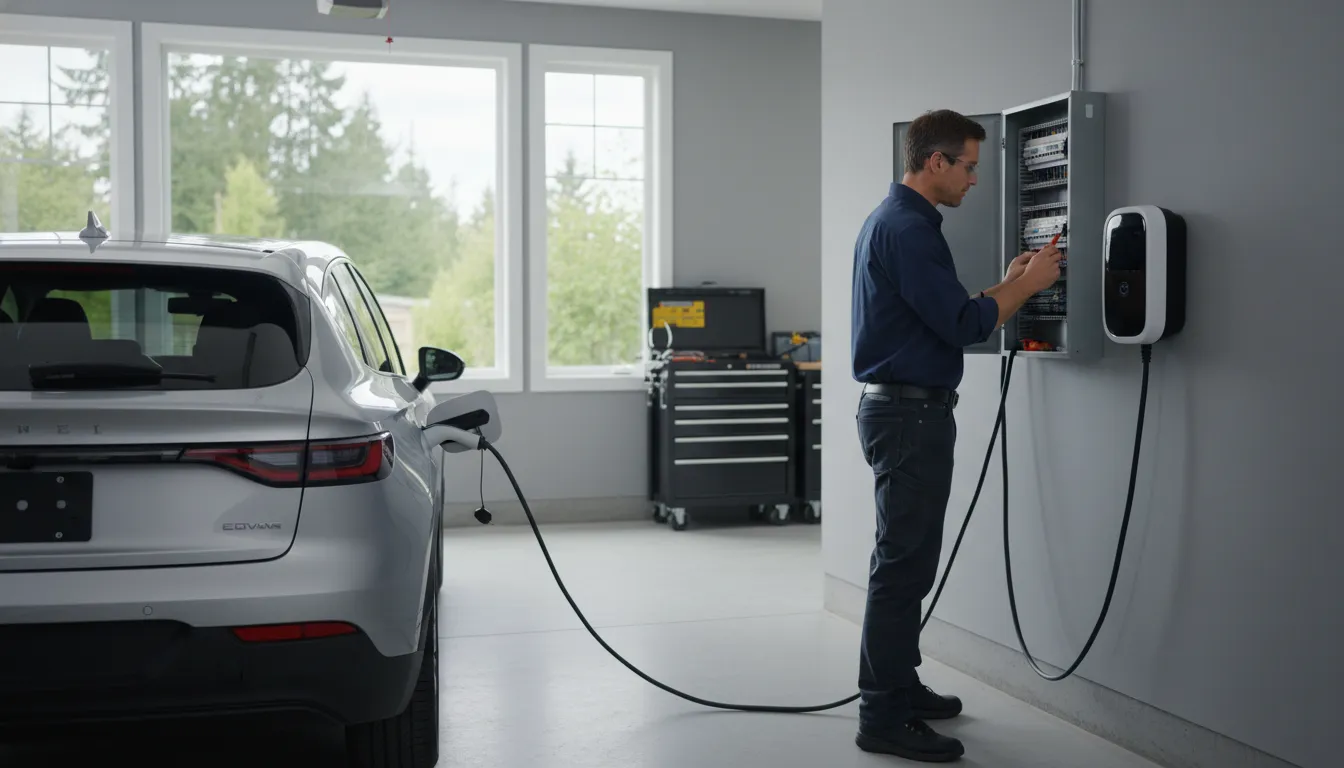
A Level 2 charger can expose a home’s limited electrical capacity overnight. For Tigard and Portland homeowners, safe installation starts with checking the panel, not guessing at power.
Request a home charging assessment before selecting your charger installation plan.
An electrical panel upgrade for EV charger installation is needed when the existing electrical supply cannot safely support charging plus the home’s other loads. Most Level 2 chargers need a dedicated 240-volt circuit, adding a major new load to a household that may already be near capacity. In Tigard and Portland homes, the decision depends on panel condition, breaker space, supply capacity, and a load calculation by a licensed electrician. The U.S. Department of Energy notes that low-capacity and space-limited panels in vintage homes may not accommodate new electric loads under current code rules. Sometimes the correct solution is a panel upgrade; in other homes, approved load management may provide safe charging without full replacement.
Your panel label alone does not answer the question, because available capacity depends on the whole home’s load. Next, Electrical panel upgrade for EV charger: when is it needed? explains which checks point to an upgrade and which may support another safe option.
Electrical panel upgrade for EV charger: when is it needed?
The direct answer
For Portland-area homeowners, an electrical panel upgrade for EV charger installation is needed when the existing system cannot support the planned charging load. A 100-amp or 200-amp label does not settle the question by itself. An electrician reviews the home, the charger plan, and the capacity left after current loads are counted.
The U.S. Department of Energy notes that low-capacity and space-limited panels in vintage homes may not accommodate added electric loads. Under current NEC rules, that issue can matter in older Portland-area homes adding an EV charger.
What the electrician checks
The first check is available electrical capacity, not just supply amperage. An electrician assesses major loads, such as heating, cooling, cooking, a dryer, or other installed equipment. The charging rate and circuit called for by the selected charger are part of the same review.
Breaker space also matters. A panel may have usable capacity but no open position for a new charging circuit. The electrician can explain what work fits the evaluated conditions, instead of treating a panel replacement as automatic.
This review should match the charger you intend to install. A homeowner choosing equipment first may miss how charging demand fits with loads already in use. A clear review keeps the focus on capacity, space, and safe circuit planning.
When to schedule a review
A review is a sound first step before choosing charging equipment when any of these conditions apply:
- You plan to charge at home on a new dedicated circuit.
- Your panel has little or no open breaker space.
- Your home already relies on several major electric loads.
- You are not sure whether past panel work supports a new circuit.
If capacity is limited, ask the electrician which charger setup fits the home’s electrical system. The answer may be an upgrade, or it may be a charging plan that works with the evaluated capacity. The decision should come from the site review, not an assumption based on panel size.
This capacity decision is different from a cost discussion. Homeowners comparing project scope can read the Level 2 EV charger installation cost in Oregon guide. Use it after the required electrical work is clear.
Start with the charger you want to use and a review of your panel and current loads. Pro-Tech-Power helps Tigard, Portland, and nearby homeowners with EV charging needs. Request an electrical assessment for a sound plan to use the existing panel or plan an upgrade when needed.
Can your electrical panel handle an EV charger?
A panel check starts with one question: can the home’s electrical system carry the added charging load safely? Many Level 2 home chargers use a dedicated 240-volt circuit. That new circuit must work alongside the loads already in the home. Before work begins, review the charger plan and existing supply capacity. Oregon homeowners can also review common electrical panel upgrade factors.
Why breaker size is only a clue
The main breaker label is a useful starting point. It does not show how much capacity remains when several devices may run together. A heat pump, electric range, dryer, water heater, or hot tub can change the plan. Charging often happens while other household loads are active.
This concern is more likely in homes with limited supply capacity or limited panel space. The U.S. Department of Energy reports that some older panels cannot accept new electrical loads under current code rules. Those new loads may include electric vehicles and heat pumps. Its residential electrification research explains this panel constraint.
What the assessment checks
A load assessment looks beyond one label or an empty breaker slot. The electrician reviews the planned charger, existing large appliances, supply rating, and available breaker space. Many Level 2 chargers require a dedicated 240-volt circuit with substantial amperage. This Level 2 charger overview describes that circuit requirement.
| Check point. | Quick clue. | Full assessment. |
|---|---|---|
| Main breaker. | Shows the supply rating. | Checks remaining capacity with active loads. |
| Breaker spaces. | An open slot may appear available. | Checks correct space for the circuit. |
| Heavy electric loads. | Lists major home appliances. | Reviews demand when loads overlap. |
| Panel condition. | Shows wear, age, or damage. | Checks safe and suitable equipment. |
When an upgrade enters the plan
An electrical panel upgrade for EV charger work is not decided from panel age alone. It enters the plan when the intended circuit cannot be added safely. The panel may lack capacity, proper breaker space, or suitable condition for the charger. In some homes, the safest scope is smaller than a full replacement.
For a Tigard or Portland area home, the review should happen before charger installation is scheduled. It gives the homeowner a clear answer about the circuit, panel work, and charger choice. That is a safer path than selecting equipment first and finding a capacity issue during installation.
Signs an upgrade may be the safe choice
An EV charger adds a new load to a home’s electrical system. That does not mean every project needs a new panel. It does mean the panel, supply capacity, and planned charger should be reviewed together. An electrical panel upgrade for EV charger installation may be the safer path when clear signs appear during that review.
Panel space and planned load
Start with what can be seen without removing the panel cover. A full breaker layout, crowded wiring area, or older equipment can point to limits that need inspection. Do not open a panel or move breakers to make space. A qualified electrician can check usable space and condition.
Useful details to collect before the visit include the panel label, main breaker marking, charger model, and parking location. Also note any major electric equipment used at home. These details help the electrician prepare, but they do not replace a load review.
Space is not the same as capacity. An empty breaker position does not prove the supply can handle charging with other large loads. The U.S. Department of Energy describes limits in low-capacity and space-limited panels in older homes. These panels may not handle new electric loads, such as electric vehicles or heat pumps.
Condition signs that need inspection
The panel’s condition matters as much as its rating. Rust, heat marks, buzzing, burning smells, a warm cover, or breakers that trip often should not be ignored. These signs do not prove a charger caused a problem. They are reasons to pause charger plans until an electrician inspects the system.
A panel can also lack a clear path for the needed circuit, even when it looks tidy. An electrician will assess the panel, grounding, supply equipment, and current home loads. That inspection helps show whether a repair, load-control option, or upgrade is appropriate.
If the current setup is limited, replacement is not the only question to ask. The correct design depends on the charger’s needs and the home’s loads. A qualified electrician can explain safe options after assessing the site.
Plans that change home demand
Look beyond the first charger. A household may later add a second EV, electric heat, an electric water heater, or other equipment. Planning for those choices now can prevent a panel decision that meets today’s need but leaves little room for the next change.
Homeowners can review how charger scope and panel work relate in Pro-Tech-Power’s guide to an electrical panel upgrade. Then, ask a qualified electrician for an on-site evaluation before installation. The safe choice is based on the home’s actual condition and load, not on age or panel label alone.
Could you install EV charging without a full panel upgrade?
An electrical panel upgrade for an EV charger is not the only possible design in every home. In some homes, an electrician may find a safe path with a smaller charging circuit or approved load controls. That answer depends on the supply capacity, panel space, connected loads, and charger plans.
Some vintage homes have low-capacity or space-limited panels. The U.S. Department of Energy notes that current NEC rules may keep those panels from taking new EV loads.
Could a lower charging rate fit?
A home does not always need the charger’s highest possible output. If the existing load leaves capacity for a dedicated circuit, a lower charging setting may be part of the design. It may add enough range for daily driving while reducing new demand on the panel.
Charging speed also needs to match the homeowner’s use. A circuit that supports overnight charging for one driving pattern may not fit long daily trips or two EVs. Future plans, such as electric heating or a second charger, should be part of the review.
This choice is not a shortcut or a guess. The electrician still needs to review panel condition, breaker space, supply size, and major loads before choosing equipment. For more detail, see Pro-Tech-Power’s guide to an electrical panel upgrade.
Load management and code review
Load-management equipment can change how charging operates when panel capacity is limited. An evaluated system may pause or lower charging when other large loads run. It is an option only when the device, charger, installation method, and local approval requirements fit the project.
Equipment choice must follow the adopted electrical code and any permit or inspection rules. In the Portland and Willamette Valley area, a professional assessment can confirm what applies at the home’s location. A device should not be used to mask a damaged, crowded, or unsafe panel.
Ask how the proposed control behaves during appliance use and after a power interruption. The answer should be clear before a homeowner commits to that route.
A decision based on the home
The right starting point is a site review, not an assumption based on panel amperage alone. Two homes with panels labeled the same amperage can have different loads, breaker space, wiring conditions, and project goals.
An electrician can assess the existing supply, panel condition, circuit route, charger needs, and other household loads. The result may be a standard circuit, a managed circuit, or an electrical panel upgrade for EV charger use.
If you are planning home charging in the Tigard or Portland area, request an assessment from Pro-Tech-Power. The review can define a code-compliant design before equipment is installed or an upgrade is ruled in or out.
What happens during panel and charger planning?
Planning an EV charger starts with the way you drive, park, and expect to charge at home. A safe electrical panel upgrade for EV charger use is not based on a quick guess. It starts with a careful review of equipment, loads, routing, and charger needs.
Charging goals and site review
Older or space-limited panels may not have room for new electric loads under current code rules. The U.S. Department of Energy notes this issue in many vintage homes as new electric uses are added.
Your electrician should look beyond the panel label. The review covers breaker space, panel condition, supply capacity, and key household loads. It also covers the path from the panel to the charging point. These findings guide the plan before electrical work begins.
Five planning steps
- Discuss charging needs. Explain where the vehicle will park, how often it will charge, and whether you have selected a charger. If plans may change, say so at this stage.
- Inspect existing equipment. The electrician examines the current panel and related equipment. They note condition, open spaces, existing breakers, and large home loads that affect a safe charging plan.
- Select a sound plan. A load review and site conditions shape the circuit and equipment choice. If added capacity is needed, the proposal may include an electrical panel upgrade suited to the home.
- Complete approved work. The crew completes the planned electrical work with safe, careful workmanship. When permits or inspections apply to that scope, the work must follow those local requirements.
- Confirm safe operation. The electrician tests charger operation and checks the completed circuit. They label new equipment as needed and explain the installed setup before the project is handed back to you.
Safe work and clear choices
Planning may show that a panel upgrade is needed, or that another sound approach fits the home’s capacity. The purpose is not to choose the largest job. It is to select a safe plan that supports the selected charger and the actual electrical system.
For homeowners in Tigard and the Portland area, Pro-Tech-Power plans residential electrical upgrades and EV charger projects. A clear scope should state the equipment planned, work to be done, and any required local steps. That keeps safety and workmanship at the center of the project.
Why local homeowners should plan panel work early
Choosing a home charger often starts with the car. For Tigard, Portland, and nearby homeowners, it should also start at the panel. An electrical panel upgrade for EV charger use is not always needed. Yet planning early helps prevent a charger choice that does not fit the home’s available power.
Start with the home’s existing load
A charger adds a new electrical load alongside heating, cooking, laundry, and other daily needs. Older homes may have panels with limited capacity or room for new circuits. The U.S. Department of Energy notes that these limits can affect added loads, including electric vehicles, under current code rules.
A panel review before vehicle delivery keeps the plan grounded in the house as it exists today. It can show whether panel work needs consideration before a charger model and installation location are set.
Plan the charger and panel together
A homeowner may choose a charger based on charging speed or vehicle features. The home still needs a safe path to supply it. Reviewing panel capacity, circuit space, charger needs, and the parking location together reduces assumptions at the next step.
That early check also gives homeowners a clearer question to ask: can the current setup support the planned charger? Pro-Tech-Power’s guide to when an electrical panel upgrade may be needed explains why installer review belongs in the charger decision.
A local plan for Tigard and Portland homes
Homes around Tigard and Portland differ in age, layout, parking access, and existing electrical use. A plan that fits one house may not fit the next. Homeowners can share their vehicle plan, charging location, and current electrical needs during a home assessment.
This approach does not assume that a full panel change is required. It shows what must be checked before equipment is purchased or installation begins. For help assessing an EV charging project with other residential electrical upgrades, local homeowners can discuss the home’s present setup and planned use first.
Frequently Asked Questions
Do I need an electrical panel upgrade for an EV charger install?
Not automatically. A licensed electrician checks panel rating, available breaker space, supply capacity, and the home’s existing loads before adding charging equipment. A Level 2 charger generally needs a dedicated 240-volt circuit with 40 to 60 amps, according to EnergySage. Tigard and Portland homeowners with older or crowded panels may need an upgrade or another approved solution.
What size electrical panel is needed for home EV charging?
Panel rating alone does not determine whether charging can be installed safely. A 200-amp panel may have adequate room, while a 100-amp panel may work if household demand is lower. The final decision depends on a load calculation, circuit space, charger output, and local permit requirements. For a common Level 2 circuit requirement, see EnergySage’s EV charging guide.
Can a 100-amp electrical panel handle an EV charger?
Yes, in some homes. A 100-amp panel can sometimes support EV charging when the home’s calculated load leaves sufficient capacity and the panel has circuit space. The charger may need a lower output setting or approved load controls. A licensed electrician serving Tigard or Portland should evaluate the full system before a new dedicated circuit is permitted and installed.
What are alternatives to a full electrical panel upgrade for EV charging?
Sometimes, smart load management or a circuit-sharing device can limit charging while other high-demand equipment is running, if local code allows it. The U.S. Department of Energy identifies panel and supply upsizing as an electrification barrier and studies ways to avoid unnecessary upsizing. A licensed electrician can determine whether an approved alternative fits a Tigard or Portland home.
Ready to plan safe EV charging power for your home?
Waiting until charger installation is near can force rushed electrical decisions when your home’s existing panel capacity and available space are still unclear. Starting now gives you time to assess your home’s electrical capacity, understand any needed panel work, and plan before charging becomes an everyday need. An early assessment helps Tigard and Portland homeowners weigh practical next steps before equipment choices, installation dates, and future charging routines add unnecessary pressure.
Ready to prepare your home’s electrical system for dependable EV charging without rushed project decisions? Request an EV charging and electrical panel assessment to discuss panel capacity, possible upgrade timing, charger installation planning, and next steps with Pro-Tech-Power today.