Backup Generator for Home Power Outages
A backup generator for home power outages is not just a storm-season upgrade in the Willamette Valley. It is a way to keep heat, refrigeration, medical devices, internet, sump pumps, security systems, and daily routines protected when wind, ice, trees, or utility repairs interrupt power. The best setup starts with a clear plan for what your home needs to keep running, how much power those loads require, and how the generator will connect to your electrical system safely.
Planning backup power for your Oregon home? Request a generator installation quote from Pro-Tech-Power before the next outage season.
For more planning help, compare backup generator installation cost factors, review this whole house generator sizing guide, and see what goes into home generator installation in Portland.
This guide explains how Willamette Valley homeowners can think through outage risk, generator sizing, fuel, transfer switches, installation steps, and quote comparisons. It is written for homes in Tigard, Portland, Beaverton, Lake Oswego, West Linn, Tualatin, Sherwood, Salem, and nearby Oregon communities where winter storms and utility disruptions can turn a short outage into a serious inconvenience.
Why Home Power Outages Hit the Willamette Valley Hard
Oregon homeowners deal with a specific mix of outage risks. Heavy rain softens soil around trees. Wind events bring down limbs. Ice storms can add weight to branches and overhead lines. Summer heat waves can strain the grid and make indoor cooling more important. Even routine equipment failures or local construction work can leave a neighborhood without power.
The impact depends on the home. A few hours without lights may be manageable. A longer outage can affect refrigerated food, home offices, well pumps, garage doors, security systems, medical equipment, internet access, and heating or cooling. For families with young children, older adults, remote work needs, or critical equipment, waiting until the lights go out is not a plan.
A standby generator gives you a more predictable response. Instead of running extension cords from a portable unit, a professionally installed system connects through a transfer switch and powers selected circuits or the whole home automatically when utility power drops.
What Does a Backup Generator Do During an Outage?
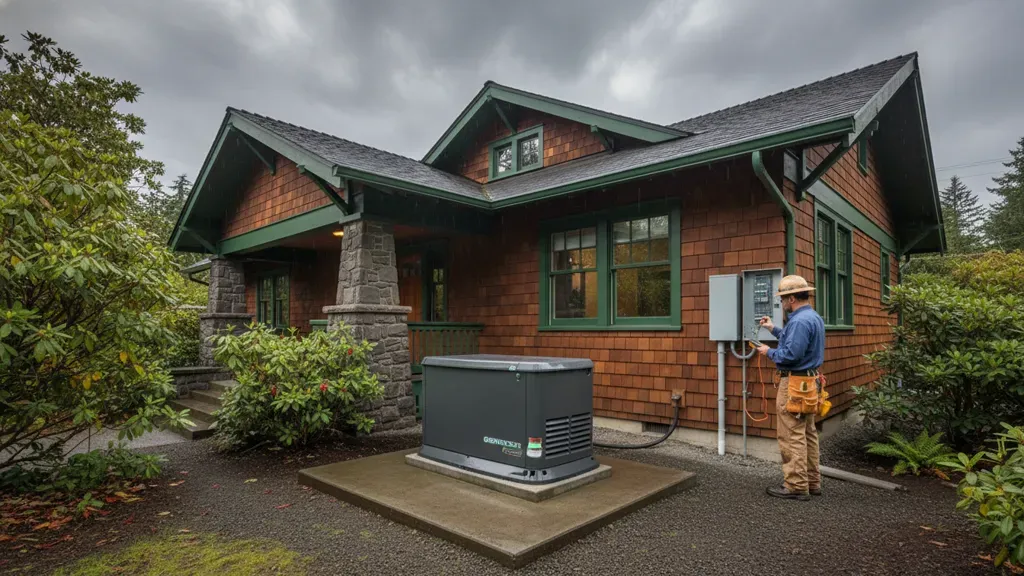
A home backup generator supplies electricity when utility power is unavailable. In a permanent standby setup, the generator sits outside the home on a stable pad and connects to the electrical system through an approved transfer switch. When an outage occurs, the transfer switch separates the home from utility power and allows the generator to supply selected loads.
This matters for safety. A generator should never backfeed the utility grid, and a home should not be powered through improvised cords, open panels, or unapproved connections. The transfer switch is what keeps the generator power isolated and controlled.
Most homeowners choose one of two approaches:
- Essential-circuit backup: Powers the highest-priority circuits, such as refrigerator, furnace controls, selected lights, internet, garage door, and medical equipment.
- Whole-home backup: Powers a broader set of circuits and may support large loads, depending on system size, electrical capacity, and load management.
The right choice depends on budget, electrical demand, comfort expectations, and how much disruption your household can tolerate.
Start With an Outage Plan, Not a Generator Size
Many homeowners start by asking, “What size generator do I need?” The better first question is, “What do I need to keep running when the power is out?” That answer drives the sizing conversation.
Make a short list of must-have loads before you request a quote. Include the equipment that protects health, safety, comfort, work, and property. A licensed electrician can then review your panel, load requirements, and installation conditions to recommend a system that fits the house instead of guessing from square footage alone.
Essential loads to consider
- Refrigerator and freezer
- Furnace blower, heat pump support, or boiler controls
- Selected lighting circuits
- Wi-Fi, router, computer, and home office equipment
- Garage door opener
- Sump pump or well pump, if applicable
- Medical equipment that must stay powered
- Security system and exterior lighting
- Kitchen outlets or a small appliance circuit
Large loads that change the calculation
Some equipment draws much more power than everyday lighting and small electronics. Electric ranges, dryers, water heaters, central air conditioning, hot tubs, large heat pumps, and EV chargers can quickly increase the generator size or require load management. If you want these items available during an outage, call that out early.
Not sure which circuits belong on your backup plan? Use this whole home generator installer checklist before comparing quotes.
How Generator Sizing Works for an Oregon Home
Generator sizing is a load calculation, not a guess. The installer needs to understand starting watts, running watts, electrical panel capacity, transfer switch setup, fuel availability, and the homeowner’s expectations. A system that is too small may not support the loads you expect. A system that is larger than necessary can add cost without adding useful reliability.
There are three practical sizing steps:
- List the circuits and appliances you want powered. Separate must-have loads from nice-to-have loads.
- Review electrical demand. Motors and compressors often need extra power to start, then less power to keep running.
- Decide whether load management is appropriate. Some systems can prevent large appliances from starting at the same time, which may reduce the generator size needed.
For many Willamette Valley homes, the answer is not simply the largest unit available. It is a balanced design that keeps the right parts of the home running while staying within a safe, code-compliant installation plan.
| Backup goal | Typical powered items | Best fit |
|---|---|---|
| Basic outage protection | Refrigeration, lights, internet, furnace controls, selected outlets | Essential-circuit setup |
| Family comfort during storms | Essentials plus more lighting, kitchen circuits, garage door, limited comfort loads | Larger essential-circuit or managed whole-home setup |
| Whole-home continuity | Most daily circuits, larger appliances where practical, comfort systems | Whole-home standby system with proper load review |
Portable Generator or Standby Generator?
Portable generators can help in limited situations, but they require manual setup, safe placement, fuel handling, cords, and a proper inlet or transfer equipment if they connect to home circuits. They also require someone to be home and capable of setting them up during bad weather.
A standby generator is designed for a more seamless response. It is installed permanently outside, connects through a transfer switch, and can start automatically when power fails. For homeowners who want dependable backup power without dragging equipment into place during a storm, standby is usually the stronger long-term option.
Portable generator considerations
- Lower upfront equipment cost in many cases
- Manual startup and refueling required
- Limited capacity for home circuits unless paired with proper transfer equipment
- Must be operated outdoors with safe carbon monoxide clearance
- Often less convenient during ice, wind, or overnight outages
Standby generator considerations
- Automatic outage response
- Permanent installation with a transfer switch
- Can support essential circuits or whole-home plans
- Requires professional electrical integration, permits, and inspection
- Higher upfront investment but stronger convenience and reliability
Where Should a Home Backup Generator Be Installed?
For homeowners still comparing possible locations, this whole house generator placement guide explains how access, drainage, fuel routing, transfer-switch location, noise, and permitting questions should be reviewed before installation day.
Placement affects cost, safety, noise, maintenance access, and project complexity. A generator needs a suitable outdoor location with clearances from windows, doors, vents, property lines, and combustible materials. It also needs a stable base, practical access for installation, and a route for electrical and fuel connections.
In Oregon neighborhoods, site conditions can vary from tight side yards to sloped lots, mature landscaping, fences, decks, and limited access paths. These details are one reason a site visit matters. A quote based only on a phone conversation may miss trenching, panel distance, gas meter location, pad requirements, or clearance issues.
Fuel Source and Transfer Switch Planning
A standby generator installation usually includes two critical planning decisions: the fuel source and the transfer switch. The fuel source affects runtime, equipment selection, and coordination. The transfer switch determines how generator power safely enters the home and which circuits receive power.
Natural gas is common where available because it avoids on-site refueling during an outage. Propane may be an option for homes without natural gas access. Either way, the installer needs to confirm capacity, routing, and coordination requirements before the project moves forward.
The transfer switch should be matched to the backup plan. An essential-circuit design may use a subpanel or selected-circuit approach. A whole-home design may use a larger automatic transfer switch with load management. The details should be explained in the quote, not left vague.
What Professional Installation Should Include
A safe backup power project is more than setting equipment beside the house. Professional installation should address the full path from planning to inspection and handoff. Pro-Tech-Power is a licensed electrical contractor serving Tigard, Portland, and surrounding Oregon communities, with ESB License No. 13068 and CCB License No. 198878 shown on the company site.
A complete installation plan should typically include:
- Site evaluation and electrical panel review
- Load planning and generator sizing recommendation
- Generator placement and pad planning
- Transfer switch selection
- Fuel coordination and routing considerations
- Permits and inspection coordination where required
- Electrical connection and testing
- Homeowner walkthrough after startup
Ask your contractor to explain who handles each step. A clear scope helps you compare quotes accurately and avoid surprises once the project begins.
How Much Backup Power Do You Really Need?
Not every home needs every circuit powered. The right level of backup power is the level that protects the household without overbuilding the system. Some homeowners only need refrigeration, heat controls, internet, and a few lights. Others want a more complete setup because they work from home, have medical needs, or want to maintain normal routines through multi-day outages.
Use these questions to narrow the plan:
- How long could your household comfortably be without power?
- Which appliances protect food, heat, water, or health?
- Do you need to work from home during outages?
- Are there older adults, young children, or medical devices in the home?
- Do you want automatic startup when you are away?
- Are you planning future loads, such as an EV charger or remodel?
These answers help your electrician recommend a system that fits both current needs and future plans.
Quote Comparison Checklist for Willamette Valley Homeowners
Generator quotes can vary because the scope varies. One quote may include permits, transfer switch, pad, load review, startup, and fuel coordination. Another may focus mostly on equipment. Comparing only the bottom-line price can lead to the wrong decision.
Before you sign, make sure each quote answers these questions:
- What generator size is recommended, and why?
- Which circuits or loads will be powered?
- Is the transfer switch included?
- Is the electrical panel ready, or are upgrades needed?
- Who handles permits and inspections?
- What fuel source is assumed?
- Where will the generator be placed?
- Is trenching, pad work, or conduit included?
- What testing and walkthrough are included?
- What is excluded from the quote?
Want a quote that reflects your actual home instead of a rough average? Contact Pro-Tech-Power for a generator installation estimate.
Common Mistakes to Avoid Before the Next Outage
The biggest mistake is waiting until storms are already in the forecast. Equipment availability, permitting, scheduling, and site planning all take time. Homeowners who plan ahead usually have more choices and less pressure.
Other mistakes include:
- Buying equipment before the load calculation. The generator should fit the home, not the other way around.
- Ignoring transfer switch requirements. Safe connection is as important as generator size.
- Planning only for today. A future remodel, heat pump, or EV charger may affect electrical planning.
- Assuming all quotes include the same work. Always compare scope, not just price.
- Using unsafe temporary connections. Improvised power connections can create fire, shock, and utility backfeed hazards.
Frequently Asked Questions
What size generator do I need to run my house in a power outage?
The right size depends on the circuits and appliances you want powered, not just the square footage of the home. A licensed electrician should review your electrical panel, essential loads, starting watts, and comfort expectations before recommending a generator size.
Is a standby generator worth it in the Willamette Valley?
It can be worth it if outages disrupt heat, refrigeration, remote work, medical equipment, sump pumps, or family routines. The value is strongest for homeowners who want automatic backup power and do not want to rely on portable equipment during storms.
Do I need a transfer switch for a home backup generator?
Yes, a transfer switch is a key safety component when generator power connects to home circuits. It separates the home from utility power during an outage and helps prevent unsafe backfeed.
How long does backup generator installation take?
The timeline depends on equipment availability, site conditions, permit requirements, electrical scope, fuel coordination, and inspection scheduling. A straightforward project may move faster than a project that needs panel changes, trenching, or complex placement planning.
Can a backup generator power my whole house?
Yes, some standby systems can be designed for whole-home backup, but the system must be sized and installed correctly. Large loads may require load management or a bigger system. Your installer should explain what will and will not run during an outage.
Plan Backup Power Before You Need It
A backup generator for home power outages should be planned before the next windstorm, ice event, or extended utility interruption. Start with the loads that matter most, confirm the electrical requirements, choose a safe transfer switch setup, and work with a licensed contractor who can explain the full installation plan.
Pro-Tech-Power helps Oregon homeowners plan and install backup power systems in Tigard, Portland, Beaverton, Salem, and nearby Willamette Valley communities. If you want a safer, more reliable way to keep your home running during an outage, the next step is a site-specific quote.
Request your generator installation quote from Pro-Tech-Power and get a backup power plan built around your home.