
Residential
Before You Start: What Should Be Planned for a Weatherproof Outdoor Outlet Installation in Oregon?
Pro Tech Power Corp
· 17 Min Read
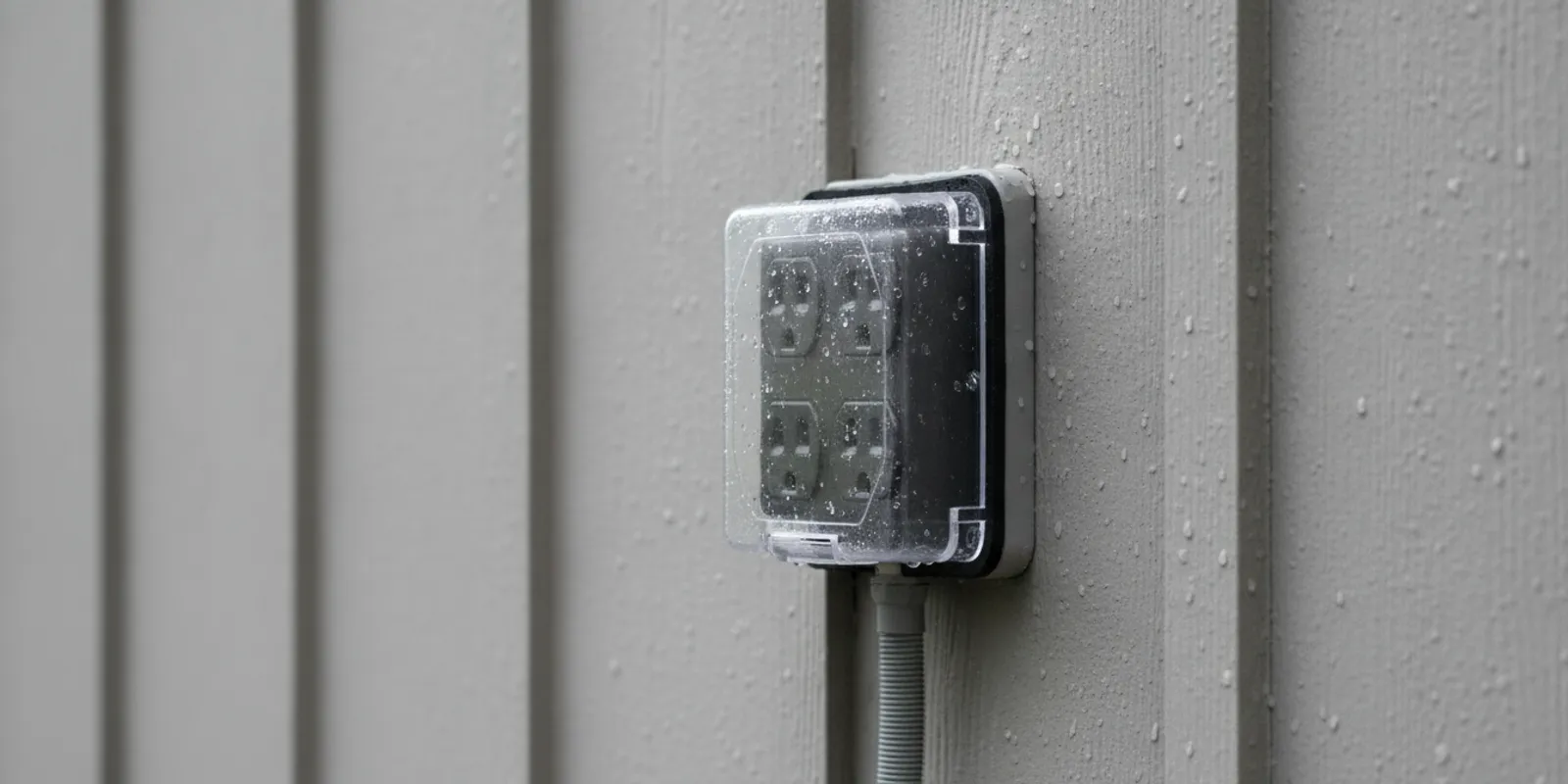
A weatherproof outdoor outlet installation in Oregon starts with more than choosing a spot on an exterior wall. The location, expected use, water exposure, circuit capacity, and appropriate protective equipment all affect the plan. An outdoor receptacle should be built for the conditions where it will be installed, and the electrical work must meet applicable code requirements. Here is what to consider before requesting an assessment. Pro Tech Power works with residential and commercial customers across the region; review the company’s Oregon locations for a general view of its geographic coverage.
Request an electrical project assessment
What does “weatherproof” mean for an outdoor outlet?
People often use “weatherproof outlet” as shorthand, but no ordinary receptacle should be treated as waterproof in every condition. Outdoor electrical equipment needs protection appropriate to its location and exposure. That generally means using a receptacle listed for the application, providing ground-fault circuit-interrupter (GFCI) protection where required, and choosing an approved cover that protects the outlet while it is in use as well as when it is not.
Rain, wind-driven moisture, irrigation spray, condensation, dust, and physical impact can all affect an exterior installation. A covered porch may have less direct exposure than an open wall, but it is still outdoors. The installer needs to consider the actual conditions, not assume that an overhang makes indoor equipment suitable.
It is also important to plan for how the outlet will be used. A receptacle that powers a string of seasonal lights has different practical demands from one intended for yard equipment, a pressure washer, or an outdoor kitchen appliance. The device, cord, and plug need room to fit beneath the cover, and the cover must be able to close as designed. An enclosure that is too small or awkward can make the outlet inconvenient or tempt someone to leave it unprotected.
Where should an outdoor receptacle go?
Start by identifying the task the outlet needs to support. Think about which equipment will plug in, where it will be used, and the path a cord would take. A well-placed receptacle can reduce the need for long extension cords across a walkway, driveway, or lawn. It should be accessible without being in the way of doors, gates, furniture, or routine yard work.
- Near a patio or deck: Consider how outdoor seating, a grill, or seasonal lighting is arranged. Keep the outlet reachable without placing it where furniture repeatedly blocks access.
- Along a walkway: Look for a position that supports lighting or maintenance equipment while keeping cords away from foot traffic and door swings.
- Near a garden or lawn: Account for hose connections, irrigation heads, planting beds, and the path of yard tools. Avoid locations likely to receive frequent spray or physical damage.
- For a specific appliance: Identify the equipment’s nameplate requirements and plug style. Do not assume an existing general-purpose outlet is suitable for a new load.
Mark one or two preferred locations before the assessment, then explain the planned use. The electrician can evaluate whether the placement is practical and whether the wiring route, circuit, and protective equipment support it. A seemingly simple location may require a longer route or work through finished spaces. Another position may connect more cleanly to an appropriate electrical source.
Think about maintenance too. The receptacle should be visible enough to inspect and reachable for resetting a GFCI device if that device trips. Do not hide it behind permanent equipment or planters. The height and exact position may also be affected by the building, site conditions, and applicable requirements, so treat a preferred spot as a starting point rather than a final installation instruction.
What electrical protection should be included?
Outdoor receptacles face moisture and may be used with portable equipment, so GFCI protection is an important safety consideration. A GFCI device is designed to interrupt power when it detects an imbalance in current. The required protection method and placement depend on the installation and the currently applicable electrical code. The person planning the work should confirm what is required rather than relying on an old outlet’s appearance or assuming a nearby indoor device protects the new location.
Ask whether GFCI protection will be provided at the receptacle itself or through another approved arrangement. If protection is provided upstream, you should know where the reset controls are and how the circuit is identified. This matters if a trip occurs while equipment is in use. A protected receptacle should not be modified, bypassed, or replaced with a non-protected device to stop nuisance trips. Repeated tripping should be investigated to find the cause.
Other considerations can include tamper-resistant construction for applicable residential locations, grounding, circuit capacity, and whether the receptacle needs to be on a dedicated circuit. The answer depends on the building and the intended load. Do not infer capacity from the shape of a receptacle alone. A circuit can have several outlets on it, and the connected equipment may draw more power than the planned outdoor use can safely share.
For general information about Oregon’s building-code program and code adoption, consult the Oregon Building Codes Division. Local permit and inspection questions should be confirmed for the specific property and scope. Code editions and local processes can change, so an online article is not a substitute for checking requirements before work begins.
Which cover and enclosure are right?
The cover must fit the outlet’s location and the way it will be used. In a wet location, an in-use cover is designed to protect a plugged-in connection while the cover is closed. That differs from a basic flap that can protect an empty receptacle but may not accommodate a cord while closed. A cover should be suited to the receptacle and box, installed as intended, and kept in usable condition.
Consider the size and direction of the plug and cord. Bulky plugs, right-angle plugs, and multiple cords can make a small cover difficult to close. The cover’s shape may also affect whether a plug can remain connected without putting pressure on the cord or lid. Tell the electrician what you expect to plug in; if you have a particular device, having its specifications available can help clarify the needed arrangement.
Material and mounting details matter as well. Outdoor equipment is exposed to weather and temperature changes. The box and cover need to work together and be suitable for the wall surface and exposure. A cover with a cracked lid, missing seal, or loose mounting is not offering the intended protection. After installation, periodically look for visible damage and keep the cover closed when the outlet is unused.
Do not choose a product based only on a marketing label or a picture online. The correct equipment depends on the specific location, listing, and installation details. A contractor can identify a compatible combination and explain any trade-offs between appearance, access, and protection.
How should you check the existing electrical setup?
Before work is scoped, the electrician needs to understand where the new receptacle could connect and what the existing circuit can support. The assessment may include the electrical panel, nearby outlets, the proposed route through the structure, and any visible wiring conditions. A simple-looking exterior addition can involve substantial routing if there is no suitable source nearby or if the wall is difficult to access.
Be ready to share what you know about the home. Useful details include the approximate age of the building, previous electrical updates, recent remodeling, known panel concerns, and whether the proposed wall is finished on the inside. Mention any existing outdoor receptacles and whether they trip, feel warm, or show visible damage. Do not open electrical equipment or remove covers to gather this information.
Ask whether the planned outlet can reasonably share an existing circuit or whether a new circuit may be warranted. That decision should account for the load, circuit condition, other connected equipment, and applicable requirements. A new outlet should not be added by simply tapping whichever wire is closest without confirming that the connection is suitable.
If a panel change or broader electrical update appears necessary, ask the electrician to explain why and distinguish necessary scope from optional improvements. Pro Tech Power’s guide to electrical panel upgrades in Oregon can help you understand the separate planning questions that may arise when panel capacity is part of a project.
Do permits or inspections apply in Oregon?
Permit and inspection requirements depend on the exact work, the jurisdiction, and the applicable rules. Do not assume that an outdoor outlet is automatically exempt because it serves a home, or that a permit is always required for every small electrical change. Ask who will verify the requirements for the property and the proposed scope before the work is scheduled.
A useful discussion covers who is responsible for any permit application, whether an inspection is expected, and what access will be needed. If the project includes new wiring, a new circuit, changes at the panel, or work through a remodel, those details may affect what the local authority requires. The written scope should make clear what the estimate includes and what would be handled separately.
Property owners can check code-adoption information through the Oregon Building Codes Division and confirm local processes with the authority having jurisdiction. The Division’s website is a starting point, not a determination for an individual address. If you are coordinating exterior work with a deck, siding, or landscaping project, clarify which contractor is responsible for each part and for keeping the electrical work accessible for inspection if needed.
Planning the approval question early helps avoid surprises. A schedule that assumes no inspection, followed by a requirement to arrange one, can affect project timing. Ask for the expected sequence and leave room for local review where applicable.
What happens during a typical installation?
The precise process depends on the building and scope, but a planned installation commonly follows a series of decisions and checks rather than a single product swap.
- Discuss the intended use. The electrician confirms what you plan to plug in, where you need access, and whether more than one location is under consideration.
- Assess the route and electrical source. The existing circuit, panel, wall construction, and possible wiring path are reviewed. The plan may change if the first route is impractical or the circuit is not suitable.
- Confirm equipment and protection. The receptacle, box, cover, and GFCI arrangement are selected for the location and expected use.
- Clarify approvals and scope. Permit questions, access needs, repair boundaries, and any related work are confirmed before installation proceeds.
- Complete the electrical work. A qualified electrician installs and connects the planned equipment, with appropriate attention to the building surface and wiring route.
- Check operation and explain use. The completed installation is checked, and the homeowner should know how to use the GFCI test and reset functions, where applicable, and who to contact with concerns.
There may also be wall penetrations or finish work, depending on the route. Ask whether patching, painting, siding repair, or landscaping restoration is included. If the outlet is part of a larger renovation, define the handoff between trades so the finished cover is not covered, damaged, or blocked by later work.
What can affect the project cost?
There is no reliable one-price answer for every exterior outlet. Cost depends on the route, equipment, circuit capacity, access, finish conditions, and any approval or repair work. The estimate should describe the actual plan rather than price only the receptacle itself.
| Planning factor | What may make it simpler | What may add scope | Question to ask |
|---|---|---|---|
| Wiring route | Accessible path near a suitable electrical source | Long route, finished walls, difficult exterior access | Where will wiring run, and what areas need access? |
| Circuit capacity | Existing circuit is suitable for the intended use | New circuit or panel work is needed | How was circuit suitability evaluated? |
| Equipment | Standard receptacle and cover fit the location and plug | Special enclosure or a different configuration is needed | Which receptacle, box, and cover are included? |
| Site condition | Clear, accessible wall and a straightforward work area | Obstructions, fragile finishes, landscaping, or repair needs | What finish restoration is part of the estimate? |
| Approvals | No additional approval is needed for the confirmed scope | Permit, inspection, or coordination requirements apply | Who confirms and handles local approvals? |
Compare estimates by scope, not just by the number at the bottom. Check whether each proposal describes GFCI protection, the cover type, the circuit plan, the wiring route, finish restoration, and permit responsibilities. If one estimate is much lower, find out whether it assumes a shorter route, uses different equipment, or leaves out work another proposal includes.
For more context on how project scope can shape a household electrical estimate, see this guide to outlet replacement cost considerations. A replacement and a new outdoor installation are not the same scope, but the guide illustrates why access and the work involved matter when comparing prices.
How can you prepare for an electrician’s assessment?
A little preparation makes it easier to discuss the outcome you want. Before the appointment, write down the intended use and identify the preferred location. If you have multiple possible spots, mark them with removable tape or take a photo. Include a wider view so the electrician can see nearby doors, walkways, water sources, and existing equipment.
- List the equipment you expect to plug in, including its power requirements if available.
- Note when and how often you expect to use the outlet.
- Identify whether you prefer one receptacle location or want to compare alternatives.
- Share known electrical updates, panel changes, or recurring GFCI trips.
- Point out irrigation, hose bibs, downspouts, and areas that receive regular spray.
- Ask about the wiring route, protective equipment, approvals, finish work, and testing.
Keep the work area accessible. Move patio furniture, stored items, or movable planters away from the proposed location. Do not dismantle siding, open the panel, or try to trace wiring. Leave those checks to the professional. If the work is being planned with a larger exterior or remodeling project, share the other contractor’s schedule and the order of work.
For broader reminders about safe household electrical practices, review Pro Tech Power’s home electrical safety guide. The key practical point is to describe concerns clearly and avoid using damaged equipment while the installation plan is being reviewed.
What warning signs need attention before installation?
Tell the electrician if an existing outdoor outlet has a cracked face, a loose cover, discoloration, unusual warmth, a burning smell, buzzing, or repeated GFCI trips. A receptacle that has been exposed to standing water or has visible corrosion should not be treated as ready for continued use. Do not touch damaged electrical equipment or attempt to dry, open, or repair it yourself.
If a GFCI trips, unplug the connected equipment if it is safe to do so, and follow the device’s instructions for resetting only after the immediate concern is addressed. If the device trips again, leave the circuit alone and arrange an assessment. Repeated trips can have several causes, so bypassing protection is not an appropriate fix.
For urgent conditions such as smoke, active sparking, or fire, move away and contact emergency responders. For a non-emergency concern, explain what happened, whether the outlet was in use, and what equipment was connected. A clear description can help the electrician determine what should be checked as part of the proposed work.
How does this project differ from outdoor lighting?
An outdoor receptacle supplies power through a plug-in connection. Outdoor lighting is a separate design and installation question, with choices about fixture location, switching, controls, wiring, and the area to be illuminated. A homeowner may plan both at once, but the outlet should still be assessed for its own circuit and use rather than treated as an automatic power source for any lighting plan.
If the goal is to improve visibility along a path or highlight a landscape feature, it may help to compare a receptacle with a dedicated lighting approach. Pro Tech Power’s guide to custom outdoor lighting planning discusses the separate choices involved. Tell the electrician whether you need plug-in access, installed fixtures, or both so the proposal matches your actual goal.
What should a written estimate explain?
A useful estimate makes the planned work understandable before you approve it. It should identify the proposed outlet location and general equipment, explain the expected wiring route or access assumptions, and say whether the existing circuit is suitable or whether additional electrical work may be needed. If a final decision depends on opening an area or inspecting hidden conditions, the estimate should identify that uncertainty rather than imply that every condition is already known.
Look for a clear statement about the weather-resistant receptacle and cover, GFCI protection, installation and testing, permit handling if applicable, and finish restoration. It should also explain exclusions. For example, patching, painting, siding repairs, or work by another trade may not be part of the electrical scope. Knowing this in advance helps you plan the complete project.
Ask how a change would be handled if the route or circuit differs from what was expected. A written process for discussing added work gives you a chance to review the change before it proceeds. Keep a copy of the final scope and any permit or inspection information provided for your records.
How can you compare a proposed location with another option?
When two locations seem equally convenient, compare them against the same criteria. Think about the equipment’s reach, exposure to rain or irrigation, risk of impact, access to a suitable circuit, and the amount of wall or interior finish work involved. A spot that looks ideal from the patio may require a complex wiring route, while a nearby alternative may meet the same need with less disruption. The electrician can explain whether the alternatives are electrically feasible.
Do not choose a location only because it is easiest to reach from indoors. Consider how the outlet will be used once the project is complete. Avoid a position where a cord would cross a doorway or walking route, where routine hose use would soak the connection, or where a gate, storage bin, or future planting could block access. If a plug must remain connected for extended periods, discuss whether the cover can close around it safely and conveniently.
For a rental, shared outdoor area, or property with association requirements, confirm who can approve the work before scheduling it. Written permission, design requirements, and responsibility for repairs may vary by property. Resolve those questions along with the electrical plan, not after equipment has been selected.
How should you plan for seasonal use and wet conditions?
Outdoor use changes throughout the year, so consider when the receptacle will be in use and what the weather is likely to be like at that time. Holiday lights may be connected for weeks, while garden equipment may be used only for short periods. A device that stays plugged in needs a cover that is designed to close around the connection. Check that the plug and cord do not force the lid open, pinch the cord, or create a path for water to collect. Tell the electrician if the connection will remain in place for long stretches.
Rain is not the only source of moisture. Sprinklers, hoses, roof runoff, damp planting beds, and snowmelt can expose an outlet to water in ways that are not obvious from a quick glance. Observe the proposed locations during ordinary yard use. If a sprinkler sprays the wall, or a downspout empties nearby, mention it during the assessment. A different location or a different protective arrangement may be more suitable than simply adding a larger cover.
Also consider what will be stored or installed around the wall later. A new shed, stacked firewood, patio furniture, a grill, or dense landscaping can make a receptacle difficult to reach or inspect. Keep access in mind when planning the broader outdoor layout. If the outlet is intended for a particular device, leave enough space to insert and remove its plug without bending the cord sharply or striking the cover.
Finally, make a simple maintenance plan. Keep the cover closed when the receptacle is not being used, and check periodically for cracks, loose mounting, or damaged seals. Do not paint over the cover or wedge it open. If weather exposure or normal use damages the assembly, stop using it and ask a qualified electrician to assess it. The goal is not to make equipment immune to weather; it is to choose and install equipment for its location, keep it in sound condition, and use it as intended.
Frequently asked questions
Can I use an indoor outlet cover outdoors?
No. A product meant for an indoor location should not be assumed suitable for exterior exposure. The receptacle, box, and cover need to be appropriate for the location, including whether a plug will remain connected while the cover is closed. Have the equipment selected for the actual exposure and installation.
Does every outdoor outlet need GFCI protection?
Outdoor receptacles commonly require GFCI protection under applicable electrical-code rules, but the exact requirements and permitted method should be confirmed for the project and current code edition. Ask the electrician to identify the protection plan and show you how to test and reset the device that provides it.
Can a new outlet use an existing circuit?
Possibly, but that depends on the circuit’s condition, connected loads, capacity, wiring route, and applicable requirements. A nearby outlet does not prove that the circuit can support the intended equipment. The electrician should assess the proposed load and explain whether an existing circuit or a new one is appropriate.
Can the outlet go anywhere on the outside wall?
No single location works for every home. The position must be practical for the intended use and suitable for the wiring route, exposure, access, and applicable requirements. Share your preferred locations, then ask the electrician to compare their feasibility and trade-offs.
How long does installation take?
Timing varies with the wiring route, access, circuit needs, approvals, and any finish work. A straightforward accessible route may differ substantially from work that requires opening finished walls or adding a circuit. Ask for an expected sequence after the site conditions have been assessed.
Talk with Pro Tech Power about your outdoor outlet plan
A well-planned outdoor outlet is convenient because its location, equipment, protection, and electrical supply suit the way you will use it. Share the intended use and site conditions with a qualified electrician so the installation can be scoped for your home and confirmed against current local requirements.