How Much Does Outlet Replacement Cost? A Homeowner Guide
A loose, cracked, warm, or outdated outlet is more than an inconvenience. It can signal worn wiring, an aging connection, or a grounding problem that deserves prompt attention. Replacing it is a common residential electrical repair, but the safest solution is not always the quickest do-it-yourself fix.
In many homes, outlet replacement costs about $50 to $150 in labor per outlet, plus the fixture and any required wiring or code updates. The final price depends on the outlet type, access, existing wiring, and whether a licensed electrician finds a larger electrical issue.
A professional can identify those factors, install the right outlet, and confirm the circuit is safe before leaving the job. Understanding what affects the estimate makes it easier to plan the work and recognize when a low quote may leave important problems unresolved.
Request a residential outlet replacement quote from Pro Tech Power and get a clear, licensed assessment of your home’s outlets before you spend a dollar.
How Much Does Outlet Replacement Cost?
Outlet replacement is usually a manageable residential repair, but the final price depends on more than the faceplate you see. As a general estimate, labor for replacing one standard outlet often falls in the tens to low hundreds of dollars, commonly around $50 to $150 per outlet. The outlet fixture itself may add a modest cost, while specialty models can cost more.
These figures are planning ranges, not a guaranteed quote. A licensed electrician needs to evaluate the outlet, wiring, and surrounding conditions before giving you an exact price. For help with outlet replacement and related residential electrical services, request an assessment based on your home’s actual needs.
What affects the price?
Outlet type is one of the first cost factors. A basic grounded receptacle is generally less expensive than a GFCI outlet, tamper-resistant model, USB outlet, or another specialty fixture. If a kitchen, bathroom, garage, or outdoor outlet needs GFCI protection, the required device and testing can affect the total.
Location also matters. An easily accessible outlet with sound wiring is typically a straightforward replacement. An outlet behind heavy furniture, in a difficult-to-reach area, or connected to a crowded electrical box may require additional time. Replacing several outlets during one service visit can also change the overall estimate compared with scheduling separate visits.
The largest variable is often the wiring. An electrician may find loose connections, damaged conductors, an ungrounded circuit, an undersized box, or heat damage behind the outlet. Correcting those conditions is different from simply swapping the device. It may require tracing the circuit, repairing wiring, improving the box, or recommending a broader electrical update.
Why a small repair can be a worthwhile investment
Replacing a worn outlet costs far less than dealing with damage caused by an electrical failure. The National Fire Protection Association reports that home electrical structure fires caused an estimated annual average of 527 civilian deaths and $2.4 billion in direct property damage in the United States from 2020 through 2024. See the NFPA electrical fire report for the underlying figures.
If an outlet is warm, buzzing, discolored, sparking, or no longer holds a plug securely, stop using it and arrange professional evaluation. An electrician can identify whether the repair is limited to the outlet or points to a larger wiring concern, then provide a clear quote before work begins.
Why Professional Outlet Replacement Is Worth the Investment
An outlet may look like a small fixture, but it is part of your home’s electrical system. When connections loosen, components age, or the outlet does not match the circuit, a quick-looking replacement can involve risks behind the wall. Professional outlet replacement gives you more than a new faceplate. It helps confirm that the device, wiring, grounding, and protection are appropriate for the location.
Electrical outlet replacement is a critical safety task that should be handled by a licensed professional for code compliance and safe installation. A qualified electrician can shut off and verify the correct circuit, inspect the wiring, identify damage, and install the right replacement rather than simply copying the old device. If the existing box or conductors need attention, that problem can be addressed before it becomes a larger repair. Pro Tech Power’s residential electrical services cover this type of outlet replacement work.
Safety is the value, not an optional upgrade
The potential consequences of an electrical failure make qualified work worth considering. The National Fire Protection Association reports that home electrical structure fires caused an estimated annual average of 527 civilian deaths and $2.4 billion in direct property damage in the United States from 2020 through 2024. Those figures do not mean every aging outlet is an immediate fire hazard, but they show why warning signs and questionable installations deserve prompt attention. NFPA’s electrical fire research provides the underlying figures.
Age can also affect how an outlet performs under load. Research published through the National Library of Medicine found that outlet temperature rose as current increased, and that older installed outlets reached higher temperatures during testing. An outlet that runs hotter over time may have less margin when supplying demanding equipment. Replacing a worn device and correcting the connection can reduce one avoidable point of failure, although an electrician should evaluate the full circuit when overheating is suspected.
Code compliance and longer service life
Professional installation also helps ensure the replacement fits current safety requirements for its location. The right device may differ between a dry living area, a kitchen, a bathroom, or an exterior point. A licensed electrician can check grounding, polarity, box condition, and required protection instead of treating every outlet as interchangeable. That attention improves reliability and helps the new outlet perform as intended for longer.
If you are weighing DIY work against expert installation, our guide to residential electrical service calls explains why it matters to hire a licensed electrician. A careful assessment now can prevent repeated replacements, hidden wiring damage, and a safety issue that costs far more to resolve later.
Signs Your Outlets Need Replacing
Outlets usually provide warning signs before they become a larger safety problem. Pay attention to how an outlet looks, feels, and performs during normal use. A qualified electrician can determine whether the issue calls for outlet replacement, wiring repairs, or a broader electrical inspection.
- The outlet is loose or wobbly. If the receptacle moves when you plug in or unplug an appliance, its internal connections may be worn or the device may no longer be securely mounted. A loose connection can worsen with continued use. Entergy identifies a loose or wobbly outlet as a sign that replacement may be needed: see the outlet warning signs.
- The faceplate is cracked, damaged, or discolored. A damaged cover is more than a cosmetic concern. Cracks, darkening, scorch marks, or melting can indicate heat, wear, or damage to electrical components behind the plate. Do not cover the problem with a new plate without having the outlet checked.
- Lights flicker when you use the outlet. If lights flicker when an appliance is plugged into a particular receptacle, the outlet may have a loose connection or faulty internal wiring. Stop using that outlet and arrange professional evaluation rather than repeatedly testing it with different appliances. Our guide to breaker panel repair signs can help you recognize related electrical problems.
- You hear buzzing or feel warmth. Persistent buzzing, a warm or hot outlet, sparks, a burning smell, scorching, or visible melting are urgent warning signs. These conditions can indicate overheating or arcing. Stop using the outlet, keep clear of it, and turn off the circuit if you can do so safely. Blackhawk Electric advises cutting power and seeking professional help when these symptoms appear: review these replacement indicators.
- The outlet is more than 30 to 40 years old. Age alone does not prove that an outlet has failed. But older devices have had more time to wear out and may not match the demands of modern appliances. Outlets installed 30 to 40 years ago deserve an inspection, especially when combined with loose plugs, discoloration, or unpredictable performance.
Never ignore heat, burning odors, sparks, or scorch marks. Those symptoms call for prompt professional attention, not a wait-and-see approach.
What Is Involved in a Professional Outlet Replacement?
A professional outlet replacement is more than removing an old device and attaching a new one. The electrician first determines why the outlet needs attention, checks the surrounding wiring, and selects a replacement suited to the circuit and location. That process helps prevent a small repair from masking a larger electrical problem.
A licensed electrician also works with the safety requirements that apply to the home. In damp or potentially wet areas, that may include installing a ground-fault circuit interrupter (GFCI) outlet. GFCI protection is commonly required in locations such as kitchens, bathrooms, garages, laundry areas, and outdoor spaces. Entergy identifies GFCI protection as an important consideration when replacing outlets in these areas: learn more about outlet safety signs.
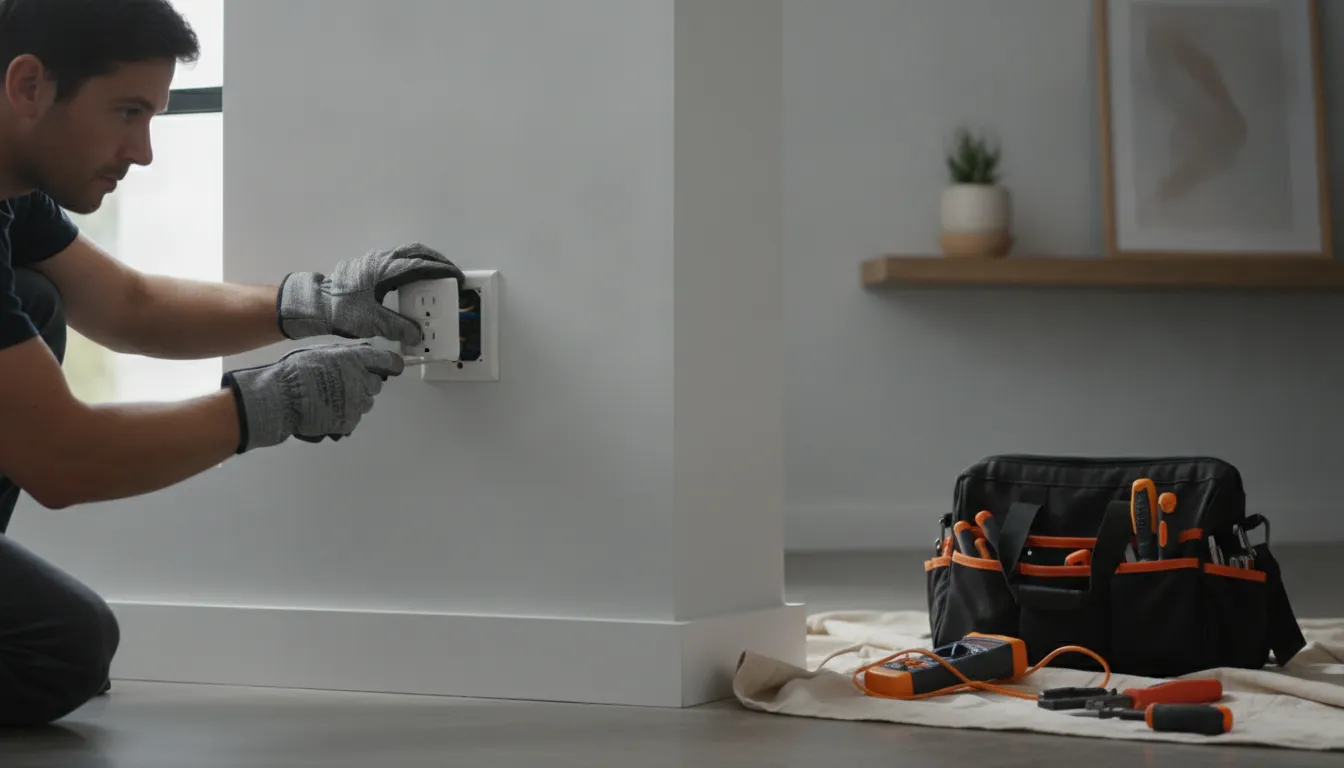
- Assess the outlet and make the circuit safe. The electrician examines the outlet, cover, surrounding wall, and any visible signs of heat, damage, moisture, or movement. Before removing the device, they identify the correct breaker and turn off power to the circuit. They then test the outlet with appropriate equipment to confirm that it is de-energized. This step is essential because an incorrectly labeled breaker can leave a receptacle energized.
- Inspect the wiring and electrical box. With the outlet removed, the electrician checks the wire condition, connections, grounding, and box. Loose, scorched, brittle, undersized, or damaged wiring may need additional repair before a new outlet is installed. A loose or damaged box can also prevent the device from sitting securely and may require correction.
- Choose the right replacement outlet. The replacement must match the circuit, wiring, grounding arrangement, amperage, and location. A standard receptacle may be appropriate in one room, while a GFCI outlet or another code-required device may be needed elsewhere. If an older two-prong outlet lacks an equipment grounding conductor, the electrician evaluates the compliant replacement options instead of assuming a three-prong device is automatically safe.
- Install the outlet to code. The electrician makes the required connections, secures the receptacle and cover, and confirms that conductors are properly contained in the box. Correct polarity, grounding, box fill, and device orientation all matter. The finished outlet should sit firmly and flush with the wall without exposed conductors or a loose faceplate.
- Test and verify the finished work. The electrician restores power and tests the outlet for correct operation, polarity, grounding, and stability. Where a GFCI is installed, they test its protection and reset functions as well. If other outlets or wiring show related problems, they explain the findings and recommend the next appropriate repair.
This measured approach provides more than a working receptacle. It gives you confidence that the underlying connections were reviewed and that the replacement supports a safer, code-conscious home. For help with an outlet that is damaged, loose, warm, or outdated, contact Pro Tech Power to discuss the next step.
Common Outlet Types to Consider for Your Home
Not every outlet serves the same purpose. During an outlet replacement project, the right choice depends on the age of the wiring. The room’s conditions, the appliances you use, and the level of protection your electrical system needs. A licensed electrician can inspect the existing box and wiring before recommending an upgrade.
| Outlet type. | Best for. | Key safety feature. |
|---|---|---|
| Standard grounded three-prong. | General living areas and dry rooms. | Grounding for modern appliance use. |
| GFCI. | Kitchens, bathrooms, garages, laundry, outdoors. | Shuts off power when it detects a ground fault. |
| AFCI (outlet or breaker). | Rooms where wiring may be aged. | Detects dangerous arcing conditions. |
| Tamper-resistant. | Homes with young children. | Internal shutters block partial insertion. |
| USB. | Desks, kitchens, bedrooms. | Convenience charging, not a safety feature. |
Standard grounded three-prong outlets
Many older homes still have two-prong, non-grounded receptacles. Replacing them with grounded three-prong outlets can provide better safety and shock protection for modern appliances. But the upgrade must match the wiring and grounding path already in the home. A three-slot face does not create a ground where one does not exist. The electrician should verify the circuit rather than simply installing a newer-looking outlet. This grounding guidance is consistent with the safety recommendations from Entergy.
GFCI outlets for damp locations
Ground-fault circuit interrupter, or GFCI, outlets are designed for areas where electricity may come near water. Kitchens, bathrooms, garages, laundry areas, exterior walls, and outdoor receptacles may need this type of protection. GFCI devices monitor electrical flow and can shut off power quickly when they detect an imbalance that could indicate current traveling through an unintended path. Entergy specifically identifies kitchens, bathrooms, and outdoor locations as places where standard outlets may need to be upgraded to GFCI protection.
AFCI outlets and breakers
Arc-fault circuit interrupter protection helps identify dangerous arcing conditions that may occur in damaged or deteriorating wiring. Depending on the home’s circuit design and applicable code requirements, AFCI protection may be provided at the breaker or through a receptacle. An electrician can determine which approach fits the circuit instead of treating AFCI as a universal plug-in replacement.
Tamper-resistant and USB outlets
Tamper-resistant outlets include internal shutters that help prevent objects from entering only one slot, making them useful in homes with young children. USB outlets can provide convenient charging at desks, kitchens, bedrooms, or other locations where devices are commonly used. They should still be selected for quality, compatibility, and proper installation. USB ports are a convenience feature, not a substitute for GFCI or AFCI safety protection.
In practice, a replacement may involve a simple grounded outlet, a GFCI device, or a combination of safety and convenience features. If you are unsure which option fits a room, Pro Tech Power can evaluate the circuit and recommend an appropriate solution. If the assessment turns up an aging panel or related wiring concerns, our guide to electrical panel upgrades explains the warning signs and expected costs.
Can You Replace an Outlet Yourself?
For a confident DIYer, replacing a standard outlet can look like a simple fixture swap. The basic task involves turning off the circuit, confirming the power is off, moving the wires to a new device, and securing the outlet in the electrical box. However, the visible steps do not tell you whether the wiring is grounded, damaged, overloaded, or compliant with current requirements.
That is why outlet replacement deserves more caution than many routine home repairs. A loose connection, incorrect wire placement, damaged conductor, or failure to identify an energized circuit can cause shock, arcing, overheating, or fire. NFPA reports that home electrical structure fires caused an estimated annual average of 527 civilian deaths and $2.4 billion in direct property damage each year from 2020 through 2024. Those figures do not mean every outlet replacement is dangerous, but they show why small electrical mistakes should be taken seriously. NFPA’s electrical fire data provides additional safety context.
When should you call an electrician?
A licensed electrician is the clear choice when the outlet is old, loose, cracked, discolored, warm, buzzing, or showing signs of scorching. Stop using the outlet and turn off the circuit if you notice sparks, a burning smell, melting, or other evidence of overheating. Do not treat a replacement as a cosmetic repair when the box or wiring may also need attention.
Professional help is also important when you find a two-prong outlet, aluminum or unfamiliar wiring, multiple wires in the box, or an outlet in a damp location. Kitchens, bathrooms, garages, laundry areas, and outdoor locations may require GFCI protection. A licensed professional can determine whether the outlet is properly grounded, whether the circuit can support the intended use, and whether the installation meets applicable electrical codes. Pro Tech Power describes outlet replacement as a safety task that should be handled by a licensed professional for code and safety compliance. See the company’s residential electrical services for help with an inspection or replacement.
If you are uncertain at any point, stop and call an electrician. The cost of a service visit is modest compared with the consequences of a hidden wiring problem, shock, or electrical fire.
Get help from a licensed electrician in the Portland area for an outlet that is loose, worn, or unsafe. Call 503-780-6207 or request a quote online.
Frequently Asked Questions
How much does electrical outlet replacement cost?
Most straightforward replacements cost about $50 to $150 in labor per outlet, plus the price of the fixture. The total depends on outlet type, wiring condition, accessibility, and whether the electrician finds a larger issue. A licensed electrician can provide an accurate quote after inspecting the outlet and surrounding wiring.
Can I replace an electrical outlet myself?
Some homeowners attempt this as a DIY project, but outlet wiring presents shock, fire, and code-compliance risks. Turn off power at the breaker and avoid using the outlet if it is warm, damaged, buzzing, or sparking. For reliable and code-compliant work, have a licensed professional handle the replacement.
When should an electrical outlet be replaced?
Replace an outlet when it feels loose, shows cracks, discoloration, scorching, or melting, or causes flickering, buzzing, or a burning smell. Warm outlets and persistent buzzing require prompt attention. Outlets that are more than 30 to 40 years old may also be candidates for preventative replacement, depending on their condition.
What are the different types of electrical outlets?
Common options include standard grounded three-prong outlets, tamper-resistant outlets, USB-equipped outlets, and GFCI outlets. GFCI protection is especially important in damp areas such as kitchens, bathrooms, and outdoor locations. Older two-prong outlets may need a professional evaluation before any upgrade to determine whether proper grounding is available.
Why should I hire a licensed electrician for outlet replacement?
A licensed electrician can identify unsafe wiring, select the correct outlet, verify connections, and complete the work according to applicable building codes and safety standards. Professional inspection matters because U.S. home electrical structure fires caused an estimated annual average of 527 civilian deaths and $2.4 billion in direct property damage from 2020 to 2024. NFPA fire data supports treating electrical repairs as a safety priority.
Ready to Schedule Your Outlet Replacement Quote?
If an outlet is loose, damaged, discolored, or no longer meeting your needs, a professional assessment can help you choose a safe replacement for your home. Contact Pro Tech Power to request a residential outlet replacement quote, or call 503-780-6207 to discuss the next step with the team.