
Lighting
Dimmer Switch Installation: A Safe Electrical Planning Guide
Pro Tech Power Corp
· 15 Min Read
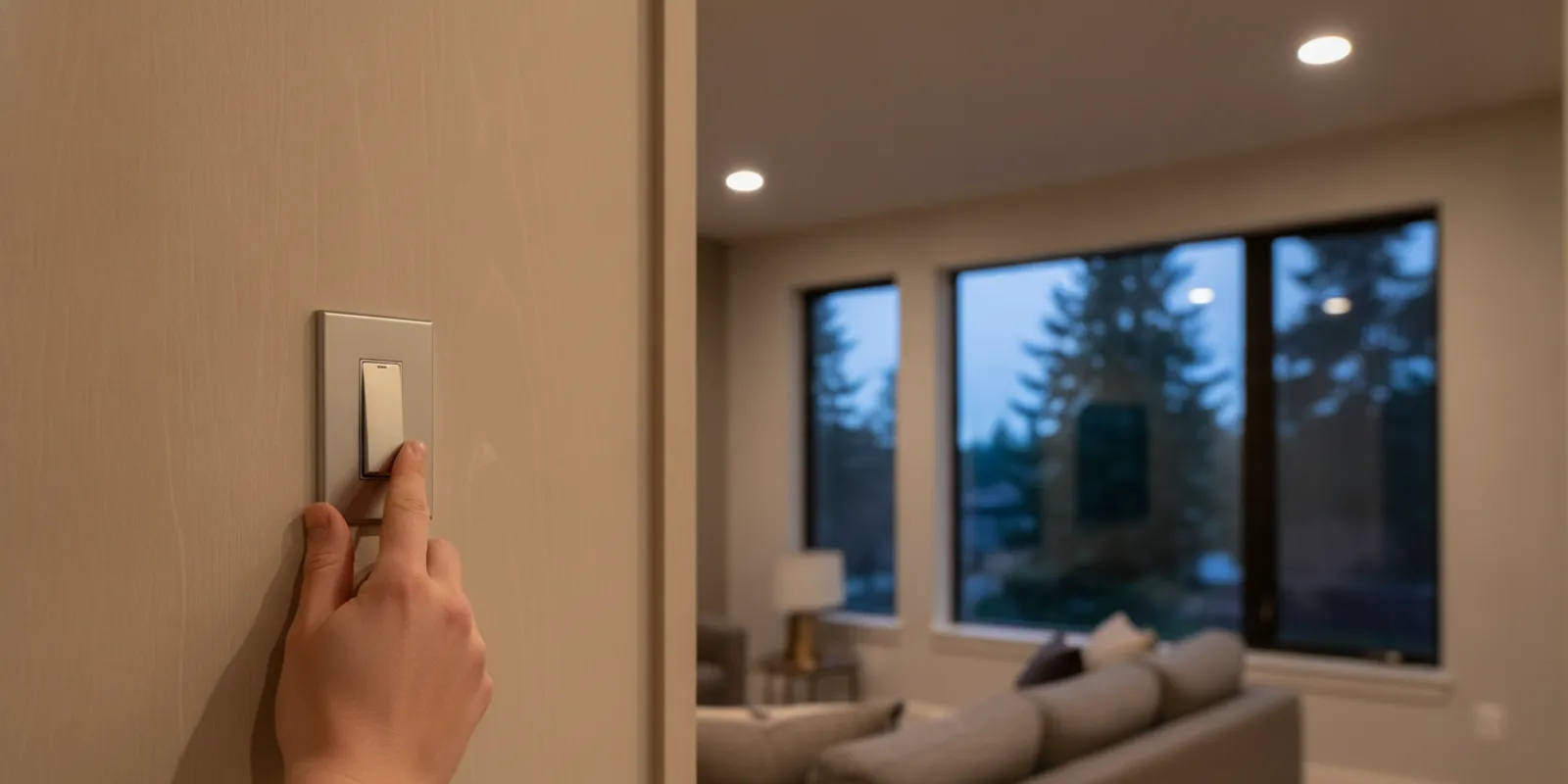
Dimmer switch installation can make a room more comfortable and give you better control over lighting, but a compatible dimmer must match the bulbs, fixtures, electrical load, and switch arrangement. Before choosing a model, identify what is connected to the circuit and whether the lights are controlled from one location or several. Plan a safe installation with a licensed electrician.
Request an electrical estimate
What should you check before choosing a dimmer?
Start with the lighting load and the switch configuration. A dimmer is not automatically compatible with every light that fits a fixture. The bulb or fixture must be designed to dim, the control must support the connected load, and the device must work with the existing switching arrangement. Checking these details first can prevent flicker, a narrow dimming range, buzzing, or a control that does not behave as expected.
Make a simple inventory without opening the switch box. For each room or lighting group, record:
- The number of bulbs or fixtures controlled together.
- Whether the lights use replaceable bulbs or integrated LED modules.
- The lamp type and the wattage printed on the bulb, fixture label, or product documentation.
- How many wall controls operate the same lights, and whether any control already dims them.
- Any other equipment that you know shares the circuit, such as a fan or receptacle.
- Symptoms such as flickering, a buzzing sound, delayed start, or lights switching off unexpectedly.
Keep the bulb packaging, fixture model number, or a clear photo of the product label. Those details help an electrician check manufacturer compatibility. They do not reveal what is behind a wall plate, so do not remove the plate to investigate. If you have noticed other electrical warning signs, review this home electrical safety guide and share relevant observations with a qualified professional.
Think about the room’s purpose as well as its equipment. In a kitchen, for example, a homeowner may want bright light for food preparation and lower light during dinner. In a bedroom, the goal may be a comfortable low setting without losing enough brightness for cleaning. Write down the useful range you want; it helps focus the discussion on performance rather than choosing a control by appearance alone.
How do bulb and dimmer compatibility work?
For a dimmer to work well, both the light source and the control must be designed for dimming and compatible with one another. With LED lighting, look for a dimmable designation on the bulb or fixture, then check the dimmer maker’s compatibility information for the exact model. Two products can each be labeled dimmable and still perform poorly together because their electronic components do not work well as a pair.
Common signs of a mismatch include:
- Flicker: The light pulses or shimmers at one or more settings.
- Dropout: The bulbs turn off before the control reaches its lowest setting.
- Limited range: Brightness changes only slightly, or the lowest setting is not low enough for the room.
- Buzzing or humming: The lamp or dimmer makes an audible sound during operation.
- Uneven response: Bulbs in the same group appear to dim at different rates or stop at different levels.
- Delayed response: A lamp hesitates before lighting or reacts inconsistently as the control moves.
These symptoms do not prove that the dimmer alone is at fault. The lamps, fixture driver, control type, wiring, or the combination may be involved. If several bulbs are on one control, using the same make and model can make the response more consistent, but it does not guarantee compatibility. Keep the packaging and record each product model so the combination can be checked against manufacturer guidance.
Integrated LED fixtures need particular attention because the light source and driver are built into the fixture. Check whether the fixture maker permits dimming and identifies compatible control types. If the documentation does not identify a suitable dimmer, pause before purchasing a device. A control with an adjustment for minimum or maximum brightness may improve performance with a supported load, but it cannot make a non-dimmable fixture suitable for dimming.
When replacing lamps to solve a problem, change one variable at a time only under professional guidance. For instance, changing both the dimmer and every bulb at once can make it harder to identify which part affected the result. Give the electrician the current lamp model, dimmer model if known, and a description of when the problem occurs, such as only at low brightness or only after the lights have been on for a while.
How should you understand a dimmer’s load limit?
A dimmer’s rating describes the amount and type of lighting load it is designed to control. Do not choose one based only on the number printed on the package or the number of bulbs. Gather the relevant load information for every lamp or fixture, then compare it with the exact device instructions. A rating may vary by light source, and LED loads can have additional compatibility or capacity limits.
For a first-pass inventory, write down the number of fixtures and each stated wattage. If a room has six replaceable lamps marked 9 watts each, the arithmetic total of their listed wattage is 54 watts. That figure is useful information to share, but it does not establish that a particular dimmer is appropriate: the device may have separate ratings, compatibility conditions, or instructions for the load type. Integrated fixtures may list input details differently, so do not substitute a guess for their documentation.
Use this comparison as a planning aid, not as a substitute for the device instructions or an electrician’s assessment.
| What to compare | What to gather | Why it matters |
|---|---|---|
| Lighting type | LED, incandescent, halogen, or integrated fixture details | Dimmer designs support different kinds of loads. |
| Total connected load | Bulb or fixture count and product wattage or rated load | The combined load must remain within the applicable device rating. |
| LED capacity | Exact dimmer instructions and manufacturer compatibility information | An LED rating may differ from a rating for another lamp type. |
| Control locations | One switch location or multiple locations controlling the same lights | The device must match the multi-way switching arrangement. |
| Other circuit conditions | Known equipment, existing symptoms, and unusual controls | The situation may call for further assessment rather than a simple device change. |
Keep the model number and instructions for any control you are considering. If the fixture load is unclear, the circuit includes different kinds of equipment, or the product documentation does not cover the arrangement, pause before buying. An electrician can determine what is connected and whether the proposed control is appropriate. Avoid treating an apparently low wattage as proof that a dimmer will fit or operate safely in every box.
What changes with a multi-way switch?
When lights are controlled from two locations, such as at opposite ends of a hallway, the switching system differs from a single-location setup. A compatible dimmer must be designed for that specific arrangement. Depending on the equipment, the system may use one dimmer and a compatible companion control, or another setup named by the manufacturer. Two ordinary single-location dimmers are not automatically interchangeable with a multi-way system.
Before selecting a device, tell the electrician how many locations control the same lights and whether any existing control adjusts brightness. Also mention whether the locations are in different rooms or on different floors, and whether all controls operate the same group. These details help distinguish one multi-way lighting group from separate fixtures that happen to be near one another.
Do not rely on the look of a switch plate to identify wires or their function. Switch-box wiring can vary, and wire color alone is not a safe substitute for testing and expertise. Do not remove a switch or touch conductors to try to identify a traveler, common conductor, or other connection. Leave that assessment to a licensed electrician.
If you are planning controls during a remodel or new build, decide where each control should be and which fixtures it should operate before the walls are finished. Map the path people use through the space. For example, a hallway light that should be controlled at both ends needs a different plan from a closet light operated at one entrance. A broader lighting planning guide can help frame questions about fixtures, zones, and where controls are useful.
What should you compare when selecting a dimmer?
Once you know the lighting type and switching arrangement, compare the controls by their actual specifications. A basic slide or rotary model may be enough for a single room. A button or preset model may make repeated settings easier, but added features do not replace electrical compatibility. Read the instructions for the exact model instead of relying on a product photo or a general description.
Check these details before making a purchase:
- Supported lamp type: Confirm that the model supports the exact LED or other light source in the fixture.
- Load capacity: Check the rating that applies to the connected lighting type and follow every condition in the instructions.
- Switching arrangement: Verify whether it works from one location or requires a companion control for multiple locations.
- Wiring requirements: Review the product documentation and have an electrician determine whether the existing wiring is suitable. Do not open the box to investigate.
- Physical fit: Consider whether the device can fit in the existing wall box alongside other controls, with room for wiring and the cover plate.
- Operating range: Find out whether the maker supports minimum or maximum brightness adjustments for the chosen lighting load.
- Everyday operation: Consider whether users prefer a slider, a rotary control, buttons, or a preset level, and whether the control is easy to find in low light.
Features are most useful when they solve a clear need. A preset can be convenient when the same brightness is used every evening. A plain slider may be a better fit when several people want direct, simple control. For a light group that needs adjustment from multiple places, compatibility and the correct companion equipment matter more than the control’s appearance. Make a short priority list before comparing models so optional features do not distract from the basic requirements.
How can you document a lighting problem safely?
If the lights already flicker, buzz, or cut out, careful observations can help an electrician narrow down what to inspect. Do not remove a switch, handle conductors, or repeatedly operate a control that appears damaged. Instead, note what happens during normal use and stop if you notice heat, a burning smell, sparking, or another urgent warning sign.
For a non-urgent issue, record the room, fixture group, and approximate time when you notice it. Does every lamp on that control flicker, or only one? Does the behavior occur at all brightness settings or only near the lowest level? Does it happen immediately after turning the lights on, or after they have been on for a while? These distinctions do not identify a cause, but they give the electrician useful context. If the lamps are replaceable, note their make and model rather than swapping several products before the setup is assessed.
Consider a few examples. If one bulb behaves differently from the others, its condition or its compatibility with the group may be relevant. If every light changes together when the dimmer is adjusted, the control and the overall load are useful details to report. If the problem appears alongside a tripped breaker or unusual warmth, treat it as a safety concern rather than a dimmer-selection question. In each case, report what you observed; do not try to reproduce a symptom that may be unsafe.
A short record can include the date, the control location, the number of affected fixtures, the type of lamps, and any recent change such as a new bulb or fixture. Share the notes and product labels with the electrician. This creates a clearer starting point than a general report that the lights do not work right, while keeping troubleshooting away from exposed wiring.
Also consider how the lighting will be used at different times. A kitchen may need bright task light as well as a lower setting for evening use. In a living room, different activities can call for different levels, but a dimmer cannot compensate for a fixture layout that leaves work areas poorly lit. A bedroom may benefit from comfortable low light while still needing enough output for everyday tasks. Describe these use cases to the electrician and ask whether the planned fixture and control combination can support them.
Keep the packaging, model number, and compatibility notes after selecting a device. If the electrician recommends a different control after reviewing the fixtures or wiring, ask which specification prompted the change. That explanation helps you compare alternatives without assuming that products with similar appearances are interchangeable. If you are coordinating several zones or control types, review this lighting control planning guide before finalizing the plan.
When should you choose a different control?
A standard wall dimmer is not the right answer for every lighting setup. A smart control may offer scheduling or remote operation, but it still has to match the lighting load, wiring, and companion controls. A fan-and-light combination may require separate controls designed for each function. Low-voltage or specialized fixtures may need a control identified by the fixture maker.
Compare options by how the room is used, rather than by the number of features. Ask whether you need a simple brightness adjustment, control from several locations, preset scenes, or integration with another system. Confirm which functions the fixtures themselves support. If you are interested in a connected control, ask how it will operate if a network or app is unavailable and whether local wall operation remains practical. Do not assume that a wireless feature eliminates the need to evaluate the electrical installation.
For a larger remodel, share fixture specifications and intended control locations before the walls are closed. A residential planning conversation can also address related work; the residential electrical information outlines the company’s broader electrical work. If a project includes multiple lighting zones, ask how the controls, circuits, and fixture selections will be coordinated as one plan.
Why should unsafe wiring be handled by a licensed electrician?
A wall switch can look simple while connecting to wiring that is not obvious from the room. Mistakes can create shock or fire hazards, damage lighting equipment, or leave a circuit operating unpredictably. The Occupational Safety and Health Administration’s electrical safety overview describes protections such as guarding, grounding, electrical protective devices, and safe work practices. It offers general context, not a substitute for local requirements or an on-site evaluation.
Bring in a licensed electrician if you notice any of the following:
- A switch, wall plate, or nearby wiring feels unusually warm, smells burnt, sparks, or shows discoloration.
- A breaker trips, lights behave inconsistently, or a switch makes an unusual noise.
- You cannot confidently identify the circuit or determine whether power is off.
- Wiring looks damaged, crowded, unfamiliar, or different from what you expected.
- The lights are controlled from several locations or include a fan, smart control, or specialized fixture.
- A new control does not fit easily, the box appears crowded, or the instructions do not match the setup.
Do not remove a cover or touch conductors to investigate. Avoid repeatedly resetting a breaker after it trips. Leave the area undisturbed and contact a qualified professional for an assessment. If you see smoke or an active fire, leave the area and contact emergency responders. Electrical work may also be subject to local permit and inspection requirements; ask the electrician or local authority what applies to the specific project rather than assuming that rules are identical everywhere.
For homes with older or altered wiring, a dimmer request can be a useful point to discuss the broader condition of the circuit, but it does not automatically mean that a panel change or other major work is needed. Explain the symptoms and the intended change, then ask the electrician to identify the actual scope. This keeps the decision grounded in the existing installation rather than an assumption based on the age of the house alone.
What is a practical planning sequence?
A little preparation helps an electrician assess the right equipment and scope. Use this sequence before requesting an estimate:
- Describe the room and goal. Explain whether you want softer evening light, a wider brightness range, or coordinated control from more than one location.
- Identify the fixtures. Record fixture and bulb information, including whether LEDs are integrated or replaceable. Take photos of product labels if they are safely visible.
- Map the controls. Note how many switch locations operate the lights and whether any control already dims them. Do not remove the plate to inspect wiring.
- Gather load details. Count the bulbs and record the wattage or fixture model. Tell the electrician if the rating is missing or difficult to interpret.
- Share symptoms. Mention flicker, humming, intermittent operation, unusual warmth, or breaker trips. Do not try to recreate a dangerous symptom.
- List priorities. Separate must-haves, such as multi-location operation, from preferences, such as a particular control style or preset.
- Ask about compatibility and capacity. Confirm that the proposed device supports the actual fixtures, total load, and switching arrangement.
- Confirm project details. Ask whether additional evaluation, changes, permits, or inspections may apply before work begins.
- Agree on a completion check. Ask how the installed setup will be tested across the expected brightness range and control locations, and what information to keep for future bulb replacement.
For examples of completed electrical projects, visit the project portfolio. If a dimmer is one part of a wider electrical update, discuss the full scope instead of assuming that a new control requires a panel change. This panel upgrade planning guide explains considerations for a separate, larger project.
Before the appointment, keep the notes in one place and make sure the person assessing the work can see the relevant fixtures and controls. If several rooms are involved, label the room names and describe each control group separately. A concise list prevents an important detail—such as a second switch location or a fixture with integrated LEDs—from getting lost in a general description.
Ask about your lighting project
Frequently Asked Questions
Can every LED bulb be used with a dimmer?
No. The bulb or fixture must be labeled for dimming, and it must be compatible with the selected control. Check the manufacturer’s guidance for both products. If the light flickers or will not dim smoothly, have the bulb, fixture, and dimmer combination assessed instead of assuming that replacing only one part will resolve it.
Can I install a dimmer without replacing the bulbs?
Possibly, if the existing bulbs or fixtures are dimmable and compatible with the planned device. Check the product details first and account for the complete lighting load. If the type or rating is unknown, do not assume that a new dimmer will work with what is already installed.
Can one dimmer control lights from two switch locations?
Some dimmer systems can control lights from multiple locations when paired with the correct companion device and installed for that arrangement. The product instructions and existing circuit determine what is suitable. A standard single-location dimmer may not work in a multi-way setup, so tell the electrician how many controls operate the lights.
What should I do if a dimmer or switch feels hot?
Stop using the control if it feels unusually warm, smells burnt, sparks, or shows discoloration. Do not remove it or touch the wiring. Contact a licensed electrician to evaluate the condition; if there is smoke or an active fire, leave the area and call emergency responders.
Does a dimmer always reduce energy use?
Do not choose a dimmer on the assumption that it guarantees a particular energy result. Performance depends on the lamps, fixture, control, and how the lights are used. Ask the electrician or lighting manufacturer what to expect from the exact products in your room.
Dimmer performance depends on the complete lighting setup, not just the wall control. Confirm compatibility and load limits, account for every switch location, and have uncertain or unsafe wiring evaluated by a licensed electrician before work proceeds.