Home Gym Electrical Wiring Portland: A Homeowner’s Guide
A home gym can turn an underused basement, garage, or spare room into a practical workout space, but the electrical plan should come before the equipment arrives. Treadmills, cable machines, lighting, fans, and other electronics can place demands on circuits that were never designed for concentrated, continuous use.
Safe home gym electrical wiring Portland projects start with a load assessment, correctly rated equipment connections, strategically placed receptacles, and protection suited to the room. Dedicated circuits can help prevent nuisance breaker trips, while code-compliant GFCI or AFCI protection may apply based on the gym’s location and existing wiring.
Whether you are finishing a basement or remodeling a garage, planning the power layout now can reduce extension cords, trip hazards, and costly changes later. Start by matching each major piece of equipment to the circuit it actually needs, then build the rest of the installation around that demand.
Home Gym Electrical Wiring Portland: Dedicated Circuits for Home Gym Equipment
Home gym equipment can place a concentrated electrical demand on one room. A dedicated circuit gives a high-load appliance its own branch circuit instead of sharing power with lights, outlets, or other equipment. That arrangement helps reduce nuisance breaker trips, a common concern with heavy-duty appliances and motor-driven gym machinery. Dedicated circuits should be considered for large appliances and other high-amperage equipment, especially when a room will contain several powered machines.
Match the circuit to the equipment
Read the installation manual and equipment nameplate before choosing the circuit. As a practical planning guideline, a treadmill typically needs a 20-amp dedicated circuit, while many weight machines with powered components can use a 15-amp dedicated circuit. SES Electric also notes that each treadmill should have its own 20-amp circuit. These requirements can vary by model, so the plug, voltage, amperage, breaker, and wiring must all be properly matched. Equipment must be installed according to its listing and the manufacturer’s instructions.
| Equipment type | Recommended circuit | Key considerations |
|---|---|---|
| Treadmill | 20-amp dedicated | Motor-driven; sensitive electronics need surge protection |
| Elliptical / bike | 15-amp dedicated | Lower draw but may share circuit with display |
| Weight machine (powered) | 15-amp dedicated | Hydraulic or motorized adjustments add load |
| TV / entertainment | 15-amp general | Combine with lighting if load allows |
| Space heater | 15-amp dedicated | High draw; keep away from flammable materials |
Do not assume that a nearby receptacle can safely support a new treadmill. An electrician should confirm the existing circuit’s capacity, wiring, and protective devices before connecting equipment. This is particularly important in a basement, garage, or remodeled room where older wiring may serve several unrelated loads.
Leave capacity for continuous operation
Load planning matters even when the breaker rating appears sufficient. The combined load of equipment operating continuously should not exceed 80% of the circuit capacity. That margin helps prevent overheating and unwanted trips during longer workouts. A circuit plan should account for the treadmill, screens, fans, audio equipment. And any other devices that may run at the same time, rather than sizing only for the largest motor.
Protect treadmill electronics
Many treadmills include sensitive displays and control electronics. A high-quality surge protector can help protect those components from voltage spikes. Surge protection does not replace correct circuit sizing or grounding, but it adds a useful layer of protection for electronic equipment. For reliable electrical planning for home offices and home gyms alike, plan the circuit layout before equipment is installed.
Outlet Placement and GFCI Requirements
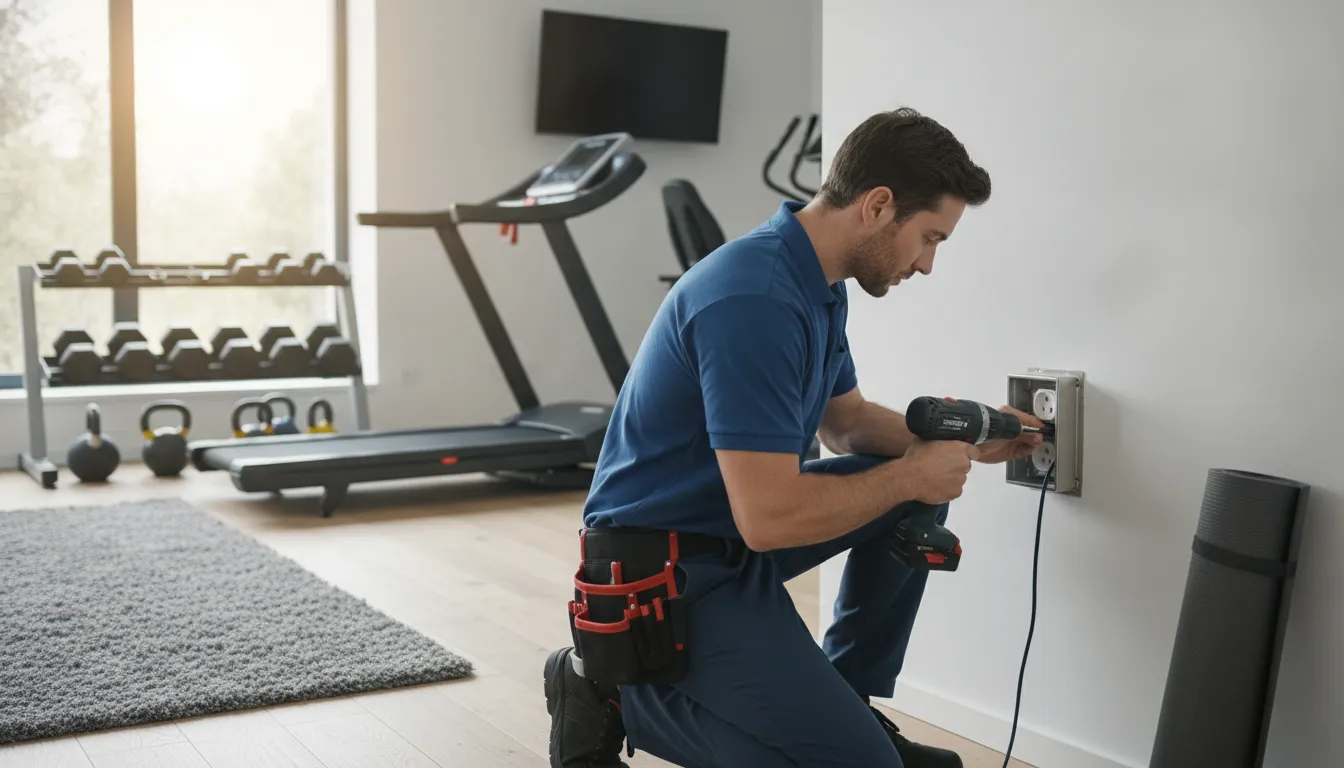
Outlet planning should follow the way you move through the gym, not simply the existing wall layout. Place receptacles near treadmills, bikes, weight-training equipment, fans, and entertainment devices so cords do not cross walking paths or sit beneath moving equipment. Electrical guidance recommends locating receptacles to minimize extension-cord use, which helps reduce trip hazards and the temptation to daisy-chain power strips.
Keep outlets accessible and away from water exposure
In a basement gym, avoid placing outlets where a minor leak, seepage event, or flood could reach them. A qualified electrician can account for the room’s elevation, plumbing, floor drains, and likely equipment layout when setting mounting heights. Garage gyms also need special attention around utility sinks and hose connections.
Ground-fault circuit-interrupter, or GFCI, protection is required for receptacles installed within 6 feet of water sources, including areas near sink basins. That can apply to a basement gym with a nearby laundry or utility sink, or to a garage gym beside a wash station. GFCI protection monitors for an unintended path to ground and quickly interrupts power. For a broader explanation of damp-area rules, see these GFCI protection requirements.
Use AFCI protection where the room qualifies as living space
Arc-fault circuit-interrupter, or AFCI, protection is generally required for 120-volt, single-phase 15- and 20-ampere outlets serving residential bedrooms and similar living areas. If your home gym is part of finished residential living space. The circuit design should be reviewed for the applicable AFCI requirement rather than assuming a standard receptacle is sufficient. GFCI and AFCI address different hazards, and a project may require one or both depending on location and circuit configuration.
Ground metal boxes correctly
Steel outlet boxes are durable, but they must be part of a properly grounded wiring system. Metal boxes and covers must be grounded, and where more than one equipment grounding conductor enters a box, the conductors must be bonded together with an approved method. This protects the box from becoming energized if a fault occurs. Outlet location, protection, and grounding should be confirmed during the wiring plan for home gym electrical wiring Portland projects, especially when finishing a basement or converting a garage.
Lighting Your Home Gym Safely and Effectively
Good lighting does more than make a workout space look finished. It helps you see equipment, footing, and movement clearly while reducing shadows around weights, steps, and machines. Electrical guidance calls for lighting that is sufficient for the intended use and provides illumination across the workspace. In practice, plan general lighting for the whole room rather than relying on a single bright fixture over one exercise area.
Choose fixtures for the room
Recessed LED fixtures can work well in a basement gym because they provide even overhead light without taking up ceiling space. Surface-mount LED fixtures may be a better choice where ceiling depth, insulation, ductwork, or access makes recessed installation impractical. Whichever style you choose, arrange fixtures to limit glare on treadmill displays and mirrors. And consider the way shadows will fall when you lift or move across the room. A simple lighting plan should account for the room’s full footprint, not just the location of the largest machine.
Garage gyms need an additional durability check. Fixtures installed near racks, cable machines, or other equipment should be firmly mounted and selected to tolerate vibration and incidental impact. Fixtures must be securely fastened to the structure and properly supported for their weight, rather than attached to a weak ceiling finish alone. Keep exposed wiring protected wherever equipment could cause physical damage.
Keep heating loads separate
Portable space heaters deserve special caution in a basement or garage gym. Do not assume a nearby receptacle can safely share its circuit with a heater, treadmill, lights, or other equipment. Use a dedicated circuit where possible, keep the heater away from flammable gym materials, and never leave it unattended. A licensed electrician can evaluate the existing circuit, lighting layout, and mounting points together so the finished space is bright, stable, and safer to use.
Electrical Panel Considerations for Your Home Gym
Your panel is the starting point for deciding whether a new gym can be powered safely. Before adding circuits, an electrician should review the panel’s available spaces, existing load, breaker ratings, and the path to the gym. A treadmill, resistance machine, lighting, ventilation, and other equipment can create a concentrated demand that an older installation was not designed to handle.
Keep the panel accessible
Do not place shelves, storage racks, exercise equipment, or permanently installed cabinetry in front of the panel. Electrical equipment needs an unobstructed working area at least 30 inches wide and 36 inches deep in front of it. That clearance allows a qualified person to inspect, test, reset, or shut off equipment without moving gym furnishings. Panel clearance requirements come from the NEC.
If the project leaves unused breaker or knockout openings, those openings must be sealed with approved closures. Open spaces can expose the enclosure to dust or accidental contact and should not be treated as convenient cable-entry points. The panel cover should be complete and properly fitted when the work is finished.
Know when a subpanel or upgrade makes sense
A small gym may need only one or two appropriately sized circuits. A larger space with multiple dedicated circuits may be better served by a subpanel located closer to the equipment. A subpanel can organize the gym’s branch circuits and reduce long cable runs, but it does not create unlimited power. The electrician still needs to confirm that the existing service and feeder can support the additional load.
If the main panel is full or has little capacity remaining, a panel upgrade may be necessary instead. Review the factors involved in electrical panel capacity before choosing between an upgrade, a subpanel, or a smaller equipment plan.
Match equipment to its listing
Every treadmill, heater, lift, fan, and other powered device should be installed according to its listing and the manufacturer’s instructions. That includes the required voltage, amperage, receptacle type, spacing, and any dedicated-circuit direction. Consult the National Electrical Code and the equipment manual for installation requirements.
Permits, Codes, and Hiring a Licensed Electrician in Portland
Safe home gym electrical wiring Portland projects start with the permitting process, not with pulling cable. Residential wiring must meet the 2023 National Electrical Code (NEC), as adopted and amended by Oregon. Portland-area homeowners also need to follow the requirements of the local permitting authority, including applicable permits and inspections. Requirements can vary with the home’s location, the scope of work, and whether the project is new construction or an alteration.
Plan for permits and the rough-in inspection
Electrical work that is required to be inspected generally needs a permit before work begins. A rough-in inspection must take place before wiring is covered by drywall, insulation, or other wall finishes. That timing matters in a basement, garage, or unfinished exercise room because an inspector needs to see cable routing, boxes, conduit, and connections while they remain accessible. Confirm the permit path with the relevant Portland-area jurisdiction before starting.
Homeowner exemptions are limited. A homeowner may be allowed to perform certain electrical work at an owner-occupied primary residence after securing the necessary permits. But that exemption does not automatically apply to rental properties, multifamily buildings, or every type of project. If the gym is part of an accessory dwelling unit, rental, or major remodel, review the requirements before assuming homeowner work is permitted. Our guides to Portland residential electrical requirements and electrical planning for home offices cover related residential wiring considerations.
Protect wiring and bring existing circuits up to code
Home gyms create unusual physical risks. Equipment, storage, moving weights, and remodeling activity can damage exposed wiring. Where wiring could be subject to physical damage, it needs appropriate protection, such as conduit. A circuit extension also cannot simply copy an older installation. Extensions must comply with current requirements, including applicable AFCI and GFCI protection.
Every splice belongs inside an accessible junction box with an approved cover. Do not bury a connection behind finished walls or leave a junction box blocked by equipment. These details are easy to overlook when converting a room quickly, but they affect safety, inspection, and future troubleshooting.
A licensed Portland electrician can evaluate the panel, calculate the planned load, select suitable wiring methods, coordinate permits, and arrange the required inspection. Professional installation is especially valuable when the project involves new circuits, finished walls, a garage or basement, or several motor-driven machines.
Frequently Asked Questions
Does a home gym need its own electrical circuit?
Often, yes. Treadmills, rowers, resistance machines, and other motor-driven equipment can place a substantial load on a branch circuit. A dedicated circuit can reduce nuisance breaker trips, but the final design should account for the equipment nameplates, lighting, outlets, and any other loads sharing the circuit. Equipment must also be rated for the circuit voltage and amperage.
Where should outlets be placed in a Portland home gym?
Place receptacles near the equipment they serve while keeping cords away from walking paths, moving belts, and workout areas. Planning locations before finishing the walls helps minimize extension-cord use and makes future equipment changes safer. If wiring is exposed in a garage or unfinished basement, it may need protection such as conduit where it could be damaged. Receptacles near sinks or other water sources may also require GFCI protection based on their location.
Do home gym outlets need GFCI or AFCI protection?
The answer depends on the room, receptacle location, and circuit design. GFCI protection is important where receptacles fall within code-required distances of water sources. AFCI protection generally applies to many 120-volt, 15- and 20-ampere outlets in dwelling living areas. Because a gym in a bedroom, basement, garage, or addition can be treated differently, have the existing circuit and proposed work evaluated against the current requirements before installation. Residential wiring guidance covers GFCI applications.
Do I need a permit to add home gym wiring?
Electrical additions commonly require a permit and inspection by the local authority. For new wiring, arrange the rough-in inspection before the walls are covered. And do not rely on an existing circuit without checking whether an extension must meet current AFCI and GFCI requirements. Permit details can vary by jurisdiction in the Portland area, so confirm the requirements with the city or county before work begins.
Ready to schedule your home gym electrical consultation?
A thoughtful electrical plan can help your Portland-area home gym support equipment, lighting, and safer workouts without relying on unnecessary extension cords. Pro Tech Power Corp (CCB#198878) can review your space and help identify the right next steps for the wiring, circuits, and outlets your setup requires. To schedule your home gym electrical consultation, call 503-780-6207.