Electrical Requirements for Heat Pump Installation
Oregon homeowners often overlook their electrical panel until they try to install a heat pump.
Planning a heat pump or HVAC upgrade? Contact Pro Tech Power Corp to review your panel, dedicated circuit needs, and permit path before equipment arrives.
The electrical requirements for heat pump installation focus on your home’s power capacity and dedicated wiring for a 208-240V double-pole circuit that runs your unit very safely. An electrician must check if your current service panel can handle the extra load, which is vital for Oregon homes built before 1965 or those with small systems. According to Clean Heat Connect, these older systems often need an upgrade and a weatherproof safety disconnect switch placed near the outdoor unit to meet local building codes. Safe planning ensures your system meets all codes; our team at Pro Tech Power Corp (CCB#198878) helps you find the right breaker size using the unit label.
Many people think the HVAC crew handles everything, but the electrical work is a separate and vital step. You need to know if your panel is ready before the new unit arrives. That starts with the basics every homeowner should check first.
Electrical requirements for heat pump installation: what Oregon homeowners should check first
Planning a heat pump or HVAC upgrade in the Portland area needs more than just picking a unit. You must make sure your home can support the new load. Heat pumps use more power than old furnaces. This often leads to higher amperage needs for the whole house. Checking your electrical system early stops slow-downs during the job.
Check your panel capacity
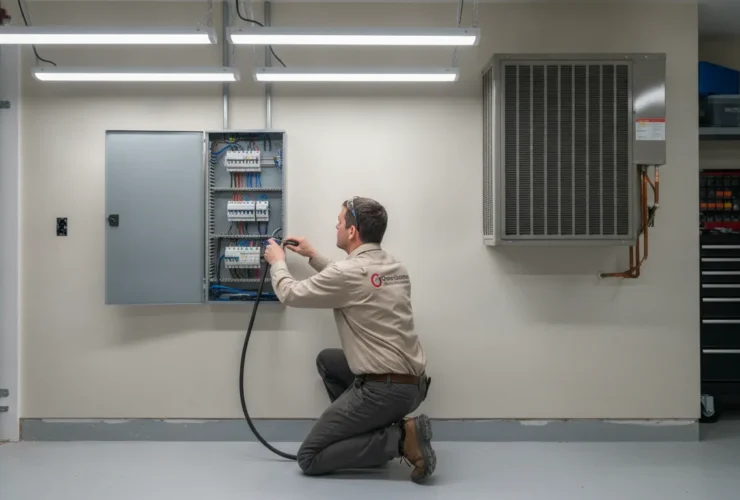
The first step is looking at your main electrical panel. Most new heat pumps need a dedicated 208-240V double-pole circuit to run well. If your home has an old panel, it might not have the room for this new link. This is common in homes built before 1965 or those with panels smaller than 100 amps.
A pro check finds if you have enough space or if your total service needs a boost. In Tigard and nearby cities, our team often sees homes that need a panel update to handle new HVAC tech. Our residential team at Pro Tech Power Corp helps owners find these needs before the heat pump arrives.
Check the unit label
Every heat pump has a label with two key numbers. These are the Minimum Circuit Ampacity (MCA) and Maximum Overcurrent Protective Device (MOCP). These values tell your electrician what wire size and breaker to use. Home units often range from 20 to 50 amps. Getting these numbers right keeps the system from tripping breakers or hurting the motor.
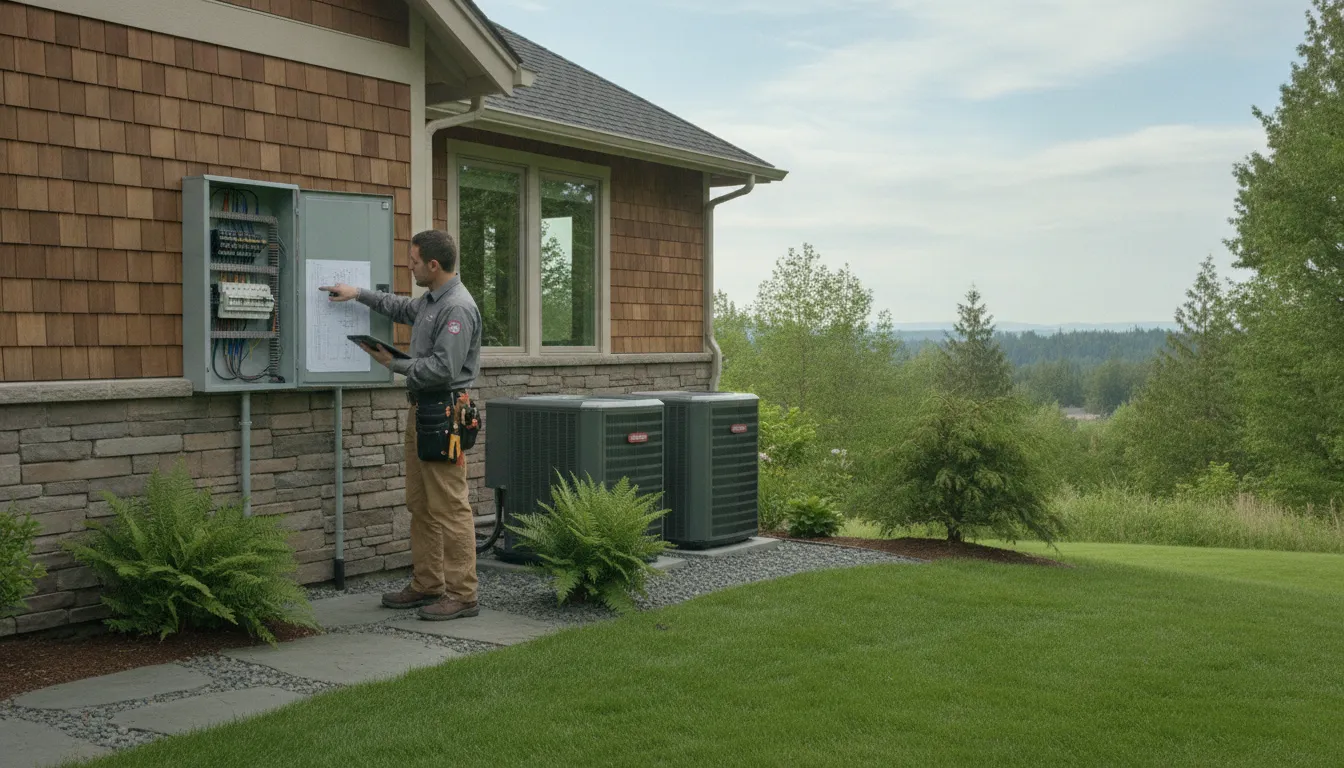
We also look at where the unit will sit. Code rules need a weatherproof safety disconnect near the outdoor unit. This lets a worker cut power fast while working on the system. Local rules in Oregon focus on these safety parts to protect both the owner and the unit from the rain and wind.
Map out your project
Setting up your electrical work with your HVAC team is key to a smooth job. At Pro Tech Power Corp, we give full system design and planning through our own team. We work with your HVAC crew so the wires and breakers are ready the day the unit is set. This smart move saves you time and keeps your project on track from start to end.
Why panel review comes before the HVAC installation date
Checking your home’s electrical capacity is a vital first step before you install a new heat pump. Most home heat pumps need a 208-240V double-pole circuit to work safely. Because these units pull more power, you must assess your electric system capacity first to ensure it can handle the extra load. At Pro Tech Power Corp, our team of 17 licensed journeymen can help you find the electrical requirements for heat pump installation in your home.
Checking panel space and load
A new heat pump often needs two open slots in your breaker panel for a double-pole breaker. If your panel is full, you might need to move breakers or add a subpanel to create space. Beyond physical space, the total power of your home matters. Homes built before 1965 or those with less than 100-amp service often need more amperage to support modern HVAC units. A 200-amp panel is the standard for most modern homes with high power needs.
We use the data on the maker’s label to find the right circuit size for your unit. This includes the Minimum Circuit Ampacity (MCA) and the Maximum Overcurrent Protective Device (MOCP) ratings. These numbers tell us exactly what kind of breaker and wire size your system needs. To ensure your panel can handle new loads, we run a full load test as part of our in-house design process.
Upgrades and project timelines
Planning for a panel upgrade early helps keep your HVAC project on track. If your current panel lacks the power to run a heat pump, you may face delays if you wait until the day of work to check. A 50-amp unit could need a panel upgrade or a load-shedding tool to prioritize your heating and cooling. Pro Tech Power Corp specializes in coordinating electrical needs for new gear, so you do not have to manage multiple teams yourself.
Following code is also a key part of our work. For example, a dry safety switch is needed near the outdoor unit to meet safety rules. By reviewing your panel early, we can find these needs and fix them before the HVAC team arrives. This proactive approach leads to a smoother setup and better energy savings for your home.
Dedicated circuits, breakers, and disconnects for heat pumps
A new heat pump installation needs its own power path to run safely. This path is known as a dedicated circuit. It ensures the unit does not share power with lights or other tools in your home. Sharing a circuit can lead to tripped breakers or unsafe heat levels in your walls. Most residential units need a 208-240V double-pole circuit (nyserda.ny.gov). This setup uses two slots in your panel to provide the high power your system needs (cleanheatconnect.ny.gov).
Safety with double-pole breakers
Double-pole breakers are a key part of the electrical requirements for heat pump installation. These breakers link two hot wires together. If one side has a surge, both sides trip at once. This stops all power flow to the unit. This is much safer than using two single breakers that might not trip together. Most homes built before 1965 have small panels that may not have space for these new breakers (cleanheatconnect.ny.gov). In those cases, you may need a panel upgrade to handle new loads.
Reading the MCA and MOCP labels
Every heat pump has a label that tells us how to size the wires and breakers. The first number is the Minimum Circuit Ampacity (MCA). This tells the electrician the smallest wire size that can safely carry the load. The second number is the Maximum Overcurrent Protective Device (MOCP). This tells us the largest breaker we can use to protect the unit (cleanheatconnect.ny.gov). Using these specs ensures the system meets the National Electric Code (NEC) for safety (cleanheatconnect.ny.gov).
Outdoor safety disconnects
A weatherproof safety disconnect must be placed near your outdoor unit (cleanheatconnect.ny.gov). This box allows a technician to cut power right at the unit while they work on it. It keeps them safe from accidental shocks. Pro Tech Power Corp ensures every install has a dedicated electrical circuit for appliances that includes this vital safety switch. We check that every part of the system meets local Tigard and Portland codes.
| Requirement. | Purpose. | Who Verifies It. |
|---|---|---|
| Dedicated Circuit. | Prevents circuit overloads. | Licensed Electrician. |
| Double-Pole Breaker. | Provides 240V power safely. | Licensed Electrician. |
| MCA/MOCP Check. | Sets correct wire and breaker size. | Design-Build Team. |
| Outdoor Disconnect. | Ensures safety during service. | Field Technician. |
| Code Compliance. | Meets NEC and local safety laws. | City Inspector. |
Do mini-splits and central HVAC upgrades need different electrical planning?
Planning the power needs for your home comfort system depends on the tools you choose. A ductless mini-split and a central heat pump have unique electrical requirements for heat pump installation. Most home heat pumps need a set 240V double-pole circuit to run safely. This setup ensures the system gets the right power without overloading other tools in your home.
Your current wires and home layout also play a big role in the plan. Our team of 17 licensed journeymen can ensure your panel can handle new loads before you start. Checking your home’s capacity is a vital first step. These systems often raise the total amp load. If your home has an older panel, you might need more power to support new HVAC upgrades.
Comparing mini-splits and central systems
Mini-split systems are often easier to add to a home since they can serve one room. But they still need a set circuit and a safe shut-off box near the outdoor unit. Central heat pumps usually range from 1 to 5 tons. This often means they need between 20 and 50 amps of power. If you change from an old furnace to a heat pump, you will likely need to boost your panel to manage the extra load.
Heat pump water heaters are also a common choice for homes. These units often need a 240V 30-amp circuit to work well according to Energy Star guidelines. Whether you put in one mini-split or a full system, following the code is a must for a safe home. Homes built before 1965 or those with less than 100 amps of service often need a panel upgrade to meet these new needs.
We give full system design and new service planning to help you through this work. Our goal is to handle the complex wires and permits so you can enjoy your new system. Making sure your plan follows state safety rules protects your home and ensures your system lasts. We lead the work in grouping these needs for new gear to make it easy for you.
Permits and coordination between your HVAC contractor and electrician
In Portland and nearby towns, you must get the right permits before you start a project. A heat pump needs both mechanical and electrical permits to meet local laws. Getting these papers ensures that a city inspector checks the work for safety once it is done. This step is a key part of the electrical requirements for heat pump installation and helps protect your home from fire or shock risks.
How contractors work together
Your HVAC team and your electrician must talk to each other to keep the job on track. The HVAC tech finds the best spot for the unit and tells the electrician the power needs. A licensed pro will check the unit label to pick the right parts. At Pro Tech Power Corp, we have 17 licensed journeymen who know how to ensure your panel can handle new loads safely.
Poor planning between teams can lead to long delays or extra costs. If the wiring is not ready when the heat pump arrives, the HVAC team may have to come back a second day. We work as a single source to help manage these moves, which takes the stress off you. This helps make sure the wires, pipes, and units all line up at the right time.
Steps for permit and team planning
- Check local rules to see what permits you need for your specific Tigard or Portland area home.
- Hire a licensed electrician to assess the home’s power capacity before you buy a new unit.
- Share the power data from the heat pump maker with your team to pick the right breaker and wire size.
- Set the schedule so the circuit is ready and tested before the HVAC crew installs the outdoor unit.
- Call for a final check by a city inspector to verify the work meets safety standards from the National Fire Protection Association.
Permits for safety and value
Permits are not just about rules; they prove the work was done well. When you sell your home, buyers will want to see that major upgrades had an official check. Skipping these steps can lead to fines or issues with your home insurance. Using a team that understands local codes means you can trust that your system will run well for years to come.
When should you call an electrician before choosing heat pump equipment?
You may think that choosing a heat pump starts with an HVAC team. While they help you find the right size unit, an electrician is often the most key first call. A heat pump puts a new load on your home. If your power system is not ready, the new unit may not work well or could even be unsafe. You should check the electrical requirements for heat pump installation before you buy any new gear. This step saves time and helps you avoid high costs later.
Home panel capacity check
The age of your home is a big clue for your power needs. Most homes built before 1965 or those with small panels under 100 amps often need a service upgrade. Heat pumps often lead to more amperage, so you must check your home’s system limits before you start. Many older homes were not made for the high power draw of modern tools. A 200-amp panel is the standard for most new homes today. If you have a small fuse box or a full panel, call a pro to see if you can add more load.
A new heat pump often needs two open slots in your panel for a double-pole breaker. This dedicated circuit provides the 208-240V power that standard units need to run. If your panel is full, you might need to move breakers or add a subpanel to make room. Pro Tech Power Corp can help you find the best way to gain this space safely. Our team of 17 licensed journeymen can plan your power needs to match your new HVAC specs.
Signs of electrical strain
Pay close attention to how your power acts now. If your breakers trip often or your lights flicker when the heat kicks on, your system may be at its limit. These are common signs that your breaker panel needs repair or an upgrade. Adding a heat pump to a strained system can lead to more trips and power loss. You want to ensure your panel can handle new loads before you sign a contract for a heat pump. An early check helps keep your home safe and your new unit running at its best.
Signs of strain can include:
- Flickering or dimming lights when large units start up.
- Breakers that trip when you use more than one big tool at once.
- A panel that feels warm to the touch or smells like burnt plastic.
- Buzzing or clicking sounds coming from your breaker box.
New power load planning
Are you planning a home remodel or adding an EV charger? These big changes add up fast. If you want to add many new electric loads, you must plan your whole power budget. Adding a heat pump at the same time as a kitchen remodel can push your service past its limit. We offer full system design to help you map out these needs. By looking at all your plans at once, we can build a system that grows with your home. This prevents the need for more work down the road when you add your next big tool.
Heat pump equipment specs
Every heat pump has a label that lists its power needs. You will see two key numbers: Minimum Circuit Ampacity (MCA) and Maximum Overcurrent Protective Device (MOCP). An electrician uses these numbers to find the right circuit and breaker size for your unit. Using the wrong size can damage your gear or cause a fire. We take the work off you by talking to your HVAC team. This ensures every part of the electrical requirements for heat pump installation meets the code in Tigard and the Portland area.
Heat pump electrical planning checklist for Portland-area homes
Planning for a new heat pump in the Portland area starts with a look at your home’s current power setup. A standard system needs a dedicated 208-240V double-pole circuit to run well. Before you start, you should check your main panel to see if it has two open slots for a new breaker. If your panel is full, you might need a panel upgrade or a subpanel to make room for the extra load.
Taking the time to prep before your electrician arrives can save you money and speed up the job. By gathering your specs and photos early, you help our team see the full scope of your electrical requirements for heat pump installation. This upfront work ensures we can give you a clear plan that meets both your needs and local safety codes.
Gather equipment and HVAC specs
Your first step is to get the technical details of your new unit. You can find these on the manufacturer’s label. Look for the Minimum Circuit Ampacity (MCA) and Maximum Overcurrent Protective Device (MOCP). These numbers tell your electrician exactly what size wire and breaker the system needs. Most home units range from 1 to 5 tons, which usually means they need between 20 and 50 amps. Having this data ready helps us plan the dedicated electrical circuits for your heat pump.
If you don’t have the unit yet, your HVAC pro can give you these specs. Make sure to share the exact model number so we can look up the wiring needs. This step is vital to avoid power trips or safety risks once the system starts. A correct match between the unit and its circuit keeps your home safe and your system running for years to come.
Check your electrical panel
Next, you should take a close look at your main service panel. If your home was built before 1965 or has less than 100 amps of service, you may need a service upgrade to handle the heat pump. A modern 200-amp panel with 40 breaker spaces is the gold standard for today’s homes. You can take photos of your panel and its labels to show your electrician. This helps us see if you have the space and power for a new double-pole breaker without needing a full rebuild.
Our residential team of 17 licensed journeymen often sees panels that are near their limit. Adding a high-draw item like a heat pump can push an old panel too far. By checking your breaker list now, you can avoid a surprise delay on the day of the install. If we find your panel needs work, we can plan that upgrade as part of the total project.
Plan the unit location and safety
Deciding where to put the outdoor unit is about more than just looks. Code rules say you must have a weatherproof safety disconnect near the outdoor unit. We also need to think about how to run the wire from your panel to that spot. If you have any plans for future remodels, let us know early. We can help with full system design to ensure your new heat pump works well with your long-term goals. Using professional electrical services ensures everything meets local codes and safety standards.
Clear access to both the panel and the outdoor spot is key for a fast install. Move any stored items that might block our team’s work. This prep helps us work safe and keeps the project on track. We’ll also check that the spot you chose has enough room for airflow and meets local noise rules.
- Find the MCA and MOCP ratings on your unit’s label.
- Check for two open slots in your breaker panel.
- Take clear photos of your panel and circuit list.
- Pick a clear spot for the outdoor unit and disconnect box.
- Make a list of any other large appliances you plan to add soon.
At Pro Tech Power Corp, we handle the complex parts of your project. Our team will coordinate your electrical needs to reduce your burden during the installation. We focus on safety and clear talk so you know what to expect at every step. If you have questions about your home’s power capacity, give us a call at 503-780-6207 to talk with an expert.
Frequently Asked Questions
How do I determine the correct circuit size for my heat pump?
Check the maker label for Minimum Circuit Ampacity (MCA) and Maximum Overcurrent Protective Device (MOCP). MCA shows the smallest wire size needed to carry the load safely. MOCP finds the largest breaker size to protect the unit. Based on Alternative Aire, these values ensure your project meets safety codes and avoids tripped breakers. Our team can help you read these specs to pick the right parts for your home.
What size wire should be used for a heat pump installation?
Wire size depends on the unit’s amperage and the distance from the electrical panel. Most home heat pumps needing 20 to 50 amps use 8-gauge or 6-gauge copper wire to handle the load without overheating. The Raiven guide notes that proper sizing prevents voltage drops and fire hazards. Pro Tech Power Corp ensures all wiring follows the National Electric Code to keep your system running well for years.
Do I need a new breaker for a heat pump installation?
Most heat pump setups need a new 240V double-pole breaker. This part takes up two slots in your panel and provides the high power needed for modern HVAC systems. If your panel is full, you may need to move breakers or add a subpanel to create space. According to Clean Heat Connect, checking your panel space early prevents delays during the work.
Is a safety disconnect required for a heat pump installation?
Yes, a safe shut-off box is needed for all outdoor heat pump units. This box must be in sight of the unit so workers can safely cut power for repairs. According to Alternative Aire, this weatherproof disconnect protects workers from electrical shocks. Our licensed team always adds these boxes to ensure your home meets Tigard and Portland building codes.
Ready to set up your heat pump electrical plan?
Waiting for an electrical panel upgrade can lead to long delays and extra costs when your HVAC installer arrives to start the job. If you do not plan for dedicated circuits and local permits right now, you may face safety risks that stall your home project. Our team handles the permit work and helps your HVAC team to make sure your home is fully ready for a new high-efficiency unit. You can avoid last-minute repairs and code failures by getting your home power check done today to keep your project on track.
Ready to start? Call 503-780-6207 to schedule residential electrical planning for a heat pump or HVAC upgrade.