Electrical Planning for Home Addition Oregon Checklist
Electrical choices made after framing begins can force costly changes behind finished walls. A clear plan keeps the addition safe, practical, and ready for the way your household uses power.
Request a quote from Pro Tech Power Corp to coordinate your addition’s electrical plan before construction begins.
Electrical planning for home addition Oregon projects should begin before construction. Confirm the existing panel can support the addition, then map new circuits, outlets, switches, lighting, fixed equipment, and likely future loads. Early planning also helps the electrician coordinate permit requirements and inspection stages with the builder before walls are closed.
This checklist answers what to decide, document, and confirm before your addition moves from drawings to the jobsite. Electrical planning for home addition Oregon: start before construction explains the first decisions that shape every circuit and fixture. The path begins with
Electrical planning for home addition Oregon: start before construction
Electrical planning for a home addition in Oregon should begin while the addition is still on paper. Early choices shape the circuits, panel needs, lighting, outlets, switches, and power for fixed equipment. They also give the project team one clear plan before framing is covered.
Why early decisions matter
A home addition changes how power moves through the house. The electrician should assess the existing panel before the team adds new electrical loads. That review helps the team plan circuits and spot any needed upgrades before construction reaches the wiring stage.
Early planning also puts outlets, switches, and lights where daily use calls for them. Think through furniture, work areas, appliances, exterior doors, and future power needs. Moving a box on a drawing is simpler than changing finished walls.
A coordinated planning sequence
Start by sharing the room goals and planned equipment with the designer, builder, and electrician. The designer can show room use and fixture locations. The builder can explain the construction sequence, while the electrician maps the power needs into the plan.
Next, review the existing electrical system and list each new load. Then confirm the lighting layout, outlet locations, switch controls, and any exterior power. Pro Tech Power Corp’s experienced Oregon electrical team page gives an overview of the residential work that may support an addition.
- Define how each new room will be used.
- List fixed equipment, appliances, lighting, and future power needs.
- Review the panel and planned circuit loads.
- Coordinate electrical details with the drawings and build schedule.
- Confirm permit duties and inspection steps before work starts.
Plans, permits, and final review
Oregon requires permits for many home installations, changes, and construction projects. Permanent wiring changes, added wiring, upgraded outlets, and new light fixtures can require an electrical permit. The Oregon Building Codes Division permit guide explains these requirements and directs project-specific code questions to the local building department.
Before construction begins, the team should review one final electrical plan together. Check that it matches the room layout, equipment list, and construction drawings. This shared review helps keep field questions from turning into rushed choices after walls are open.
How do you assess electrical load and panel capacity?
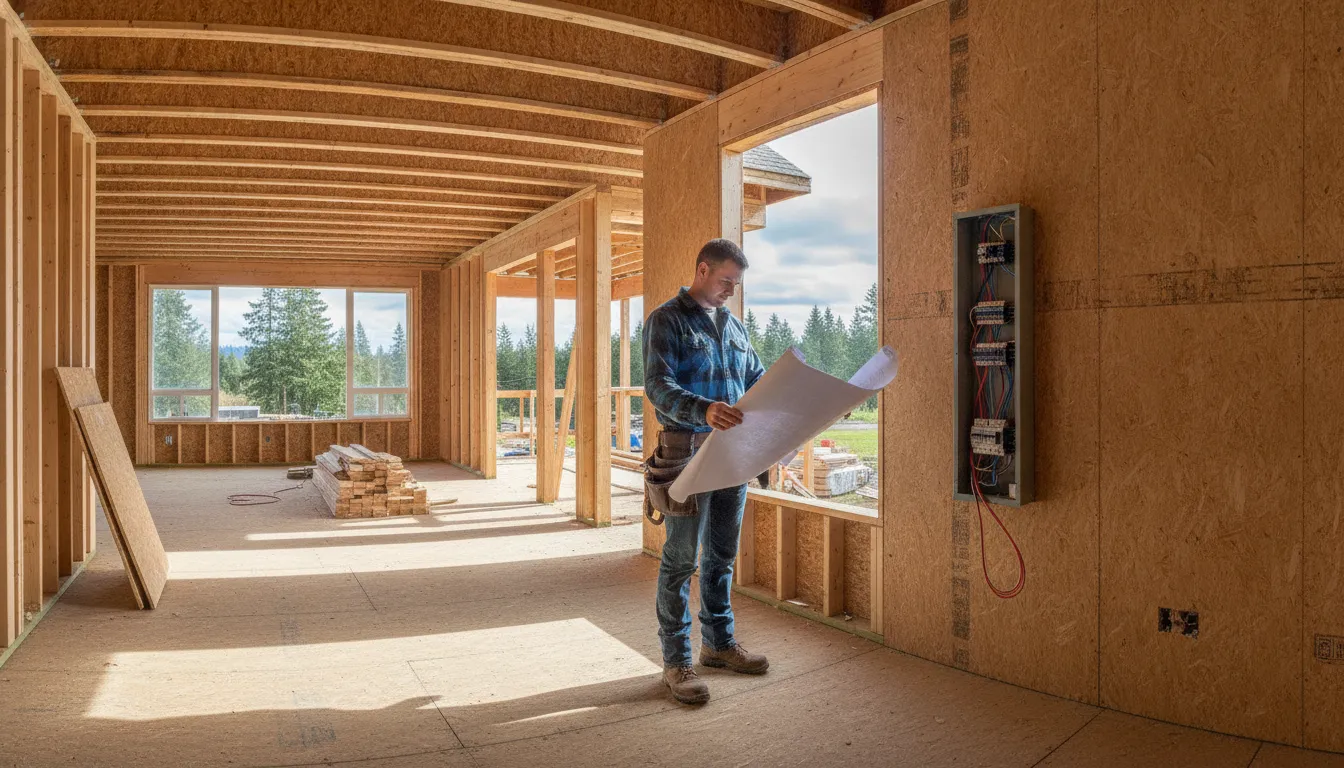
Pro Tech Power Corp assesses electrical load by reviewing the home’s existing service, panel rating, breaker space, major equipment, and every planned load in the addition. A licensed electrician then calculates whether the current system can safely support the new circuits or whether panel, feeder, or service changes should be considered.
Have an electrician complete this review before room layouts and appliance choices are final. Early planning can reveal needed circuit, panel, or service changes while the project is still easy to adjust.
Information to gather first
Start with a clear list of every planned space and its use. A bedroom, workshop, kitchen, and home office can place different demands on the electrical system. Include fixed equipment, heating, cooling, lighting, outlets, and any outdoor features.
Future plans matter too. Tell the electrician about a possible EV charger, heat pump, hot tub, or whole-home generator installation. Pro Tech Power Corp’s Portland-area electrical services can help connect these plans to the wider scope of the addition.
Load and panel review steps
The electrician should inspect the existing system and review the addition plans together. Use this checklist to prepare for that review:
- List existing major electrical loads, including heating, cooling, cooking equipment, water heating, and other fixed appliances.
- List planned loads for the addition, including lights, receptacles, equipment, and any new electric appliances.
- Note future loads that may not be installed during this project but could affect the design later.
- Record the panel rating, available breaker spaces, breaker condition, and signs of earlier alterations.
- Ask the electrician to calculate the combined load and check the service, panel, feeders, and planned circuits.
- Confirm whether the plan needs new circuits, a subpanel, panel changes, or a service change before construction begins.
Available breaker spaces do not prove that a panel has enough capacity. The electrician must consider the calculated load and the condition of the full system. This review helps the design match how the finished addition will be used.
Changes, permits, and project plans
If the review finds a capacity limit, the right response depends on the home and project. Options may include changing equipment choices, adding dedicated circuits, installing a subpanel, or changing the main panel or service. Avoid choosing an option before the load review is complete.
Panel and wiring changes also affect project records and permit planning. Oregon states that a permit is required to install or alter permanent wiring or electrical devices. Discuss project-specific requirements with the electrician and local building department.
Keep the final load calculation, panel schedule, and equipment list with the addition plans. These documents give installers and inspectors a shared reference. They also reduce the risk that a late equipment choice will conflict with the planned electrical system.
Plan circuits and outlets room by room
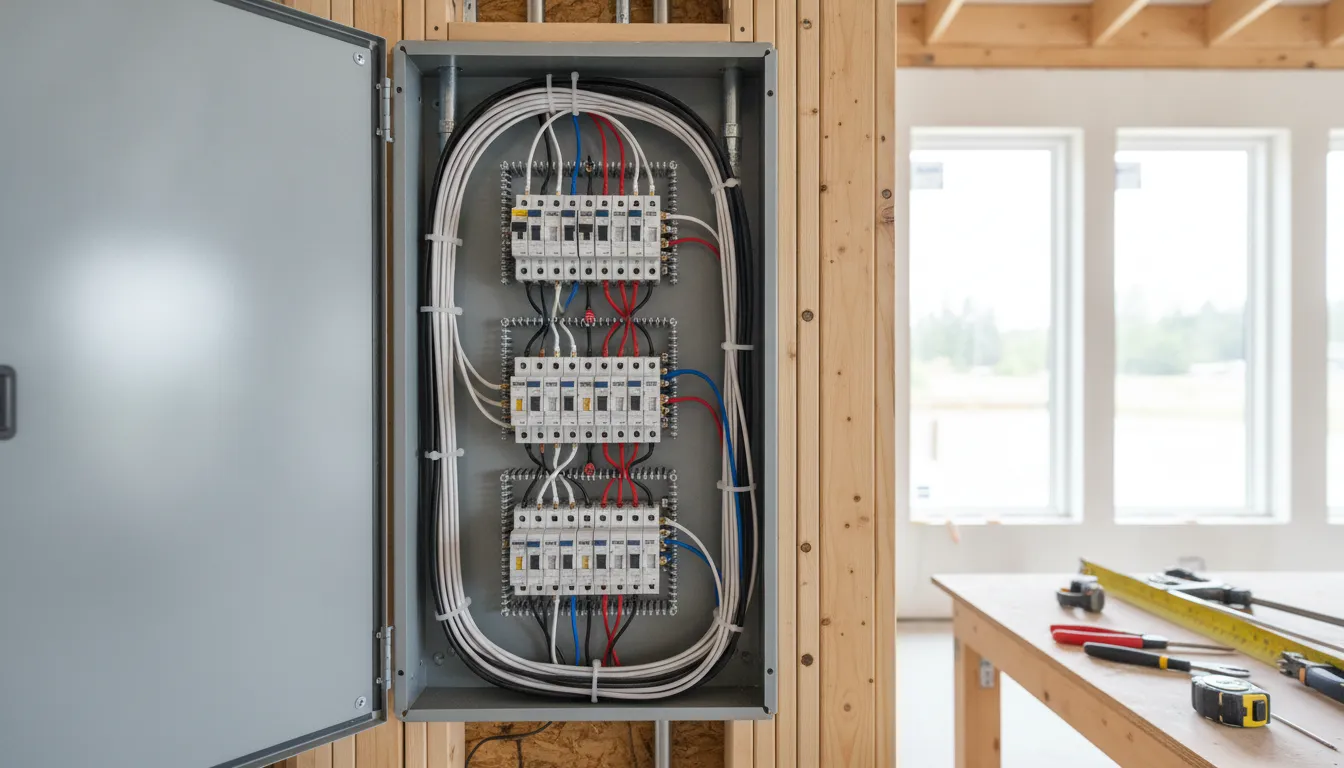
Good electrical planning for a home addition in Oregon starts with how each room will work. Before drawing outlet locations, list the fixed equipment, portable devices, lighting, and future uses for every space. This room-by-room view helps your electrician plan safe loads and place power where people will use it.
Each room’s daily use
Walk through the addition on the plans as if it were already built. Mark likely furniture layouts, work areas, wall-mounted screens, charging spots, and cleaning needs. Outlet locations should support those uses without relying on extension cords or blocking future furniture changes.
Use a practical checklist for each room:
- Note where beds, desks, sofas, counters, and cabinets may sit.
- List lights, fans, heaters, screens, computers, and small appliances.
- Mark indoor and outdoor outlets, switches, and device charging points.
- Plan controls near each entrance and along natural walking paths.
- Keep some outlets open for uses that may change later.
A bedroom may need flexible outlets on more than one wall. A workshop, office, or kitchenette may have heavier equipment and more devices running at once. Share these details when discussing Tigard electrical team, rather than treating every room the same.
Dedicated loads and future needs
Some appliances and equipment may need their own circuits, depending on their load and installation needs. Tell your electrician about planned cooking equipment, laundry machines, heat pumps, shop tools, and vehicle charging. Include model details when available, since the actual equipment helps guide circuit and panel planning.
Also discuss equipment you may add later. A spare bedroom could become an office, while a garage may gain tools or an EV charger. Early planning can reserve practical routes and panel space before walls close, even if the future equipment is not installed now.
Permanent wiring, new outlets, and upgraded outlets generally require electrical permits in Oregon. The state’s residential permit guidance also says project-specific code questions should go to the local building department. Your electrician can review room needs against current code and the available panel capacity.
Plan review with your electrician
Bring the floor plan, equipment list, and room checklist to the electrical planning meeting. Ask the electrician to explain circuit groupings, dedicated loads, outlet placement, switching, and panel impact. This review can reveal conflicts with cabinets, doors, plumbing, or built-in furniture before installation begins.
Review the final plan once more after furniture and equipment choices are firm. Confirm which items are included now and which are future-ready. For complex additions, a residential electrical services can keep electrical choices aligned with the wider construction plan.
Build a lighting and controls plan that fits daily life
A useful lighting plan starts with how each part of the addition will work from morning through night. Mark furniture, doors, windows, cabinets, work surfaces, and paths on the ceiling plan before choosing fixtures. This keeps lights centered on daily tasks rather than empty floor space.
Layered light for each room
Give each room three lighting layers: general light, task light, and accent light. Recessed or ceiling fixtures can provide general light. Pendants, under-cabinet lights, and reading lights put focused light where people cook, work, or relax.
Plan around Oregon’s changing daylight, too. A bright window may reduce the need for electric light on a summer afternoon. The same space may need more general and task light on a dark winter morning. Note window direction and likely shade use so controls remain practical in every season.
Switches and controls that make sense
Place switches where people naturally enter, leave, and move between spaces. Walk through common routes on the floor plan, including trips from the addition to the kitchen, hall, patio, or garage. Three-way controls may help when a light needs control from more than one entry point.
Use separate controls for lighting layers instead of putting every fixture on one switch. Dimmers can support bright task work and softer evening light from the same fixtures. Label any smart controls clearly, and keep basic wall control available for guests and routine use.
- Show every fixture, switch, control, and ceiling fan on the plan.
- Confirm that doors, cabinets, and trim will not block switch access.
- Group controls by room function, not only by fixture type.
- Review fixture locations against furniture and ceiling details.
Exterior light and permit-ready plans
Extend the plan beyond the new walls. Place exterior lighting at entries, stairs, walkways, and outdoor work areas where it supports safe movement. Choose controls based on use, such as a wall switch for a patio and an automatic control for an arrival path.
Finalize fixture and control locations before framing closes. Oregon lists new or upgraded light fixtures and permanent wiring among electrical work that requires a permit. Clear ceiling and control plans also help the electrician price and install the work with fewer field changes.
Homeowners who want one team to review lighting layout, circuits, and controls can explore Pro Tech Power Corp’s contact Pro Tech Power Corp. That review should happen while the addition plan can still change without costly rework.
Which future electrical needs should you plan for now?
Pro Tech Power Corp recommends discussing likely future loads before walls close, including EV charging, heat pumps, workshop equipment, outdoor power, and whole-home generator installation. Planning capacity, breaker space, conduit routes, and practical outlet locations now can make a later installation less disruptive while keeping today’s addition focused on current needs.
Capacity before equipment
Start with a load assessment of the existing panel and the planned addition. Then consider EV charging, a heat pump, electric cooking, laundry equipment, a home office, solar panels, battery storage, and generator installation. Pro Tech Power Corp’s professional electrical contracting services can help connect those choices to a practical wiring plan.
Plan for the likely equipment, but avoid choosing circuit sizes from a guess. The final appliance, charger, or backup power design may have needs that differ from an early estimate. A clear plan should show what is ready now and what still needs review before installation.
Plan now or add later
The table compares making a provision during the addition with waiting until the need appears. A provision does not always mean installing the final device. It can mean reserving panel space, checking service capacity, placing conduit, or recording a workable route.
| Future need | Provision during the addition | If postponed |
|---|---|---|
| EV charging | Assess load and plan a route to parking | A later charger may need a new wiring path |
| Heat pump or electric appliance | Include the likely load in panel planning | Equipment choice may trigger more electrical work |
| Home office | Place useful outlets, lighting, and data routes | Extension cords and exposed data cables may be tempting |
| Solar or battery storage | Discuss equipment space and conduit routes | Finished surfaces may limit clean routing choices |
| Generator installation | Discuss location, transfer equipment, and conduit planning | Site and wiring options may be more limited |
Details worth documenting
Ask the electrician to mark reserved panel spaces, conduit endpoints, and assumptions on the project plans. Also record which items are only provisions and which items are part of the current scope. This keeps a future contractor from treating an empty conduit or spare breaker space as a finished design.
Oregon requires permits for installing or altering permanent wiring and electrical devices. A future project may still need its own permit, review, and equipment-specific design. Discuss project-specific code questions with the local building department before relying on an early provision.
Solar, batteries, and generators need different equipment and siting decisions, so treat them as separate planning tracks. For generator installation, record a possible equipment location, transfer equipment approach, fuel coordination needs, and a clear conduit path. Do not assume a reserved conduit proves that the final system will fit.
Home office planning deserves the same care as larger loads. Decide where desks, screens, printers, lighting, and network gear may sit. This makes outlet and data-route choices useful from the first day, while leaving room for the way the space may change.
How should you coordinate permits and inspections?
Pro Tech Power Corp coordinates electrical work by confirming the project scope, documenting the planned installation, and aligning field work with the builder’s schedule and applicable inspection stages. Permit requirements vary by scope and jurisdiction, so homeowners should verify the specific process with the local building department before work begins.
Confirm the local requirements
Start by asking the building department which permits, plans, and reviews apply to the proposed addition. Oregon directs people with project-specific code questions to their local building department. The state’s permit guidance also notes that permanent wiring changes and added wiring require an electrical permit.
Do not assume that a permit used for a past remodel will fit a new addition. The jurisdiction and the planned work can change what reviewers need. Confirm who will apply for each permit, since Oregon makes the person performing the work responsible for required permits.
Gather a clear project package
A useful permit package should show enough detail for reviewers and contractors to understand the electrical scope. Gather the addition’s plans, room uses, lighting layout, outlet locations, fixed equipment, and expected electrical loads. Include the existing panel details and note any planned service or panel changes.
- Property address and local jurisdiction
- Owner, designer, and contractor contact details
- Current electrical panel and service information
- Floor plans with circuits, outlets, lights, and fixed equipment
- Related building, mechanical, or plumbing work
Share the same current documents with everyone involved. Pro Tech Power Corp’s professional electrical contracting services can help define the electrical work before installation begins. This step keeps electrical planning for a home addition in Oregon tied to the broader project plan.
Plan around inspection points
Ask the local building department and contractor which work must remain open for inspection. Then add those checkpoints to the construction schedule before walls or ceilings are closed. Keep the permit and any approved plans at the job site for the inspector, as Oregon requires.
Coordinate inspection requests with the contractor after each required stage is ready. Some jurisdictions use Oregon ePermitting for permit status, document uploads, inspection scheduling, and inspection results. Homeowners can review the state’s ePermitting guidance to see which online steps may be available.
Record corrections in one shared list and confirm who will address each item. If the design or electrical scope changes, ask whether revised plans or another review is needed. This keeps field work aligned with the approved documents without assuming every jurisdiction follows the same process.
Your pre-construction electrical checklist
Use this checklist before crews open walls or begin the addition. It brings plans, equipment, lighting, and future power needs into one clear review. Good electrical planning for a home addition in Oregon also gives the owner, designer, builder, and electrician the same set of decisions.
Final plans and project records
Start with a current floor plan that shows each room, door, window, cabinet, and fixed feature. Mark where furniture, work areas, and wall-mounted items may go. These details help the electrical team place outlets, switches, and fixtures where people will use them.
Confirm which permits are needed and who will obtain them. Oregon states that installing or changing permanent wiring and electrical devices requires an electrical permit. Keep the approved plans and permit records ready for the job site and inspection process.
- Use one dated plan set, and remove old versions from active use.
- List each fixture, appliance, and piece of fixed equipment by room.
- Record equipment voltage, power needs, model numbers, and final locations.
- Note which existing walls, circuits, and electrical equipment the addition will affect.
Panel, rooms, and lighting
Ask the electrician to assess the existing panel and added load before work begins. The review should cover available capacity, breaker space, and circuits needed for the new rooms. Pro Tech Power Corp’s professional electrical contracting services can help connect this review to the full construction plan.
Walk through the plans room by room. Check outlet locations against furniture and daily tasks, then confirm switch locations from each entry point. Review general lighting, task lighting, accent fixtures, fans, smoke alarms, and any outdoor lights tied to the addition.
- Confirm dedicated circuit needs for large appliances and fixed equipment.
- Mark data, television, security, doorbell, and control wiring locations.
- Choose fixture types and controls before rough-in whenever possible.
- Check exterior outlets, weatherproof fixtures, and access paths.
Future needs and team coordination
Plan beyond the first day of use. Discuss spare panel capacity, electric vehicle charging, added cooling, outdoor equipment, and possible room changes. If backup power is part of the plan, define which loads matter most. Reserve a suitable location for the equipment.
Set one coordination meeting before rough-in with the owner, builder, electrician, and other trades. Compare the electrical plan with plumbing, heating, cabinet, and structural drawings. This step helps find blocked routes, fixture conflicts, and missing details while changes remain easier to make.
Assign one person to approve plan changes and record each decision. Confirm the rough-in schedule, inspection steps, equipment lead times, and responsibility for owner-supplied fixtures. For an addition connected to broader new construction planning, align the electrical timeline with every major trade.
Frequently Asked Questions
What needs to be included in an electrical plan for a home addition?
An electrical plan should show the addition’s lighting, switches, outlets, dedicated appliance circuits, and connections to the existing system. It should also account for the electrical panel’s available capacity and future needs, such as EV charging. Include equipment locations and any planned service or panel upgrades so the electrician, builder, and building department can review the same scope.
How much does electrical planning for a home addition cost in Oregon?
Electrical planning costs vary with the addition’s size, room use, existing panel capacity, and the detail required for permits. A simple bedroom addition usually needs less design work than a kitchen or accessory dwelling unit. Ask for an itemized estimate that separates design, permit fees, materials, installation, panel work, and inspections before construction begins.
Do home additions require electrical permits in Oregon?
Yes. Home addition work commonly involves new permanent wiring, outlets, fixtures, or electrical devices that require a permit. The person performing the work is responsible for obtaining the necessary permits. The Oregon Building Codes Division advises homeowners to discuss project-specific code questions with their local building department before work begins.
How does the electrical plan review process work in Oregon counties?
Submit the required plans and permit application to the local building department that serves the property. Reviewers check the proposed work for applicable code requirements and may request revisions before approval. Some jurisdictions use Oregon ePermitting, which lets applicants upload documents, track status, pay fees, schedule inspections, and review inspection results online.
Ready to Plan Your Home Addition’s Electrical Work?
Waiting to plan electrical work can force rushed choices and costly changes after walls, layouts, and project schedules are already set. Starting early gives your electrician time to review power needs, coordinate with the broader build, and identify key decisions before installation begins. A clear plan now can help your addition move forward with fewer surprises and a practical path to safe, reliable power during construction and beyond.
Ready to move from ideas to a workable electrical plan? Starting the conversation now gives your team more time to coordinate details before work begins. Contact Pro Tech Power Corp to plan the electrical installation for your home addition before construction choices limit your options.