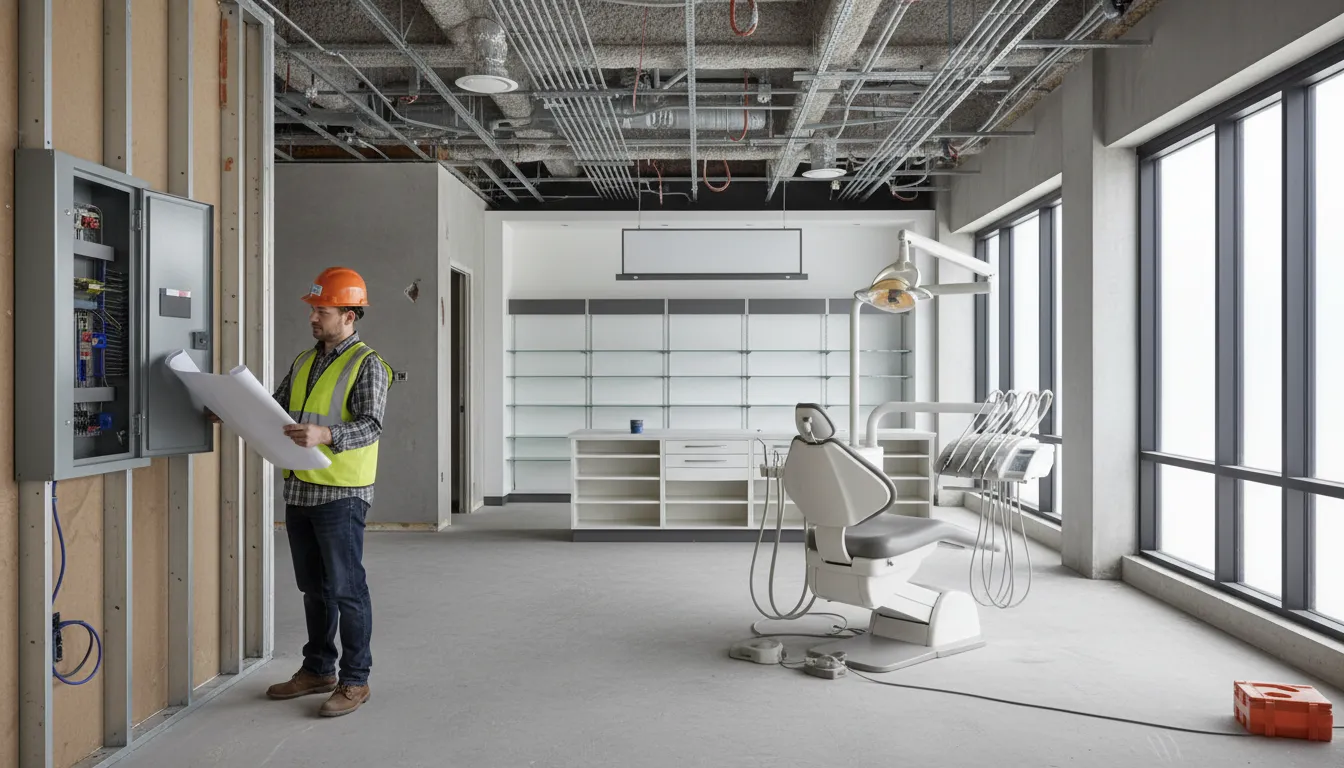
Medical Office Electrical Planning Guide
A missed equipment load can derail a medical office build before opening day. In Portland-area tenant improvements, early electrical decisions protect schedule, inspections, and clinical operations.
Contact Pro Tech Power Corp to discuss the electrical plan for your healthcare office project.
Medical office electrical planning identifies equipment loads, receptacle locations, lighting, life-safety needs, data pathways, and future capacity before construction fixes the layout.
For dental, medical, and pharmacy tenant improvements in Portland and Tigard, it helps teams find change risks, inspection questions, and workflow conflicts early. Planning should match each room’s use and equipment schedule to applicable codes, including NEC health care provisions and NFPA 99 guidance.
A design-build electrical partner can coordinate power, lighting, controls, standby-power questions, and permitting details while plans can still change. Early coordination helps project teams prepare spaces for dependable daily operation.
The right plan begins by answering which loads, rooms, protections, and future changes must be resolved before bids and walls make revisions costly. Medical office electrical planning starts before construction drawings are final, because the safest field work begins with clear decisions. Here’s how.
Medical office electrical planning starts before construction drawings are final
Medical office electrical planning begins while the floor plan and tenant scope can still change. In a clinic, dental office, or pharmacy, early planning maps how each room will use power. It also connects the electrical plan to staff movement, patient flow, and building limits.
Load discovery and tenant scope
Start with a room-by-room list of equipment, lighting, receptacles, data needs, and mechanical loads. Ask the tenant for the latest equipment schedule, including each item that needs a set location or dedicated feed. For dental rooms, flag lighting, imaging, sterilization, compressor, and vacuum selections early, then confirm electrical requirements from the selected equipment documents.
Separate known loads from open decisions. A leased space may look adequate until a unit, compressor, sterilizer, refrigerator, or imaging item reaches the schedule. Recording each open item gives the designer a question to close, instead of an allowance that may fail in review.
Inputs to confirm before final drawings
Confirm the equipment schedule and the intended use of each room. Record landlord rules for capacity, metering, shutdowns, and ceiling work.
Collect current architectural and ceiling plans. Identify mechanical coordination points, permit steps, and review contacts for the tenant improvement.
Drawings, permits, and daily workflow
Electrical locations should support the way the practice works, not force workarounds after installation. Review chair positions, exam areas, dispensing counters, refrigeration locations, and staff stations with the tenant team. Then align outlets, connections, switching, and access needs with those operations.
Coordination also starts at the building boundary. Confirm where tenant wiring meets house systems, which existing panels may be used, and who approves any shutdown. The permit package should show the agreed scope, rather than leaving key power choices for the jobsite.
Landlord standards and permit expectations should enter the drawing set before final pricing. A missing panel limit, equipment connection, or ceiling conflict can send finished drawings back for revision. Early review helps the contractor price a defined scope and resolve questions before field work begins.
Coordinated design-build review
Pro Tech Power Corp includes medical, dental, and pharmacy tenant improvements in its commercial project experience. Its project portfolio helps owners and contractors consider fit while the tenant and construction team can still choose practical changes.
Bring changes back to one working plan as rooms shift. When an architect moves a wall or the tenant selects different equipment, electrical impacts should be checked at once. That check keeps pricing, permits, procurement, and installation based on the same decisions.
For an early design-build review, gather the tenant plan, equipment schedule, landlord criteria, and target permit dates. The electrical contractor can compare these inputs before circuits, panels, lighting controls, and equipment connections are fixed on final drawings. This approach makes late revisions less likely by finding gaps sooner.
How do dental, medical, and pharmacy electrical needs differ?
Planning starts with the care setting
Medical office electrical planning starts with how each room will be used. A dental operatory, exam room, and pharmacy counter may share a tenant shell. They do not share one equipment list. Owners should name room uses before pricing begins. General contractors can then request loads, locations, and vendor cut sheets early.
In a dental layout, the team may need chair locations, imaging choices, sterilization areas, and utility coordination before rough-in. Current equipment cut sheets and a confirmed operatory layout give the design team the right basis for discussing placement and connection needs with the dental provider.
Three spaces, three planning paths
Medical exam and procedure spaces often change by clinical function. A room used for routine visits may call for different inputs than a procedure room with added devices. Pharmacy planning shifts attention toward dispensing workstations, secure operations, and any powered storage equipment selected by the pharmacy team.
| Planning point. | Dental office. | Medical office. | Pharmacy. |
|---|---|---|---|
| Typical spaces. | Operatories and sterilization area. | Exam and procedure rooms. | Dispensing and storage areas. |
| Equipment inputs. | Chairs, imaging, sterilizers. | Room devices and support equipment. | Workstations and selected storage equipment. |
| Coordination focus. | Chair layout and utilities. | Room use and device schedule. | Workflow and equipment continuity. |
| Early decision. | Confirm operatory plan. | Define room functions. | List powered storage needs. |
The table is a starting point, not a final scope. The owner should confirm bought equipment and intended room uses with the clinical or pharmacy operator. The contractor can then align panel space, branch planning, lighting controls, pathways, and shutdown timing with the tenant improvement schedule.
Decisions that prevent late changes
Early coordination matters because equipment selection can affect layout and sequencing. For dental projects, confirm operatories and imaging areas before walls close. For medical projects, note rooms that may need more support than a standard exam room. For pharmacies, confirm powered storage and continuity needs before ordering gear.
A design-build review can keep these decisions in one working plan. Pro Tech Power Corp works on commercial tenant improvements for medical, dental, and pharmacy spaces in the Portland area. Owners and general contractors can start a project conversation to resolve locations, access, lighting needs, and future changes before field work starts.
Build an equipment and load plan that can survive installation
An equipment plan should begin with a schedule, not with receptacle locations. List each clinical, lab, sterilization, imaging, office, and support item that will need power. For each item, record the selected model, planned room, connection type, maker requirements, and who confirms final information before rough-in.
This is where medical office electrical planning becomes practical. Dental office planning must account for selected clinical equipment, including lighting and imaging systems. A related dental office electrical contractor guide explains why equipment-specific coordination deserves early attention.
Equipment requirements and available power
Once the equipment schedule is stable, compare its requirements with the panel and available distribution path. Some equipment may need a dedicated circuit, a specific connection, or placement limits set by its maker. Do not infer those details from a room label. Confirm them from current equipment information.
- Confirm supplied equipment and maker electrical requirements.
- Match circuit needs and connection points to the room layout.
- Review panel information with the loads and future equipment allowances shown on the plans.
- Flag missing selections before they affect rough-in or inspection work.
Lighting and controls belong in the load plan as well. Map exam lighting, task lighting, dimming, controls, and power tied to patient or staff workflows. Keep these loads on the schedule so the team can review them with equipment needs and panel information.
Trade coordination boundaries
Power drawings and low-voltage drawings should meet before installation, even when separate teams perform the work. Identify power needed for data closets, access systems, communications equipment, imaging interfaces, and control panels. Then mark who provides raceways, outlets, cabling, final connections, testing, and owner training.
A contractor can also review panel space and capacity against the approved schedule. If equipment is changed later, the revised schedule should trigger a new load review before purchase or installation. The same discipline applies whether the project serves dental, medical, or pharmacy use.
Installation-ready documentation
Leave the field team a controlled set of records. Include the equipment schedule, updated panel information, circuit designations, lighting and control loads, low-voltage boundaries, and open equipment decisions. Mark selections that are not final.
Future changes are easier to manage when they have a clear path. Before substituting or adding equipment, compare its published requirements with the documented plan and revise the drawings as needed. This step helps prevent installation crews from finding unanswered load questions in the room.
What should be on a medical office electrical planning checklist?
Medical office electrical planning starts before fixtures, panels, or equipment are ordered. A good checklist ties each clinical need to power, schedule, safety, and turnover records.
Project scope and clinical loads
Begin with the type of practice, rooms in use, and each planned piece of equipment. Imaging units, sterilizers, exam lighting, refrigeration, IT racks, HVAC, and future devices may change panel and circuit needs. The commercial tenant improvement electrical checklist provides a related foundation for early scope review.
Code and outage planning
Qualified designers and electricians should review the electrical scope against the adopted code, permit process, and equipment instructions. If continued care or protected equipment relies on standby power, assess that need early. The CDC provides guidance on health and safety issues during power outages.
Six planning and turnover steps
Use this sequence before construction begins. Update it as equipment selections and field conditions change:
- Confirm scope and equipment. List each treatment, imaging, lab, pharmacy, dental, or support space. Collect maker power data for fixed and plug-connected equipment, with locations and planned additions.
- Check existing electrical capacity. Record available capacity, panel spaces, feeder paths, grounding, and any standby source. Compare existing conditions with expected loads before approving a layout or ordering equipment.
- Coordinate drawings and clearances. Show receptacles, dedicated circuits, disconnects, lighting controls, low-voltage paths, and equipment access. Align electrical plans with casework, plumbing, HVAC, door swings, and required working space.
- Review permits and code needs. Have the qualified project team check health care, life safety, access, and local inspection requirements. Submit clear permit drawings and track comments before work proceeds.
- Plan phasing and testing. For an occupied practice, set shutdown windows and temporary-power needs with the office manager. Define tests for circuits, standby equipment, controls, lighting, and equipment connections before rooms open.
- Prepare for inspection and turnover. Keep approved drawings, changes, panel schedules, test results, equipment data, permit records, and inspection corrections together. Before handoff, label circuits and close correction items. Give the owner final records for maintenance and future changes.
This checklist helps the owner, design team, and electrical contractor make decisions in the right order. It also makes inspection readiness and final turnover part of the plan, rather than last-minute tasks.
Coordinate power, lighting, inspections, and schedule before rough-in
One plan for each stakeholder
Medical office electrical planning works best when decisions are made before crews begin rough-in. Bring the general contractor, architect, landlord, equipment vendors, and operations team into one review. Mark each treatment room, staff area, lab space, and waiting area on the plan. Then match power and lighting needs to the intended use.
Equipment vendors should confirm connection points, voltage needs, dedicated circuits, and final equipment locations. The landlord can note building limits, house rules, and work-hour limits. The general contractor can link electrical work to framing, ceilings, millwork, and equipment delivery. This early review helps prevent reopened walls or moved outlets later.
Lighting and occupied-remodel phasing
Lighting affects clinical tasks, patient comfort, and daily operations. Review fixture locations with room layouts, casework, monitors, and ceiling features before installation. Check where staff need clear task light and where controls should be easy to reach. Review lighting with power, since ceiling changes often affect both systems.
An occupied remodel needs a phased plan that protects clinic flow. Identify rooms that must stay open, work that may create noise, and planned power interruptions. Set shutdown windows with the operations team, then share them with trades and vendors. Use this commercial tenant improvement electrical checklist before field work starts.
Inspection readiness and change control
Plan inspection points with the general contractor and local reviewer before work is covered. Keep approved drawings, equipment submittals, panel schedules, and revision notes easy to find. Confirm code questions with qualified project professionals and the authority having jurisdiction. Clear records help the team answer questions without delaying follow-on trades.
Use a short coordination log for decisions made before rough-in. The log should show who approved each choice and when crews need the answer. Track these items before framing or ceilings close:
- Final equipment locations and manufacturer connection needs.
- Room-by-room lighting, switch, and control locations.
- Planned outages, work zones, and clinic access limits.
- Inspection timing, drawing revisions, and open approvals.
If a late request appears, review its effect on schedule, cost, access, and completed work before approval. A documented review gives the owner and contractor a clear choice. It also keeps needed changes from becoming rushed field decisions.
When should a project team bring in an electrical contractor?
Bring in an electrical contractor before drawings harden for a new medical, dental, or pharmacy space. Early input helps the team place equipment, review loads, and plan pathways while layout choices can still change.
Timing the first review
Do not wait for permit documents if the scope includes imaging, sterilization, lab gear, refrigeration, treatment chairs, or backup power. A contractor can ask what equipment is confirmed, what may be added later, and where each load must connect.
That talk also matters in a remodel or tenant improvement. An existing panel may look usable. The project team still needs a capacity review before adding specialized equipment. If the use is changing, start the review during site choice or early design.
Questions for the first meeting
At the first meeting, share a floor plan, equipment list, hours of use, utility details, and schedule. Mark each device that affects circuits, grounding, standby power, or room layout.
Health care electrical planning calls for disciplined review of equipment, room use, and adopted safety requirements. That is why meeting questions should cover more than outlets and lighting.
- Which equipment loads are confirmed, and which are set aside for future use?
- Does the panel or available capacity need review before design moves ahead?
- Who will supply equipment cut sheets and confirm final connection needs?
- How will phasing protect clinic, dental, or pharmacy operations during a remodel?
- What inspections, shutdowns, and owner decisions belong on the schedule?
Choosing a planning partner
A useful partner should review the full care setting, not only one equipment type. That broad view is the point of medical office electrical planning for medical, dental, and pharmacy projects.
If your team has a dental-only question, a focused dental article may help with that narrow scope. For a clinic, pharmacy build-out, or new tenant improvement, seek a planning talk that covers the full project.
Look for a contractor who can work with the general contractor, designer, equipment supplier, and owner representative. The first talk should identify open choices, responsibility for equipment data, and timing risks. It should also show what the team must confirm before drawings move forward.
Review Pro Tech Power Corp’s commercial project work to see the types of spaces the team serves. When scope, schedule, and equipment needs are ready, contact the team with those details. This first step is for coordination and fit, not a promise of pricing or availability.
Frequently Asked Questions
When should electrical planning start for a medical office tenant improvement in Portland or Tigard?
Start medical office electrical planning while layouts and equipment selections can still change without costly rework. Early coordination lets the owner, contractor, designer, and equipment vendors identify panel capacity, circuit needs, lighting, controls, and installation routes before construction begins. For a Portland or Tigard tenant improvement, bring the electrical contractor into planning before final pricing and scheduling decisions are set.
How is dental office electrical planning different from general office electrical planning?
A dental office commonly includes treatment-room equipment, sterilization devices, imaging equipment, compressors, vacuum systems, and specialized connections not present in a standard office suite. The final design depends on selected equipment and room use. Health care treatment areas may involve specialized wiring and protection requirements under NEC Article 517, so coordination should begin with equipment specifications and floor plans.
What electrical details should be coordinated for pharmacy refrigeration or critical equipment?
For pharmacy refrigeration or other critical equipment, document each unit’s location, voltage, circuit requirement, plug or connection type, heat output, monitoring needs, and manufacturer instructions. Discuss what should happen during a power interruption, including whether backup power is planned for the project. Confirm these decisions with the equipment vendor, design team, and electrical contractor before walls, panels, and circuit routes are finalized.
What should I bring to a medical office electrical estimate meeting?
Bring a current floor plan, tenant improvement scope, expected construction schedule, equipment list, vendor cut sheets, lighting preferences, refrigeration information, and any known panel or utility details. Include locations for operatories, exam rooms, pharmacy work areas, imaging, sterilization, and data equipment. If documents are incomplete, identify pending selections so the estimate can state allowances, assumptions, and items requiring later confirmation.
Ready to plan your healthcare office power needs?
Waiting until construction is underway can make electrical decisions harder, when rooms, equipment layouts, and schedules already leave less room for adjustment. Starting now gives your team time to define power, lighting, and workflow priorities before later project decisions narrow your options. An early conversation can help you organize questions, align project partners, and set a clearer path for a dental, medical, or pharmacy build-out.
Bring your intended spaces, equipment needs, and timeline so the discussion starts with practical priorities and useful next steps. Ready to plan with fewer unknowns? Contact Pro Tech Power Corp to discuss your commercial electrical project before your build-out schedule moves forward.