Restaurant Electrical Requirements: Build Guide
A restaurant build can stall. The kitchen schedule may arrive after electrical rough-in has started. For owners and general contractors, early power planning keeps equipment, permits, and field coordination aligned.
Restaurant electrical requirements cover the power and connections that safely support a commercial kitchen and dining space. Planning begins with the equipment schedule and the available utility service. It also includes panel locations, lighting, ventilation, refrigeration, and life-safety systems. Match each major appliance to its voltage, phase, amperage, disconnect, and manufacturer instructions before bids and layouts are final. The electrical contractor should coordinate drawings and load calculations with the project team and local reviewers. Early review reduces redesign risk and helps address code, building, health, and permit needs before work reaches the field.
Owners and general contractors need one practical answer: what must be confirmed before pricing, rough-in, and installation move forward? Next, we cover Restaurant electrical requirements begin before equipment is ordered, where early decisions prevent avoidable changes. Here is how.
Restaurant electrical requirements begin before equipment is ordered
Short answer: Before buying restaurant equipment, assemble the kitchen equipment schedule and confirm the intended floor plan. Have the electrical load and service needs reviewed. Then align the electrical plan with permit review, inspections, and the build schedule. This sequence can limit late changes when an appliance does not fit the planned power layout.
The equipment schedule
A restaurant kitchen is not a list of appliances chosen one at a time. The electrical team needs a schedule that names each planned unit, its location, and its listed power needs. That schedule should cover cooking, refrigeration, warewashing, ventilation support, beverage equipment, point-of-sale needs, and back-of-house receptacles.
Owners and general contractors can use that schedule as a working decision document. If an appliance changes, the team can review its circuit, connection point, and panel impact. It can also review installation timing before ordering or rough-in work begins. Pro-Tech-Power lists commercial electrical services for restaurant construction and remodel coordination.
Load and floor plan coordination
Restaurant electrical requirements depend on more than the nameplate of one appliance. A qualified design team must review the full set of planned loads and the proposed service. It should also check panel space, connection types, and equipment placement. Pro-Tech-Power’s commercial focus includes restaurant kitchen equipment hookups and related power requirements.
Floor plan coordination is just as practical as load review. A moved fryer line, relocated dish area, or revised walk-in location can change where power is needed. It can also affect routing and the order of work among trades. Check the electrical plan against the equipment plan before procurement locks in key choices.
Code-directed planning matters during this review. The research ledger identifies NEC 220.56 as addressing qualifying commercial kitchen equipment load planning. Project requirements are determined through the authority having jurisdiction. Owners should ask the design and permit team which electrical documents are needed for their site.
Permit review and inspection sequence
Plan review is easier to coordinate when each project party works from current documents. This includes the owner, GC, kitchen supplier, and electrical team. The package should align equipment selections, floor plan locations, electrical drawings, and the proposed work sequence. Food service plan review commonly calls for construction and equipment documentation.
Early coordination helps reveal missing information before field work advances. Inspection timing also belongs in the construction schedule. Rough-in, equipment delivery, final connections, and inspection access must be planned in a workable order. Changes after ordering can require revised coordination or review, and may affect the next trade in line.
No contractor can promise an approval result or an inspection date. Complete plans give reviewers and field teams clearer information for their work. For owners defining project roles, the guide to a restaurant electrical contractor explains selection factors. Bring the chosen equipment schedule and floor plan into electrical review before purchase decisions are final.
How do electrical needs differ in a new build versus a remodel?
Starting conditions
A new restaurant build starts with plans, equipment schedules, and an open path for rough-in work. A remodel starts with what is behind the walls, above the ceiling, and inside the panels. Both need clear restaurant electrical requirements. A remodel must first confirm what can stay and what must change.
This planning question is separate from contractor selection. Our related guide explains how to choose a restaurant electrical contractor. Here, the focus is work order, power needs, and early choices that shape a sound plan.
| Planning item | New build | Remodel |
|---|---|---|
| Existing service discovery | Set service needs from planned equipment and layout. | Trace circuits, panels, loads, and available space first. |
| Shutdown and sequencing risk | Coordinate temporary power and construction phases. | Plan outages around operations, cold storage, and active tenant areas. |
| Equipment layout changes | Place circuits and connections with the kitchen design. | Check whether moved equipment fits power routes and capacity. |
| Permit coordination | Align electrical drawings with the full permit set. | Document new work and affected existing systems for review. |
| Future capacity | Reserve practical room for later equipment choices. | Decide whether current infrastructure supports future changes. |
Planning around unknowns
In a new build, design choices can move together before installation begins. Kitchen equipment, lighting, receptacles, controls, and service planning can be set on the same drawings. This does not remove changes. It makes conflicts easier to catch before crews begin work.
A remodel often needs a discovery phase before final design. Labels may not show each circuit path, and past changes may affect the next layout. Field checks, panel review, and equipment confirmation help set the work order.
Downtime also weighs more in a remodel. A new site usually has no active dining service to protect. A working restaurant may need staged outages and safe access paths. Teams also need firm choices about which areas remain in use.
Capacity and coordination choices
Equipment choices lead to useful planning questions. Will cooking equipment stay in place, or shift to a new line? Will cold storage, dishwashing, point-of-sale stations, or lighting move? Early answers help map connections and limit late changes during finish work.
Future capacity deserves the same review. In a new build, the plan can account for likely changes while spaces are open. In a remodel, added equipment may require more than a circuit extension. Confirm those needs before walls close or kitchen work begins.
Permitting coordination should begin with a clear equipment list and layout. The electrical plan must match the restaurant design and work sequence. For installation safety, teams should also follow applicable OSHA wiring design and protection requirements. Project-specific review remains with local authorities.
How is commercial kitchen electrical load calculated?
A commercial kitchen load calculation starts with a complete equipment schedule, before panel or service decisions are made. The schedule captures each appliance’s nameplate values, voltage, phase, connection type, and operating role. It also separates cooking, cold storage, warewashing, and water heating equipment. This gives owners and contractors a clear basis for reviewing restaurant electrical requirements.
Nameplate data and circuit needs
Start with the nameplate on each specified unit, not a similar appliance from an earlier plan. Record electric ranges, ovens, fryers, hood equipment, refrigeration, dish machines, disposers, booster heaters, and water heaters. If equipment selection changes, update the schedule before relying on the calculated load.
The schedule should also identify equipment that may need an individual circuit, based on its listed instructions and the project design. Include receptacles, hardwired connections, disconnect needs, and equipment locations. For a remodel or new build, restaurant electrical construction planning helps connect kitchen equipment decisions with field coordination.
Loads that operate together
A useful calculation is more than a total of appliance ratings. The design team should review how the kitchen works during prep, service, cleanup, and overnight operation. A dish machine and booster heater may run while cooking equipment remains in use. Refrigeration still needs stable power while other kitchen work is under way.
- Cooking loads: ovens, griddles, fryers, holding equipment, and electric cooking accessories.
- Refrigeration loads: walk-in or reach-in equipment, ice machines, and related condensing equipment.
- Warewashing loads: dish machines, disposers, pumps, and booster heaters where specified.
- Water heating loads: electric units that support kitchen or wash functions.
Grouping loads this way helps reveal coordination issues before rough-in begins. It also helps the team check panel spaces, feeder planning, circuit routing, and equipment connections against the kitchen layout. The final calculation should track the equipment that will be purchased and installed, not an early placeholder list.
NEC 220.56 and project review
NEC 220.56 is a planning reference for kitchen equipment in occupancies other than dwellings. It addresses equipment rated at 1/4 horsepower or 500 watts or more. Demand factors may apply to certain thermostatically controlled or intermittently used equipment. The design team should apply the adopted code edition and confirm project requirements with the authority having jurisdiction (AHJ).
For owners, the practical takeaway is simple: provide the current equipment list early, then flag substitutions promptly. For contractors, verify ratings and connections against the approved design before installation. This process reduces late revisions. A selected appliance may differ from the planned unit in voltage, phase, circuit needs, or heating function.
Plan power for every system that keeps service moving
Controls, ventilation, and cold storage
Restaurant electrical requirements extend past ovens, fryers, and dish machines. Exhaust controls, make-up air, hood interlocks, and refrigeration support each service period. When these needs appear late, finished plans may need added circuits, control wiring changes, or panel revisions.
Start with a full equipment list, then match each item to its location. Walk-ins, reach-ins, ice machines, and remote condensing units may arrive from different vendors. Final cut sheets help the electrical team plan connections, disconnects, routes, and access with the general contractor.
Ventilation has its own set of coordination points. Hood controls must align with fans, make-up air, and equipment below the hood. A review with the mechanical team can find missing pathways or control points while walls and ceilings remain open.
Systems that support staff and guests
A dining room can look complete and still be unready for service. POS stations, receipt printers, Wi-Fi access points, cameras, and menu boards each need a planned location. Map power and low-voltage routes with counters and furniture, before finishes limit the choices.
Lighting and receptacles also affect each shift. Staff need usable power at service stations, pickup counters, cleaning areas, offices, and storage rooms. The team should review emergency lighting, exit signs, fire alarm interfaces, and required shutoffs against the project plans.
- Confirm exhaust controls and equipment interlocks before final connections begin.
- Set pathways for data, controls, cameras, and later low-voltage additions.
- Check light controls and receptacle locations before walls close.
- Coordinate emergency and life safety items with the full project team.
These choices are easier to resolve during preconstruction. Pro-Tech-Power’s commercial electrical services include design-build coordination for restaurant construction and remodels. If vendor sheets or layouts are still changing, schedule a project consultation before changes reach the field.
Room for the next service model
Restaurant operations can shift after opening. A new pickup shelf, extra refrigeration, revised seating plan, or new POS station may change power needs. Reviewing spare pathway options and likely equipment changes during design can make later work less disruptive.
Bring the electrical contractor, general contractor, kitchen supplier, mechanical team, and low-voltage team into the same review. Each trade sees different opening-day risks. Together, they can catch route conflicts, blocked access, missing connection points, and unclear equipment details while plans can still change.
Early collaboration keeps the scope tied to real operating needs. It also gives owners clearer decisions before construction advances. Plan the systems behind the menu alongside the cooking line, so service areas, back-of-house work, and safety systems are considered together.
What should owners and general contractors do before construction starts?
Planning the electrical scope
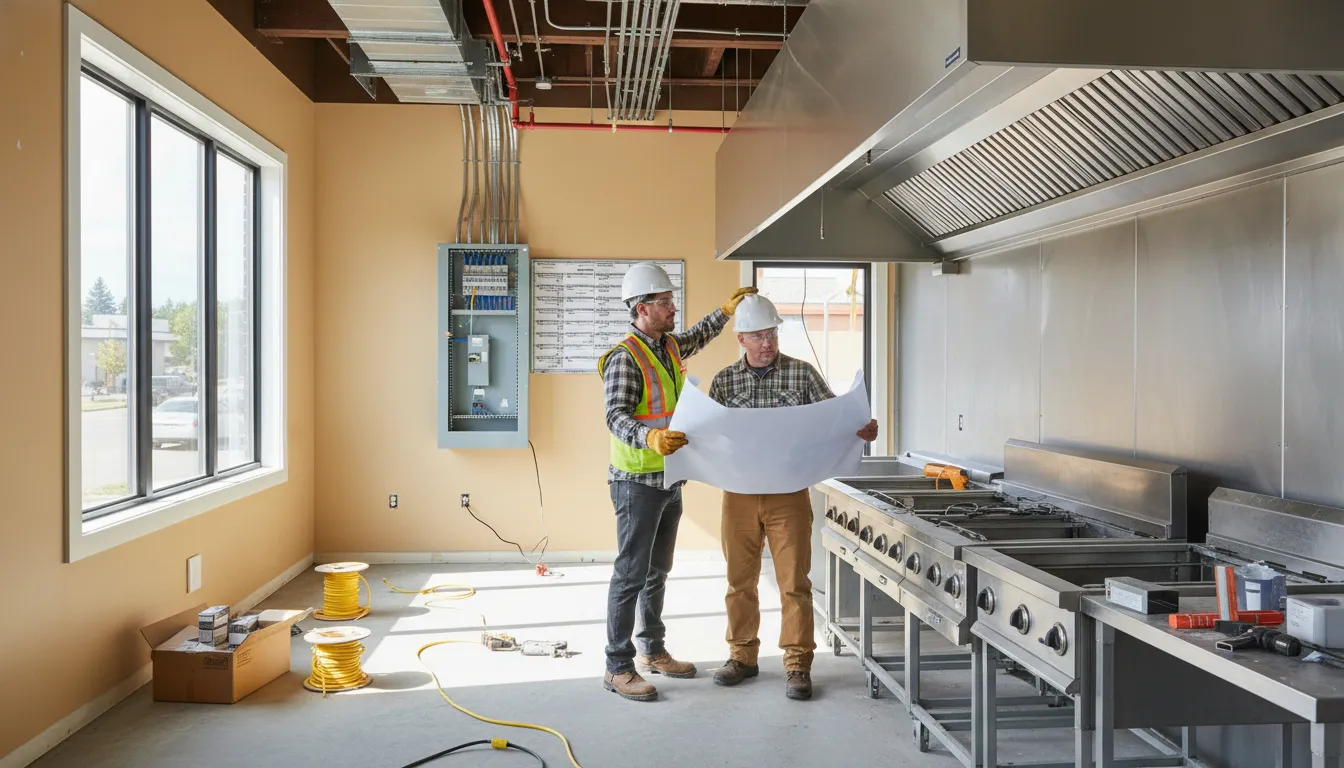
Restaurant electrical requirements are easier to manage when the team starts with a full kitchen plan. Before rough-in begins, owners and general contractors should map equipment, utilities, lighting, and controls on one shared plan set. Pro-Tech-Power includes restaurant construction, remodels, and kitchen equipment hookups in its commercial electrical services.
The steps below give the project team a clear sequence before crews begin field work. Each project still needs review by its design team and the local authority having jurisdiction. Equipment changes, permit comments, and revised layouts can change the electrical scope.
-
Gather equipment sheets and operating details. Collect current cut sheets for cooking, refrigeration, warewashing, ventilation, point-of-sale, and specialty equipment. Record voltage, phase, amperage, connection type, location, and required controls. Confirm who furnishes each item and who makes the final connection.
-
Review plans against the equipment schedule. Check that architectural, kitchen, mechanical, and electrical drawings show the same equipment and locations. Look for missing receptacles, hardwired units, hood controls, lighting zones, exterior loads, and space for planned equipment. Update changed drawings before the team makes installation choices.
-
Calculate loads and assess available power. Use confirmed equipment data to prepare the electrical load review. Check the existing or planned service, panels, breakers, feeders, and room for needed circuits. This work helps flag design questions before equipment arrives or walls close.
-
Coordinate trades and design roles. Review the plan with the owner, GC, kitchen supplier, plumber, mechanical contractor, fire protection team, and electrical team. Assign each equipment connection, control interface, and startup need to the responsible trade. Pro-Tech-Power provides design-build electrical work with in-house electrical engineering and coordination for commercial projects.
-
Coordinate permits and plan reviews. Confirm which drawings, equipment schedules, and revisions need submission for electrical, building, and food service review. Log review comments in one place and revise affected sheets. Do not direct field changes from an old plan set.
-
Schedule installation and inspections. Link equipment delivery dates to rough-in, final connections, startup needs, and required inspections. Set working milestones with the team instead of treating an opening date as a permit or inspection guarantee. Share schedule changes when deliveries or approved plans change.
-
Prepare closeout records. Gather marked plans, panel schedules, equipment connection records, approved revisions, and inspection documents as work is completed. This record set helps the owner understand installed circuits and future equipment questions. Owners and GCs can use Pro-Tech-Power’s contact page to share project details for review.
Coordination before field work
An electrical plan does not stand alone in a restaurant. Hood systems, HVAC units, plumbing equipment, controls, casework, and utility points can affect routes and connections. Early coordination gives each trade the same current plan before installation starts.
Records for the project team
Keep equipment data, drawing revisions, permit comments, and inspection records together as the job progresses. That file helps the owner and GC track decisions without relying on memory. It also supports a clear handoff after installation and inspection work is complete.
Common restaurant electrical planning mistakes to avoid
Restaurant electrical requirements are easiest to manage before equipment is ordered and walls are closed. Most planning trouble starts with a decision made too early or a detail left out of the drawings. When owners, general contractors, and trades confirm needs together, the project has a clearer path from rough-in through equipment set.
Equipment ratings and final selections
A kitchen layout is not an electrical plan. Before ordering cooking, refrigeration, dishwashing, or beverage equipment, collect each final cut sheet and nameplate rating. Confirm voltage, phase, amperage, connection type, and required disconnects with the electrical team. A model change can also change the branch circuit and connection plan.
Avoid sizing a plan from a product photo, an early bid list, or a similar appliance from another location. Keep an approved equipment schedule with the construction set and mark changes as they occur. Pro-Tech-Power’s commercial electrical services include restaurant construction and remodel work, including kitchen equipment hookups and power needs.
Existing panels, controls, and low-voltage scope
In a remodel, an existing panel may look usable but still needs a field review. Ask the electrician to record panel information, open spaces, feeder conditions, and the planned new loads. Do this before the owner buys replacement kitchen gear or the GC prices wall and ceiling work.
Another common miss is planning only for large appliances. The electrical scope should also address lighting controls, receptacles, point-of-sale power, data paths, hood and fire-system coordination, security, and low-voltage needs. These items affect pathways, box locations, trade access, and the order of work.
Do not assume a permit or inspection outcome from a first walk-through. Equipment, scope, and local review needs can differ by project. Confirm the permit path and project needs with the design team and the local review office before work begins.
Trade coordination and field records
Trades lose time when equipment, hood, plumbing, HVAC, and electrical drawings do not line up. Schedule an early coordination review, then repeat it after approved equipment substitutions or layout shifts. Each connection point, control link, pathway, and access need should appear in the current field set.
Keep one shared record of approved cut sheets, panel findings, load information, controls, low-voltage scope, and open decisions. Note who confirmed each item and when it changed. For a practical example of completed commercial work, review the Portland Golf Club project before discussing coordination needs with your contractor.
Strong documentation does not add unnecessary steps. It helps the owner and GC catch gaps before installation starts, while choices can still be reviewed and coordinated. That is the point of planning: fewer surprises between equipment selection, rough-in, final connections, and opening preparations.
Frequently Asked Questions
What electrical information is needed before a restaurant construction estimate?
Owners and general contractors should assemble an equipment schedule, floor plan, utility availability, lighting plan, and expected operating layout. They should also include HVAC needs and coordination points for exhaust and fire suppression. The electrical team can then identify service needs, dedicated circuits, kitchen equipment connections, panel locations, and coordination gaps. On remodels, include existing panel and service information plus any equipment being removed, relocated, or added.
How do restaurant remodel electrical requirements differ from new construction?
A remodel starts with field verification of existing electrical conditions before final planning. The team must determine whether current service, panels, feeders, circuits, and device locations can support the revised kitchen and dining layout. Existing conditions can affect phasing and shutdown planning while the restaurant or neighboring spaces operate. A new build allows systems to be coordinated from the initial plans, before rough-in begins.
When should kitchen equipment be coordinated with the electrical plan?
Kitchen equipment should be selected and coordinated before electrical plans are finalized. Equipment cut sheets establish voltage, phase, connection type, and load information needed for accurate circuit and service planning. If models change after design or rough-in, wiring and panel decisions may need revision. Early coordination also gives the general contractor time to align electrical work with plumbing, mechanical, ventilation, fire suppression, and equipment installation.
How should restaurant electrical permitting and inspection steps be planned?
Restaurant electrical work should be planned around the project scope and local requirements. Permit, plan review, and inspection steps can vary by jurisdiction and by the remodel or construction scope. Owners and general contractors should identify the authority having jurisdiction early, submit coordinated construction and equipment documentation, and confirm the required sequence before work begins. This approach reduces late plan changes and supports an orderly inspection process.
Ready to plan your restaurant electrical project?
Waiting to address electrical needs can turn design decisions into late changes, added coordination, and avoidable pressure before opening. Starting now gives your team time to align kitchen equipment, lighting, service capacity, and scheduling before construction details become harder to adjust. A focused review can help you define next steps for a new restaurant build or remodel in Portland or Tigard.
Ready to move your project forward with a clearer electrical plan? Request a commercial project consultation to discuss your restaurant’s needs and planned timeline. Share your project stage, equipment plans, and questions so the conversation can focus on practical next steps. Contact Pro Tech Power Corp before key layout and equipment choices are finalized, and start planning with fewer last-minute surprises.