
Generators
Commercial Generator Companies: What to Compare
Pro Tech Power Corp
· 13 Min Read
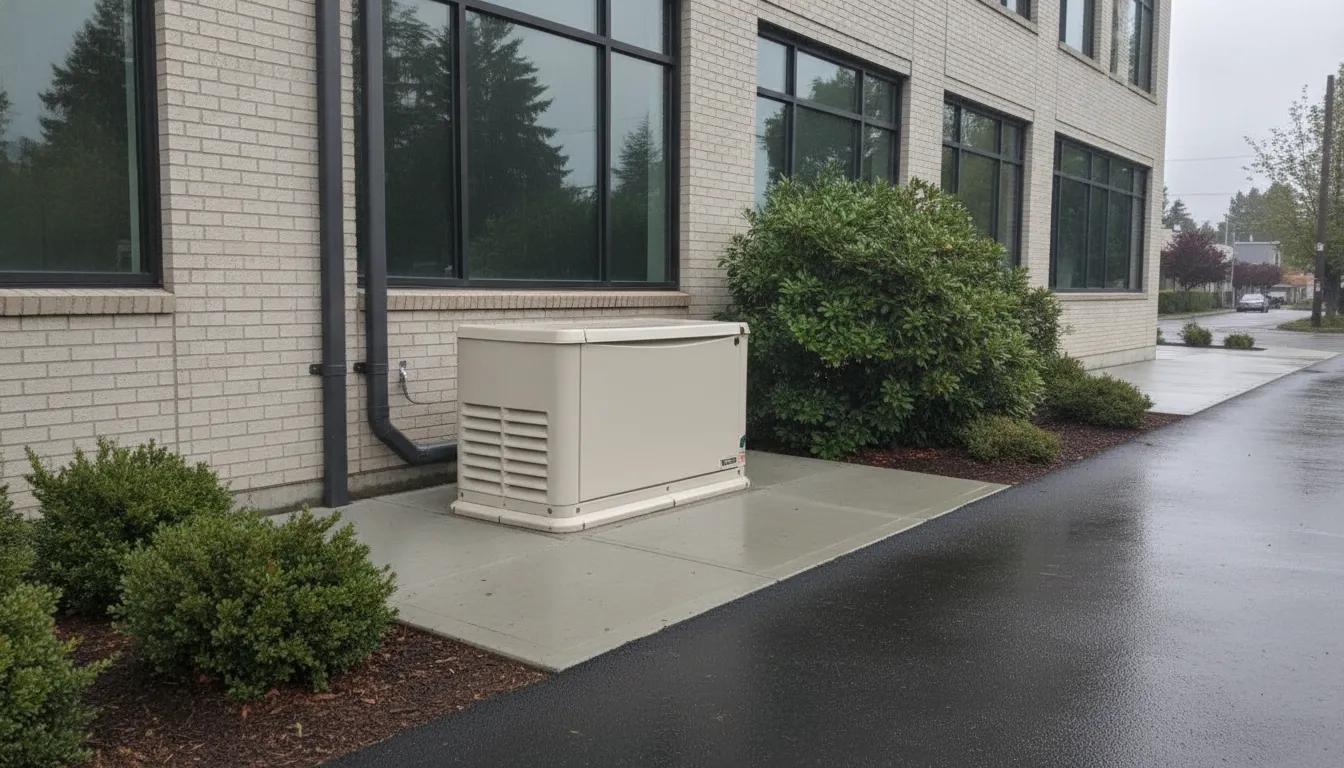
Commercial generator companies do not all do the same job. Some sell equipment, some rent it, and some design and install the electrical system that makes backup power work for a building. An Oregon owner comparing them should start with the role, the license, and the written scope, not a brand list. When the comparison points to a permanent install, start with generator sales and installation.
Call (503) 780-6207 to request a commercial generator estimate
A search for commercial generator companies often mixes four kinds of firms. An electrical contractor installs the generator into the building's electrical system. A dealer sells a specific product line. A factory supports its own equipment. A rental firm covers a temporary outage or a construction phase. Pro Tech Power is an electrical contractor for homes and businesses, and it sells and installs Kohler and Cummins whole-building generators. It does not repair or maintain generators, and it does not sell other generator brands.
What Kinds of Commercial Generator Companies Exist?
The useful first sort is by who owns the outcome. A building needs power during an outage, a safe connection to the utility, and a record that the work was permitted and inspected. Those outcomes sit with different companies.
| Company type. | What they usually own. | What they usually do not own. | Best fit. |
|---|---|---|---|
| Electrical contractor-installer. | Load review, wiring, permits, and startup. | Factory parts, plus gas or concrete trades. | A permanent system tied to an existing building. |
| Generator dealer. | Equipment choice inside a product line, plus delivery. | Building electrical design, unless they also install. | An owner who already has an electrical contractor. |
| Manufacturer support. | Product data, warranty terms, and factory help. | Local permitting and the building distribution system. | Confirming that a named model fits the project. |
| Rental company. | A temporary generator, cables, and a short connection plan. | A permanent standby system and long-term integration. | Construction, an emergency, or a planned shutdown. |
National lists of commercial generator companies rarely make this split. They rank brands or dealers. That is useful if you are shopping a product. It is a weak guide if you are trying to keep a clinic, a restaurant, a warehouse, or an office online.
Ask each firm one plain question. If the generator starts but the building still has no power, whose scope failed? The answer tells you whether you are talking to an installer or a supplier.
The four types can sit on one project without being the same vendor. A dealer may supply the set. An electrical contractor may land it. A factory rep may confirm the spec. A rental firm may cover the weeks before the permanent unit arrives. Trouble starts when one brochure implies that all four jobs are included.
Electrical contractor-installers
This is the company that should appear on the electrical permit. They read the existing gear, decide what the generator must carry, and connect the transfer equipment so the building cannot backfeed the utility. On a commercial site they also coordinate shutdown windows so tenants are not surprised.
Judge them on buildings, not on adjectives. A clinic with imaging equipment is a different problem from a warehouse with a few overhead doors. Ask what failed on a past job and how they changed the scope. Vague pride is not evidence.
Dealers and suppliers
A dealer earns a place on the list when the product line is real and the delivery date is real. Ask which models they can actually order, how long the enclosure and the transfer gear take, and who starts the set on site. A dealer who cannot name the installing electrician is selling a box, not a system.
Factory support
Manufacturer support is a check, not a bidder. Use it to confirm that the model on the proposal is current, that the warranty matches the duty, and that startup must be done by an authorized party. Do not expect a factory hotline to pull a local permit.
Rental firms
Rentals solve a date, not a design. They make sense for a remodel, a storm, or a failed utility tie-in. They are a poor substitute when the lease or the insurer expects a permanent standby plant. If you compare a rental quote with a permanent quote, label them as different products.
Which Commercial Generator Companies Should an Oregon Owner Compare?
Compare firms that can show commercial work in Oregon, not a stack of home installs. A whole-building generator has to match voltage, phase, and the loads the owner actually needs. A home standby set does not prove that skill.
Check the license before the brochure
Oregon construction work runs through the Construction Contractors Board. The board's public site lets you look up a contractor, confirm the license, and read how to file a complaint. Use that search on every name, including a dealer who says they also install. Pro Tech Power's license is CCB#198878. A license is not a quality score. It is the minimum that lets you compare real contractors instead of unlicensed sellers.
Separate the electrical scope from the equipment sale
A good comparison names who designs the connection, who pulls the electrical permit, and who stands on site for inspection. Oregon's electrical rules live in the Oregon Electrical Specialty Code, adopted by the Building Codes Division from the National Electrical Code, with Oregon amendments. The 2026 edition takes effect October 1, 2026. Your city or county still decides the permit path, so Portland, Tigard, Beaverton, Hillsboro, Salem, Albany, and Eugene can differ.
Fuel piping, a concrete pad, and crane access are often other trades. A proposal that hides those items will look cheap until the general contractor finds the gap. Pro Tech Power's general contractor page is the place to send a bid invitation when the generator is one part of a larger build.
Match the company to the building, not to a logo
A cold-storage site, a medical office, a multifamily building, and a small retail shell do not need the same backup plan. The company you compare should be able to talk about that building type without turning the meeting into a catalog. Pro Tech Power installs Kohler and Cummins only. If a proposal leads with another brand, it is a different buying path, not a like-for-like bid.
How Should You Compare Commercial Generator Companies?
Use the same short list with every firm. If one company cannot answer an item, that item is a gap, not a detail to settle later.
- Confirm the Oregon CCB license and ask who the responsible person is on this project.
- Ask for two commercial projects of a similar building type, and what the generator was meant to keep running.
- Require a written essential-load list before anyone names a kilowatt size.
- Ask which parts of the work they perform and which parts they only coordinate.
- Require the transfer-switch plan, the disconnect plan, and the permit path in writing.
- Ask which brands they actually sell and install. Treat unnamed brands as a no.
- Ask what they will not do. Repair and maintenance are a separate business for many firms.
- Compare exclusions side by side. A lower price with more exclusions is not a lower project cost.
Sizing math, fuel choice, and a full cost breakdown belong in their own reviews. If you need those next, start with how to size a generator for a commercial building and Oregon generator fuel options. This comparison should stop at whether the company is qualified to have that conversation.
NFPA 110 is the standard many designers use for emergency and standby power systems. You do not need to buy the book to ask a useful question. Does this building require emergency power, legally required standby, or optional standby? A company that cannot tell those apart is not ready to specify the system. The code that applies still comes from the authority having jurisdiction and from the Oregon electrical code, not from a sales sheet.
Read the team, not the logo
Commercial work fails in the handoff between people. Ask who visits the site, who draws the one-line, and who attends the inspection. A salesperson who vanishes after the deposit is a warning. So is a proposal signed by a company that will subcontract the entire electrical scope without naming the subcontractor.
Insurance belongs in the same pass. Ask for current liability coverage and for the license number you already looked up. The Oregon Construction Contractors Board explains how to search a license and how consumers can report unlicensed work. Five minutes there is worth more than a page of testimonials.
Local proof matters more than a national ranking. A firm that has never pulled an Oregon electrical permit will spend your schedule learning the counter. Ask which jurisdictions they have finished in the last two years. Portland, the south metro, Salem, and the southern Willamette Valley do not share one counter.
What Should a Proposal From These Companies Include?
A proposal is the real comparison tool. Brochures are not. Ask every commercial generator company to include the same blocks so you can read them on one table.
- Building address, occupancy, and the systems that must stay on.
- The equipment basis, including brand and the reason it fits this site.
- Transfer equipment, new breakers, conduit, and any panel changes.
- Who provides the pad, anchoring, fuel connection, and trenching.
- Permit responsibility, inspection stages, and utility notices.
- Startup, owner orientation, and the documents you receive at handoff.
- Assumptions and exclusions, each on its own line.
Pro Tech Power's scope on a generator project is sales and installation of Kohler or Cummins equipment, coordinated with the building's electrical system. It does not include generator repair, generator maintenance, or portable-generator add-ons. If your building also needs a tenant improvement, a restaurant remodel, or a panel change, that work can be scoped as electrical work. It should not be buried inside the generator price.
Put the schedule in the same document. Owners get hurt when equipment is promised in eight weeks and the pad, the gas utility, and the inspection are still open. Ask for a sequence: site visit, load list, equipment release, permit, on-site work, inspection, and orientation. Dates can move. A company that will not name the sequence is not ready to hold a date.
Ask how changes will be priced. A commercial building almost always reveals something in the existing gear. The fair proposal says what happens when a panel is full, when the gas utility wants a different meter, or when the only pad location blocks a truck door. Silence on changes is how a low bid becomes the high bid.
For the planning questions that come before equipment, read what a building should evaluate for a natural gas generator. For cost and scope questions on the install itself, read generator installation for commercial buildings in Oregon. Those pages answer a different question than this one.
What Should You Ignore When Lists Rank Commercial Generator Companies?
Ignore rank order that is only a brand chart. A top-five brand article does not know your utility, your fire official, or your panel. Ignore reviews that praise a quick home install. Ignore any promise of lifetime maintenance from a company that does not actually employ generator technicians. And ignore a price with no exclusions.
Also ignore geography that is narrower than the work. Pro Tech Power is based at 9386 SW Tigard St., Tigard, OR 97223, and it works across the region, including Portland, Wilsonville, Woodburn, Salem, Albany, and Eugene. A Tigard address is not a limit on where a commercial project can be.
Rental companies deserve a fair look when the need is temporary. They are the wrong comparison when the board wants a permanent standby plant. Dealers deserve a fair look when your electrical contractor is already under contract. They are the wrong sole vendor when nobody has claimed the permit.
Watch for borrowed credibility. A logo for a famous engine brand does not mean the local firm is allowed to start that equipment or to honor the warranty. Ask for the authorization in writing, on that brand, for commercial sets. If the letter is only for home standby, the commercial proposal is leaning on the wrong credential.
Also watch for a maintenance promise used as a closer. Some owners want a single company for life. That is a fine preference. It is not a reason to hire an installer who does not actually run a generator shop. Pro Tech Power will tell you that limit up front. The install can still be done well, and the mechanical upkeep can sit with a company that does that work every week.
Finally, compare how each firm talks about the rest of the building. Backup power touches fire alarm, elevators, coolers, data rooms, and exit lighting only when someone put them on the load list. A company that says the whole building without a list is guessing. Send them back for the list before you score the price.
One more filter: payment requests that arrive by surprise. Pro Tech Power does not request payment by credit card, wire, or apps. Credit card payments are accepted only when the client starts them. If a message looks off, call 503-780-6207 and verify it before you pay anyone.
Frequently Asked Questions
Are commercial generator companies the same as electricians?
No. Some are electrical contractors who install generators. Others sell equipment, rent equipment, or support a factory line. For a permanent building system, you still need a licensed contractor who will own the electrical connection and the permit.
Does Pro Tech Power repair commercial generators?
No. Pro Tech Power sells and installs Kohler and Cummins generators. It does not repair generators or keep them on a maintenance route. Ask a separate specialist if you need ongoing mechanical upkeep.
Which brands should a proposal name?
Pro Tech Power installs Kohler and Cummins only. A proposal built around a different brand is not the same offer, even if the kilowatt number looks similar.
Can a general contractor hire the electrical firm directly?
Yes. Bid invitations for this work should go through the general contractor page, so the generator scope stays with estimating rather than with a general inbox.
What if two companies refuse to price the same scope?
Stop and rewrite the scope. Unequal exclusions make the prices impossible to compare. Send the same load list, the same site limits, and the same list of trades you expect them to carry.
Talk with Pro Tech Power about a commercial generator
Bring the building address, the systems that must stay on, and any dealer quotes you already have. Pro Tech Power can tell you whether a Kohler or Cummins installation is the right path, and what the electrical scope should include. Call (503) 780-6207 or use the contact form. The office is at 9386 SW Tigard St., Tigard, OR 97223. CCB#198878.