
Panels & Wiring
Breaker Box Upgrade Cost: What the Estimate Covers

Pro Tech Power Corp
· 11 Min Read
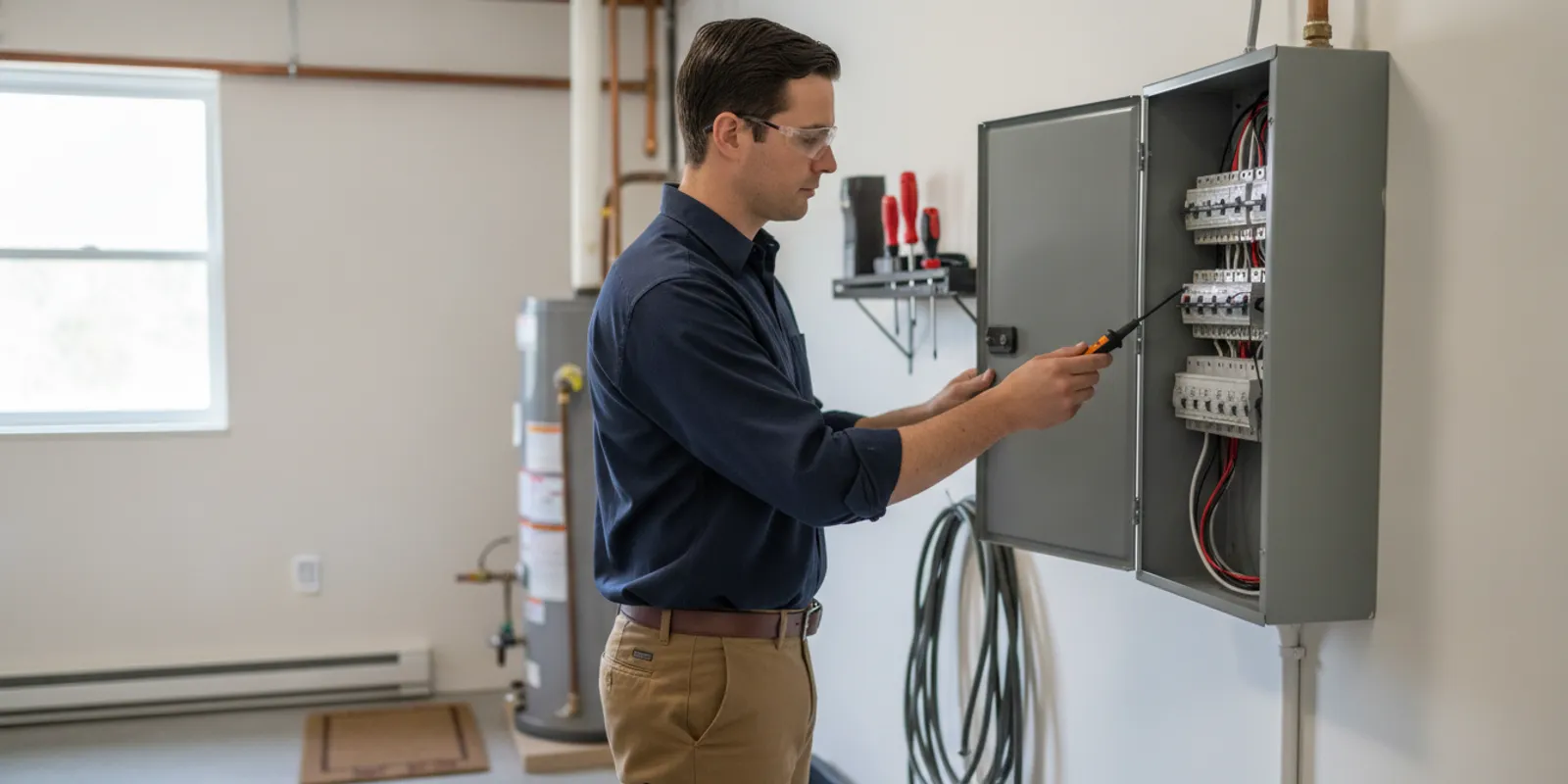
Breaker box upgrade cost is a scope question, not a single price. The words on a proposal matter more than the total, because two homes can need very different work under the same label. If you are planning a replacement, a remodel, or an electrical addition, start with a project-specific assessment and a written description of the work.
What does breaker box upgrade cost actually describe?
“Breaker box” is the everyday name for the electrical panel that holds the circuit breakers. “Upgrade” is the vague part. One homeowner may mean replacing the equipment that is already there. Another may be asking whether the home can support a kitchen remodel, a heat pump, or another addition. Those are different conversations, and a headline total cannot tell them apart.
Before you compare prices, name the result you want. Are you responding to a concern, coordinating panel work with a remodel, or planning for equipment that may be added later? Say which plans are definite and which are still ideas. A licensed electrician can then look at the current setup and explain which parts of the request belong in the proposal.
Pro Tech Power is a full electrical contractor for residential and commercial work, not only generator installation. Panel projects are quoted one home at a time. There is no standard published company price for this work. For broad background only, Rewiring America’s panel upgrade overview describes a typical range of $2,000 to $4,000. That figure is not a local quote, a Pro Tech Power price, or a prediction for your home. Treat it as general context.
For the Oregon picture, read this breaker box upgrade guide. It covers why older homes run out of capacity, how a permit can fit the process, and how local costs vary. This article stays narrower: how to read an estimate and which questions a headline total cannot answer.
Which details change breaker box upgrade cost?
The items below are discussion points, not a list of work that belongs in every estimate. Ask the estimator which details matter in your home, what is already known, and what is still uncertain.
The existing panel and the reason for the request
The panel’s visible arrangement, any known history, and the concern that prompted the call can frame an assessment. Share prior electrical work or repeated interruptions if you know about them. Do not open the panel or try to inspect internal parts yourself. A photo of the cover and the area around it may help explain the location. It cannot show internal condition or set the scope.
If you have noticed repeated trips, unusual heat, a burning odor, or visible damage, describe what happened and when. Do not keep resetting a breaker to force a circuit to stay on. Contact a qualified electrician about a concerning condition. This guide to breaker-panel warning signs can help you organize what you saw. It is not a substitute for an evaluation.
Current and planned electrical needs
A household’s plans shape the questions an estimator asks. A remodel, a new appliance, or a possible home EV charger can all be relevant. Share what is planned now, what might happen later, and how sure the timing is. Do not decide that a larger panel is required just because the house is big or because a future wish list is long.
Ask what information supports the recommendation. Pro Tech Power’s design-build work includes full electrical design, so planning can be part of a larger project when it is useful. Do not assume design work is inside every panel estimate. Ask whether it applies to your request and whether the proposal includes it. For wider price context, see this panel upgrade cost overview, then confirm the conclusion with an assessment of your home.
Whether related wiring or circuit work is proposed
Some proposals stay at the panel. Others may discuss circuit changes, new conductors, or coordination with a renovation. Do not assume any of those items are required, included, or left out. Ask the contractor to state exactly what the proposed scope covers and what findings could change it.
If you are remodeling, explain how the panel question fits the larger plan. Electrical updates, circuit changes, lighting, and outlets may need to be considered together. Pro Tech Power’s residential work includes interior remodels, with electrical updates and circuit changes as part of that work. The electrical project portfolio shows finished residential and commercial projects. It is not a price schedule, and it does not promise what your home needs.
Access, site conditions, and coordination
Where the panel sits, and how easy it is to reach, can change how the work is planned. Tell the estimator about tight access, finished surfaces nearby, or a schedule you have to meet. Ask what the written proposal assumes about the work area. If an approval or another trade still has to be confirmed, ask who will clarify it and whether that step is inside the proposed scope.
Pro Tech Power’s design-build team brings licensed electrical planning into the design phase so issues can be spotted before construction. That is a real offering on design-build projects. It does not mean every panel estimate includes design work or changes beyond the panel. The written estimate should separate defined tasks from open questions so you are not left to guess.
How should you compare two estimates?
Compare the work described before you compare the totals. Two proposals can use the same label and still rest on different assumptions. Use the table as a question list, not as a claim that every row belongs in a panel project.
| Detail to compare | Question to ask | Why it matters |
|---|---|---|
| Intended outcome | What result is this work meant to achieve? | Confirms that each proposal answers the same need. |
| Panel work | What equipment and work at the panel are described? | A short label can hide real differences in scope. |
| Related work | Are circuit or wiring changes included, excluded, or conditional? | Makes the boundaries and assumptions visible. |
| Site assumptions | What did you assume about access and existing conditions? | Unstated assumptions cause trouble if the site differs. |
| Coordination | What still needs confirmation, and who will clarify it? | Separates planned tasks from open items. |
| Changes | How will new findings and any price changes be explained? | Shows how you will review a changed scope before you decide. |
After you talk with each contractor, write a side-by-side note. Record the intended outcome, the tasks described, the exclusions, the assumptions, and the questions still open. Write “not stated” instead of filling a gap yourself. Then ask for the clarification in writing. If one proposal includes an item the other leaves open, ask whether the second contractor can price the same scope and how that would change the estimate.
Picture one proposal that says only “panel upgrade” next to a total. Picture another that explains the panel work and lists related circuit changes as conditional on what is found. The second document is easier to discuss. The extra detail does not, by itself, prove it is the right option. Ask both contractors to explain the recommendation, the evidence behind it, what is still undecided, and how a change would be presented. Compare like with like before you draw a conclusion from the totals.
A lower number is not automatically the better match if it does not cover the outcome you thought you were approving. A longer proposal is not automatically better either. Your goal is to understand the proposed work well enough to know what you are authorizing.
How can you read an estimate line by line?
Start with the work description. It should explain the proposed outcome in language you can follow. If the document says only “upgrade panel,” ask for a clearer explanation. You do not need to design the electrical project yourself. You do need to understand the recommendation and its edges.
- Confirm the objective. Ask what concern or planned use prompted the recommendation.
- Identify the stated work. Ask what will change at the panel and whether other circuits are involved.
- Mark the assumptions. Find out what the estimate assumes about existing conditions, access, and the information available before work starts.
- Separate known items from open items. Ask what still needs assessment and how that uncertainty affects the proposal.
- Review the exclusions. Ask what sits outside the quoted scope so you can plan for it.
- Understand the change process. Ask how new findings, options, and any price changes will be brought back to you.
These are questions, not claims about which line items Pro Tech Power or another contractor includes. Read each custom estimate on its own terms. If something is missing or unclear, ask for written clarification before you approve the work.
What should you prepare before requesting a quote?
You do not need to diagnose the panel or calculate capacity yourself. A little preparation makes the first conversation more useful and helps the estimator understand your goals.
- Explain why you are asking. Say whether the request comes from a concern, a remodel, planned equipment, or general planning.
- List possible additions. Note appliances, circuits, or other electrical changes you are considering. Mark which are definite and which are only possibilities.
- Share known history. Mention previous electrical work, documents you have, repeated interruptions, or anything you can see.
- Describe access. Explain where the panel is and point out obstacles or limits around the work area.
- Bring project information. If a renovation is underway, share the current plan or an outline, and note which decisions are still moving.
- Ask about the assessment. Find out what the estimator needs to see and what the written proposal will explain.
A photo of the panel exterior and the area around it can help explain the location. It cannot confirm internal condition or the capacity the home needs. Do not remove the cover or handle wiring to get a closer picture. If you have an urgent safety concern, contact a qualified electrician rather than waiting to gather paperwork.
How do remodel plans affect a panel estimate?
Timing matters. An estimate based on an early concept may need another look as decisions get clearer. Tell the estimator whether a remodel is in design, already underway, or only being considered. If you have a plan, share it. If you do not, describe the electrical additions that might be part of the work.
For a renovation, ask how the panel question fits with circuit changes, lighting, outlets, or other planned electrical work. That question is not a reason to add work that has not been assessed. It is a way to make sure the proposal matches the project you actually have. Pro Tech Power’s residential interior remodels include electrical updates and circuit changes. Ask which of those, if any, belong in your request.
If you are considering a 200-amp change, do not treat the amperage label alone as proof that a particular replacement is right. Existing conditions and the loads you intend still have to be considered. This guide to 200-amp upgrade costs can help you prepare questions. For how a panel scope differs from wiring work, see this overview of panel replacement and wiring. Both are general context, not a determination for your home.
What should you expect from the estimate conversation?
A useful conversation should leave you with a clearer view of the outcome you asked for, the work being proposed, and the questions that still need answers. Pro Tech Power prepares custom estimates rather than a published rate card. The About page lists Drew Anderson as Founder, President, Lead Residential Estimator, and Project Manager, and it lists separate residential and commercial estimators on the team. Those roles describe who can scope a project. They do not tell you what your estimate will include.
Before you decide, try to describe the proposal in your own words. You should be able to say what outcome is intended, what work is covered, what sits outside the scope, which assumptions remain, and how a newly discovered condition would be discussed. If two proposals still do not look comparable, ask both contractors to clarify them rather than guessing.
You can also review company information and the residential and commercial work Pro Tech Power offers across the I-5 corridor, including Portland, Tigard, Wilsonville, Woodburn, Salem, Albany, and Eugene. The office is in Tigard, and the work is not limited to that city. Those pages give background about the contractor. They do not replace an assessment or define the scope of your estimate. The public credential on the site is CCB#198878.
Request a project-specific quote
Frequently asked questions
How much does a breaker box upgrade cost?
There is no single price that fits every home. Pro Tech Power uses custom project estimates rather than a standard published panel rate. The proposed work and the conditions at the property shape the number. Broad online ranges are context only. Ask for an assessment and a written scope if you want a figure for your project.
Does a panel estimate automatically include wiring or circuit changes?
No. Do not assume related work is included or required unless the proposal says so. Ask the contractor to name any circuit or wiring work being proposed, along with exclusions and items that depend on what is found.
Should I request a larger panel for future needs?
Future plans are useful to share, but they do not by themselves pick the project. Tell the estimator what additions you are considering and ask what assessment supports the recommendation. A label such as 200 amps is not, on its own, proof that a particular replacement is appropriate.
Can a photograph determine the project price?
A photograph may show where the panel is. It cannot reliably show internal condition, capacity needs, or the full scope. Do not remove the cover or touch wiring. An in-person assessment is a safer basis for a tailored proposal.
A clear estimate connects the proposed work to your home’s conditions and your plans. Ask questions until you understand the scope, then decide whether to move forward.