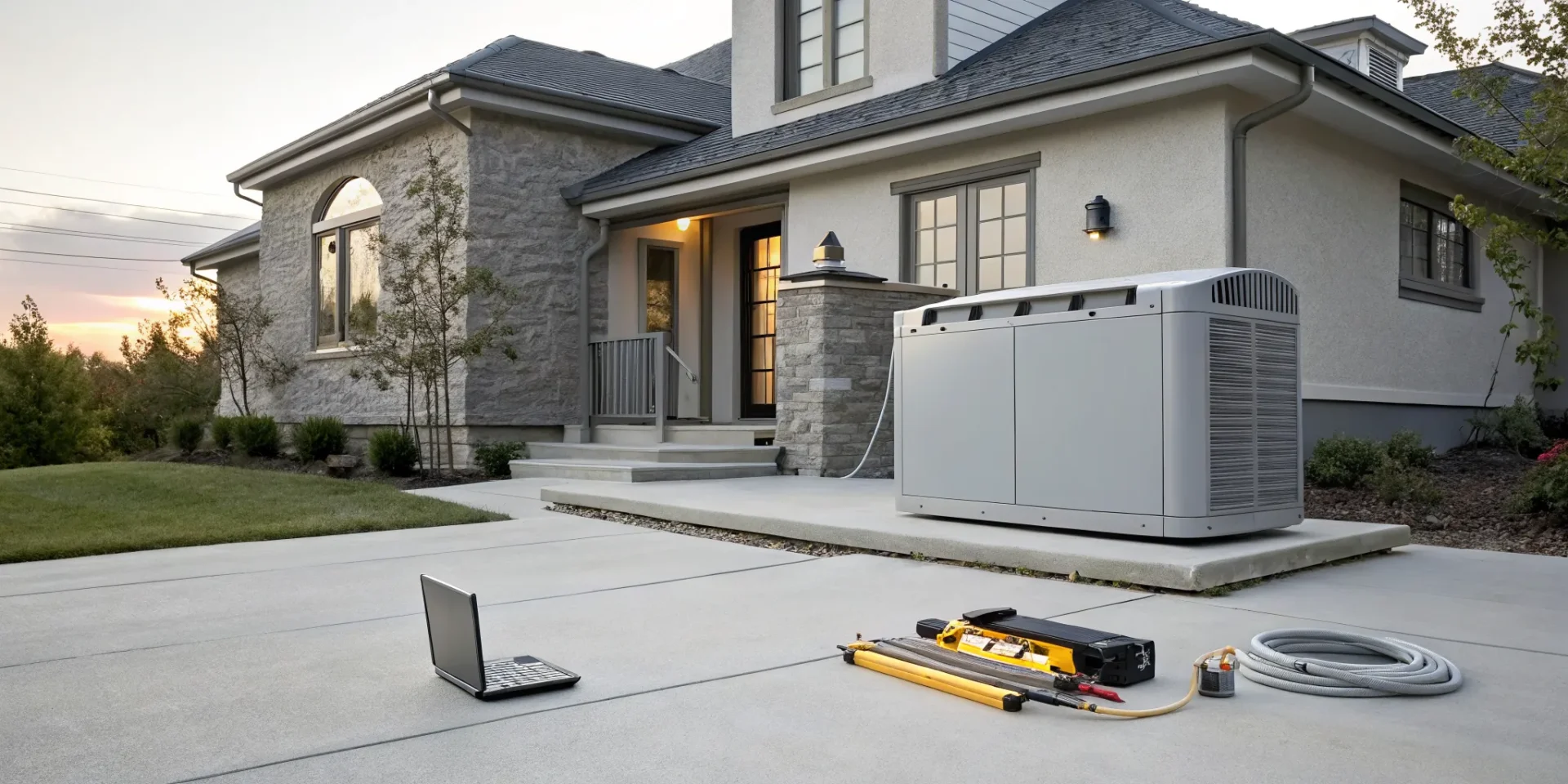
Key Factors in Whole House Generator Cost Installed
A whole-house generator is more than just an emergency appliance; it’s a long-term investment in your home’s security and value. During a power outage, it protects your property from issues like frozen pipes and keeps your family comfortable. It’s also a highly desirable feature that can increase your home’s resale value. But to see that return, you first need to understand the initial investment. The total whole house generator cost installed reflects not just the equipment, but the skilled labor, permits, and electrical work required for a safe and reliable system. Here, we’ll explore the factors that shape this cost, helping you see it as a valuable upgrade for your property.
Key Takeaways
- Budget for the complete installation, not just the unit: The final price includes essential services and components like professional labor, city permits, a concrete foundation, and the all-important automatic transfer switch.
- Know the key factors that shape your quote: Your total cost is tailored to your home and depends on the generator’s power capacity, your choice of natural gas or propane, and the complexity of the installation on your property.
- View your generator as a valuable home investment: Beyond providing immediate security and peace of mind during outages, a whole-house generator can also increase your property’s resale value, making it a smart long-term upgrade.
Breaking Down Whole-House Generator Costs
When you start looking into a whole-house generator, one of the first questions is always about the price. It’s a significant home upgrade, and the total cost can range quite a bit, often falling somewhere between $10,000 and $25,000. This price tag isn’t just for the machine itself; it covers the complete installation, which is a complex electrical project. The final number on your quote depends on a few key things, primarily the size of the generator you need and where it will be installed on your property.
Understanding these factors will help you see exactly where your money is going and why a custom quote is so important for getting an accurate price. Because every home’s electrical system and layout is unique, a professional assessment is essential to map out the work required. This includes everything from preparing the site and pouring a concrete pad to running fuel lines and integrating an automatic transfer switch with your main electrical panel. It’s a detailed process that requires licensed electricians to ensure everything is safe and up to code. Breaking down the major cost components makes the investment much clearer and helps you plan your budget effectively.
How Generator Size Affects Price
The most significant factor in your generator’s cost is its size, which is measured in kilowatts (kW). Think of it like engine power for your home. A smaller 10kW unit might keep the essentials running, like your refrigerator and a few lights, while a larger 26kW model can power your entire home, including the air conditioning. Naturally, a more powerful generator costs more. A professional electrician will perform a load calculation to determine the right size for your needs, ensuring you don’t overpay for a unit that’s too big or get one that can’t handle the load. This assessment is a key part of our generator installation service.
Why Your Location Matters
Where you live and where the generator sits on your property both play a big role in the final cost. Labor and permit fees can vary depending on your city and local regulations. More importantly, the generator’s placement matters. If it’s installed far from your main electrical panel or natural gas meter, the project gets more complex. Our team will need to dig longer trenches and run more wiring and piping to connect everything. A straightforward installation near your existing utilities will always be more cost-effective than one requiring extensive site work. That’s why an on-site consultation is the best way to get a precise project estimate.
Key Factors That Influence Installation Costs
When you start looking at whole-house generators, it’s easy to focus on the price of the unit itself. But the final cost is a much bigger picture. Several key factors come into play, from the size of the generator to the specific layout of your property. Understanding these elements ahead of time helps you create a realistic budget and ensures there are no surprises down the road. Let’s walk through the main components that shape the total investment for your home’s backup power system.
Generator Size and Capacity
The power output of a generator, measured in kilowatts (kW), is one of the biggest drivers of its cost. Simply put, a larger generator that can power your entire home, including central air and other large appliances, will have a higher price tag than a smaller unit designed to cover just the essentials. Think of it like choosing an engine for a car; more power comes at a higher cost. Determining the right size isn’t a guessing game. A professional can help you perform a load calculation to figure out exactly how much power your household needs, ensuring you don’t overpay for capacity you won’t use or end up with a generator that can’t handle the demand.
Choosing Your Fuel Type
Your generator needs fuel to run, and your choice of natural gas or propane will affect both the upfront installation price and long-term operating expenses. If your home already has a natural gas line, connecting the generator can be relatively straightforward and cost-effective. Natural gas is also convenient since it’s supplied directly by a utility. If you don’t have access to natural gas, propane is an excellent alternative. However, it requires installing a large storage tank on your property, which adds to the initial project cost. You’ll also need to factor in the expense of refilling the tank periodically.
Site Prep and Installation Complexity
Where the generator is placed on your property plays a significant role in the overall cost. Every generator needs a stable, level foundation, which usually means pouring a concrete pad. The location also determines how much work is needed to connect it to your home. If the generator is installed far from your electrical panel or gas meter, it will require more trenching, wiring, and piping. This adds to both material and labor costs. A professional installer will assess your property to find the most efficient and code-compliant location, helping to manage the complexity and cost of your generator installation.
Necessary Electrical Upgrades
A whole-house generator must be safely and correctly integrated into your home’s electrical system. This requires an automatic transfer switch (ATS), a critical component that detects a power outage and automatically switches your home’s power source from the grid to the generator. The ATS is a key part of the installation cost. Additionally, your home’s existing electrical panel might need to be upgraded to handle the generator’s power load, especially in older homes. A licensed electrician will inspect your system to see if any updates are needed to meet safety codes, ensuring your residential electrical services are up to the task.
A Look at Pricing for Common Generator Sizes
When you start looking at whole-house generators, you’ll see prices can vary quite a bit. The total investment depends on the generator’s size, the brand you choose, and how complex the installation will be at your home. Think of it less like buying an appliance off the shelf and more like a custom home upgrade. To give you a clearer picture, let’s break down the typical price ranges for some of the most common generator sizes, including installation.
Small to Medium Generators (10kW-14kW)
If your goal is to keep the essentials running during an outage, a small or medium-sized generator is likely a great fit. A 10kW generator is enough to power basics like your lights, refrigerator, and a few outlets. For this size, you can expect the total cost to be between $10,000 and $13,000. If you need a bit more power, maybe for a small AC unit or a sump pump, a 14kW generator is a solid step up. The price for a 14kW unit typically ranges from $13,000 to $15,000. These options provide peace of mind without having to power every single item in your house.
Large Generators (20kW-26kW)
For homeowners who want to maintain their normal routine without interruption, a larger generator is the way to go. A 22kW generator can handle most of your home’s appliances, including your heating and cooling systems, with a price tag between $15,000 and $17,000. Moving up to a 24kW unit, which can power your entire house and larger AC units, you’ll see costs around $19,000 to $21,000. For maximum coverage, a 26kW generator ensures everything, even multiple air conditioners, stays on. This size usually costs between $21,000 and $23,000. These are powerful generator solutions that keep life running smoothly.
Custom and High-Capacity Options
Every home is unique, and so is every generator installation. While the prices above are great starting points, your final cost will depend on your specific needs. Overall, homeowners can expect to spend anywhere from $7,000 to over $25,000 for a whole-house generator and its installation. Factors like the brand, the layout of your property, and any necessary electrical work all play a role. The best way to get a precise number is to have a professional assess your home. We can help you understand your power needs and provide a detailed quote tailored to your property, ensuring there are no surprises.
Hidden Costs: What to Budget for Beyond the Unit
When you start looking at whole-house generators, it’s easy to focus on the price tag of the unit itself. But that number is just one piece of the puzzle. The total cost of a generator project includes several other essential components and services that ensure your system is safe, reliable, and ready to go when the power goes out. Thinking about these additional costs from the start helps you create a realistic budget and avoid any last-minute surprises.
A complete and professional installation involves much more than simply placing a generator in your yard and plugging it in. It requires careful site preparation, complex electrical work, and adherence to local codes and regulations. Each of these steps comes with its own costs. From the concrete pad it sits on to the automatic switch that brings it to life, these elements are crucial for a properly functioning system. A trustworthy contractor will always provide a detailed quote that breaks down these expenses, so you know exactly what you’re paying for. Understanding these “hidden” costs ahead of time makes the entire process smoother and helps you make a confident investment in your home’s security.
Labor and Permit Fees
A whole-house generator installation is a job for licensed professionals, not a weekend DIY project. The cost of labor covers the expertise of certified electricians who will safely connect the generator to your home’s electrical system. Professional installation is crucial for safe and reliable operation and can range from a few thousand dollars to more, depending on the complexity of the job. This fee ensures everything is done correctly and up to code.
Additionally, most cities and counties, including those in the Portland area, require permits for this type of electrical work. These permits ensure the installation meets local safety standards. Your contractor typically handles the process of obtaining the necessary permits, but the associated fees will be part of your total project cost.
The Automatic Transfer Switch
The automatic transfer switch, or ATS, is the brain of your generator system. This critical device constantly monitors the power coming from the utility grid. The moment it detects an outage, it automatically disconnects your home from the grid and signals the generator to start, seamlessly switching your power source. When utility power is restored, the ATS switches you back and shuts the generator down.
High-quality quotes will always include the cost of an ATS because it’s what makes the system truly automatic and convenient. Without it, you would have to manually start your generator and connect it to your home during an outage. The ATS is a non-negotiable component for a true whole-house system, and its cost is a standard part of a professional installation.
Concrete Pad and Site Preparation
Your generator needs a stable and level home. It can’t just be placed on the ground, as shifting soil or moisture could damage the unit. That’s why site preparation almost always includes pouring a concrete pad for the generator to sit on. This provides a solid foundation that keeps the machine level and secure.
Beyond the pad, site preparation involves clearing the designated area and making sure it meets local code requirements for distance from windows, doors, and vents. Your installation team will also need to run electrical wiring and a fuel line from your house to the generator. The length and complexity of these connections can also influence the final cost, especially if trenching is required to bury the lines.
Long-Term Maintenance
Your generator is a significant investment, and like any major piece of equipment, it needs regular care to perform at its best. Think of it like your car; it requires routine service to ensure it starts right up when you need it most. Whole-home generators can last for decades if they are properly maintained. This includes periodic oil and filter changes, battery checks, and general system diagnostics.
To protect your investment, it’s wise to budget for an annual maintenance plan. Many contractors, including our team at Pro-Tech-Power, offer manufacturer-recommended maintenance performed by an authorized maintenance provider to keep your generator in top condition. This proactive approach helps prevent unexpected failures and ensures your family has reliable power during any outage.
Choosing the Right Fuel: Natural Gas vs. Propane
Okay, let’s talk about fuel. Your generator needs a reliable power source to run, and for most homeowners, the choice comes down to natural gas or propane. This decision is a big one because it affects everything from the initial installation price to how much you’ll spend over the generator’s lifetime. Each fuel type has its own set of pros and cons, and the right one for you really depends on what’s available at your property and what your budget looks like. Let’s break down the key differences to help you make a clear choice.
Comparing Upfront and Running Costs
When you’re looking at your budget, it’s helpful to separate the upfront costs from the long-term running costs. Natural gas generators often have a lower running cost because the fuel is supplied directly from your utility line, much like your furnace or water heater. If your home already has a gas line, the installation can be more straightforward. Propane, on the other hand, is stored in a large tank on your property that needs to be refilled. This means you’ll have the added expense of the tank installation and the ongoing cost of propane deliveries, which can fluctuate in price.
Checking Fuel Availability at Your Home
The best fuel source for you might be decided by what’s already available at your house. Do you have a natural gas line running to your property? If so, that’s usually the most convenient and efficient path forward for your generator installation. If you don’t have access to natural gas, which is common in more rural areas, propane is your best bet. This will require installing a dedicated propane tank on your property. You’ll need to consider where the tank will go and plan for regular fuel deliveries to ensure your generator is always ready when you need it.
Common Myths About Generator Costs
When you start looking into a whole-house generator, it’s easy to get sticker shock or feel confused by the range of prices you see online. The truth is, the price tag on the generator unit is only one piece of the puzzle. Let’s clear up a few common misconceptions about what a generator really costs, so you can plan your project with confidence. Understanding the full scope of the investment helps you see the complete value you’re getting: reliable power and peace of mind, especially when those Pacific Northwest storms roll in.
The “Extras” Homeowners Often Forget
One of the biggest myths is that the cost is just the generator plus labor. In reality, a safe and professional installation involves several other components. Think of it like buying a car; the base price doesn’t include the features that make it perfect for you. For a generator, there are often extra costs for things like a concrete pad to ensure the unit is stable and level, fuel tanks if you’re using propane, and sometimes noise-dampening enclosures. These aren’t optional add-ons; they are essential parts of a reliable and long-lasting system. A good contractor will include these items in your quote from the start.
The Unit vs. The Full Installation
It’s easy to find the price of a generator online and assume that’s the bulk of the cost. However, the installation itself is a major part of the total investment. The average cost for a fully installed system can range from $7,000 to over $20,000, depending on the generator’s size and the complexity of the job. This price covers the skilled labor, electrical work, permits, and the automatic transfer switch that makes the whole system work seamlessly. You’re not just buying a machine; you’re investing in a professional service that integrates a powerful piece of equipment safely into your home’s electrical system.
How a Generator Affects Your Home’s Value
Many people view a generator as purely an expense, but it’s also an investment in your property. Having a whole-house generator is a highly desirable feature, especially in areas prone to power outages. Studies show that a standby generator can increase your home’s value by as much as 3% to 5%. For a home valued at $700,000, that’s an increase of $21,000 to $35,000. So, while there’s an upfront cost, a generator can add significant resale value and appeal, making it a smart financial decision for many homeowners.
Why a Complex Installation Costs More
When you get a quote for a whole-house generator, you’ll notice the price is for more than just the machine itself. The installation process is a major part of the total cost, and it can vary quite a bit from one home to another. Think of it like this: the generator is the main character, but the supporting cast of materials, labor, and permits determines the final budget.
Several factors can make an installation more complex, and therefore more expensive. Your property’s layout, the location of your utility lines, and local regulations all play a significant role. A straightforward project might take a day or two, while a more involved one could require more extensive work, from trenching across a large yard to upgrading your home’s electrical panel. Understanding these variables will help you see exactly where your money is going and why a professional, custom installation is so important for a safe and reliable system. At Pro-Tech-Power, we provide a detailed quote that breaks down every aspect of your specific generator installation, so there are no surprises.
Simple vs. Complex Setups
Not all generator installations are created equal. A simple setup is one where the generator can be placed easily on level ground, right next to your electrical panel and gas meter. In these cases, less labor and fewer materials are needed, which keeps the cost down. However, many properties present unique challenges that create a more complex installation. For example, if your yard is sloped, we’ll need to build a retaining wall and a level concrete pad to support the generator. Or, if we need to work around delicate landscaping or hardscaping, the job requires more time and care. These custom solutions ensure your generator is installed safely and correctly, but they naturally add to the project’s overall cost.
Placement and Proximity to Utilities
Where you place the generator on your property has a huge impact on the installation price. Ideally, the unit should be close to both your main electrical panel and your fuel source, whether that’s a natural gas line or a propane tank. The farther away the generator is, the more work is required. A distant placement means our technicians will need to dig longer trenches to run extended electrical conduits and fuel pipes. This increases the cost of both materials (more wiring, more piping) and labor. We always work with you to find a location that meets local code requirements for clearance while being as efficient as possible. This professional guidance helps you manage your project costs.
Navigating Permits and Inspections
A safe and legal generator installation involves more than just the physical work; it also includes handling all the necessary paperwork. Every city and county has its own rules, and a professional installation requires securing the right electrical and placement permits before any work begins. The cost of these permits varies by location. After the installation is complete, a local inspector must approve the work to ensure it meets all safety codes. This is a non-negotiable step that protects your home and family. A seasoned contractor handles this entire process for you, from filing the initial application to scheduling the final inspection, ensuring everything is done right.
How to Choose the Right Installation Contractor
Choosing the right generator is only half the equation. The team that installs it plays a massive role in how well it performs for years to come, especially during a power outage. A poor installation can lead to performance issues, safety hazards, and even void your warranty. So, how do you find a contractor you can trust with such a critical home system? It comes down to doing a little homework on their credentials and making sure you get a clear, comprehensive quote before any work begins. Taking these steps will give you peace of mind that your investment is in good hands and will be ready to go when the lights go out.
Verifying Licenses and Experience
First things first, you need to confirm that any contractor you consider is properly licensed and insured. This is non-negotiable. A licensed electrician has proven their knowledge and is held to strict safety standards, which is exactly what you want when connecting a powerful generator to your home’s electrical system. Don’t be shy about asking for proof of licensing and checking their experience with generator installations specifically. A team that has handled many generator projects will know how to handle the unique requirements and potential challenges, ensuring your system works flawlessly when you need it most.
Getting an Accurate Quote
Once you have a shortlist of qualified contractors, it’s time to talk numbers. We recommend getting at least two or three detailed quotes. A trustworthy quote won’t just be a single number; it will break down the costs for the generator unit, automatic transfer switch, labor, permits, and any necessary site prep. Be wary of any bid that seems unusually low, as it could signal cut corners or surprise fees down the road. A professional contractor will be happy to walk you through their estimate and explain every line item. When you’re ready, you can request a transparent quote to get started.
Smart Budgeting for Your Generator Project
A whole-house generator is a significant upgrade for your home, and like any major project, it requires thoughtful financial planning. Thinking through the costs ahead of time ensures a smooth process and helps you make choices that fit your budget. By breaking down the expenses and looking at the long-term value, you can approach this investment with confidence, knowing you’re making a smart decision for your home’s security. Let’s walk through how to plan your budget for this important project.
Create a Comprehensive Budget
When you’re planning for a whole-house generator, it helps to have a realistic idea of the total cost. You can generally expect to invest between $7,000 and $25,000 for the generator and its complete installation. This wide range depends on a few key factors: the generator’s size, the brand you select, and the specific requirements of the installation at your property. Creating a comprehensive budget from the start is the best way to manage your project, allowing you to account for every piece of the puzzle and make informed decisions.
Explore Financing Options
Seeing the total cost can feel like a lot at once, but there are ways to make it more manageable. Many homeowners use financing to spread the cost of a generator over time. The installation portion alone can range from $6,000 to $15,000, influenced by the unit’s capacity and any extra electrical work needed. Understanding these potential costs is the first step in exploring financing solutions that fit your needs. A clear quote gives you a solid number to work with, making it easier to plan your payments.
Get the Most from Your Investment
Think of a generator as more than just a machine; it’s a long-term investment in your home’s safety and peace of mind. During a power outage, it provides an invaluable safety net, keeping your lights on, your food fresh, and your heating or cooling systems running, which is especially comforting during Oregon’s unpredictable weather. A professionally installed generator also protects your home from potential damage, like frozen pipes, and can even add significant value to your property. It’s an investment that pays off for years to come.
Related Articles
Frequently Asked Questions
Why does the total cost for a generator vary so much, from $10,000 to over $25,000? The final price tag isn’t just for the machine. It includes professional installation, which is a complex electrical project. The two biggest factors are the generator’s power capacity (a larger unit costs more) and the complexity of the installation at your specific home. Things like the distance from your electrical panel and gas line, site preparation, and local permit fees all contribute to the final quote.
How do I figure out the right size generator for my home? You don’t have to guess. A professional electrician determines the right size by performing a “load calculation.” This process assesses your home’s electrical needs, from essential appliances like the refrigerator to larger systems like your air conditioner. This ensures you get a generator that can handle the demand during an outage without paying for more power than you’ll actually use.
What costs are involved besides the generator itself? The generator unit is just the starting point. A complete, professional installation also includes the cost of an automatic transfer switch (the device that makes it all work automatically), a concrete pad for a stable foundation, all the necessary electrical wiring and fuel piping, and local permit fees. It’s also smart to plan for a long-term maintenance plan to keep your system in top shape.
Is a whole-house generator a good investment for my property? Absolutely. Beyond the immediate peace of mind during a power outage, a generator protects your home from issues like frozen pipes or spoiled food. It’s also a very attractive feature for potential buyers. Studies have shown that a permanently installed generator can increase a home’s resale value, making it a solid addition to your property.
Can I install a generator myself to save money? This is one project you should always leave to the professionals. A generator installation involves complex electrical work and connections to fuel lines. For safety, reliability, and to meet local codes, the work must be done by a licensed and insured electrician. A DIY installation can be dangerous, void your generator’s warranty, and fail an inspection.