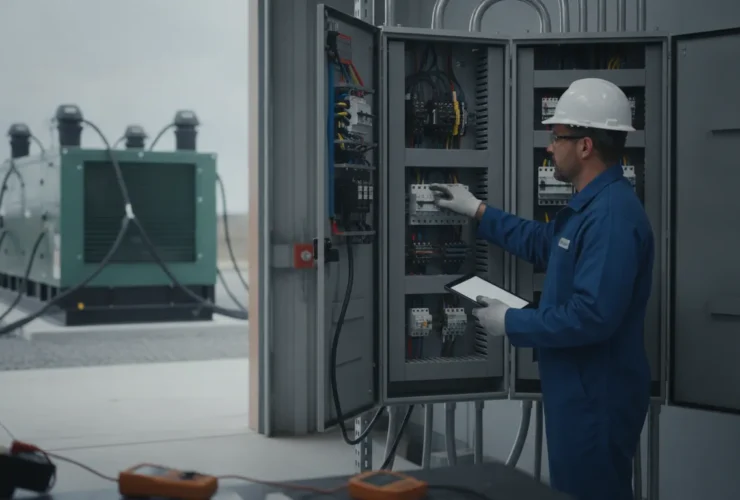
Whole-Home Kohler Generator Installation Portland Guide
When a Portland-area outage cuts power, the impact can reach well beyond dark rooms. Heating, refrigeration, internet access, and medical equipment may all depend on a steady electrical supply, especially during severe weather. A backup system should restore essential power without asking you to run extension cords or make decisions in the middle of an outage.
Whole-home Kohler generator installation Portland homeowners can rely on pairs a properly sized Kohler standby generator with an automatic transfer switch. Which monitors utility power and starts the generator when service is lost. Unlike a portable unit that requires manual operation and produces dangerous carbon monoxide, a professionally integrated standby system is designed to support the home’s electrical needs safely. The CDC warns that generator carbon monoxide is odorless and colorless, making correct placement and operation essential: review the CDC’s generator safety guidance.
The right solution begins with understanding how your home uses electricity, the risks of portable backup, and the conditions that make automatic standby power valuable in Portland. From there, generator capacity and installation requirements can be evaluated with a clear plan.
Why Portland Homes Need a Whole-Home Backup Generator
Pacific Northwest winters bring wind, rain, ice, and falling branches that can interrupt utility service across the Portland area. For homeowners who depend on electricity for heat, refrigeration, lighting, internet access, medical equipment, or a garage door, an outage is more than an inconvenience. Backup power helps keep essential systems operating while utility crews restore service. Standby power is especially valuable for households that want dependable coverage without waiting for someone to be home and ready to respond.
Portable generators require hands-on operation
A portable generator can power selected appliances, but it requires manual setup every time the electricity goes out. You must move the unit into position, connect equipment correctly, refuel it, and monitor its operation. Portable generators also produce carbon monoxide, an odorless, colorless gas that can kill without warning. The CDC generator safety guidance emphasizes that generators must be operated outdoors and away from doors, windows, and vents. A rushed setup during a winter storm can increase the chance of unsafe placement or improper connections.
Standby power works automatically and stays outside
A professionally installed standby generator is placed outdoors and connected to the home’s electrical system through an automatic transfer switch. When utility power fails, the switch detects the outage and starts the generator without requiring manual operation. This means there is no need to carry a heavy unit through rain, run extension cords across the home, or troubleshoot the equipment in the dark. Because the generator operates outdoors rather than inside the home, it avoids the indoor carbon monoxide exposure risk associated with operating a portable generator indoors. Proper placement and installation still matter, and carbon monoxide safety should always be treated seriously.
Kohler has been building generator equipment since 1920, giving homeowners a long-established manufacturer to consider for whole-home backup power. Its automatic-transfer approach is designed for the moments when you need power most: during a storm, overnight outage, or unexpected utility interruption. A Kohler generator installation can be evaluated around your home’s electrical demand, fuel options, and site conditions so the system supports the loads that matter most.
How to Size a Kohler Generator for Your Portland Home
Generator sizing starts with how you want your home to operate during an outage. A smaller unit may cover critical loads such as refrigeration, lighting, internet equipment, a furnace, or a sump pump. A whole-home system is selected to support more of the home’s electrical demand at the same time. Square footage provides useful context, but it is not enough by itself. The appliances, heating equipment, motors, and electrical loads in your specific Portland home determine the appropriate capacity.
Critical loads or whole-house coverage?
Critical-load planning can reduce the generator capacity required, but it also means deciding which circuits should remain powered and which will wait until utility service returns. Whole-house coverage offers a more seamless experience, especially for homes with electric heat, well pumps, multiple refrigerators, or other high-demand equipment. The right choice depends on your priorities, the home’s electrical infrastructure, and the loads you need to run together.
Kohler organizes its home generators by power output in kilowatts, and the running-wattage specification is an important part of evaluating whether a model fits your application. Available options span approximately 10 kW to 60 kW, giving homeowners a broad range of capacity to consider. That does not mean the largest unit is the best choice. An oversized or undersized system can create unnecessary cost or fail to support the loads you expect.
What does a Kohler generator cost?
Kohler’s listed manufacturer suggested retail prices provide a starting point, not a complete installation quote. The published range in the researched product lineup is approximately $3,834 for a 10 kW generator to $28,304 for a 60 kW generator. Other listed examples include $4,997 for 14 kW, $5,813 for 20 kW, and $7,445 for 26 kW. These figures describe equipment MSRP and should not be treated as your final project price.
Local pricing depends on the installation type and the requirements of your property. A dealer evaluates available fuel, electrical service, placement, transfer-switch configuration, permitting, and site conditions before determining the complete price. Pro Tech Power Corp takes a consultative approach to residential electrical solutions, matching the Kohler unit to your home’s actual demand rather than steering you toward a one-size-fits-all model. For a whole-home Kohler generator installation in Portland, visit our generators page to discuss your loads and receive a project-specific recommendation.
What the Whole-Home Kohler Generator Installation Process Looks Like in Portland
A whole-home Kohler generator installation Portland homeowners can rely on begins with a site-specific plan. The installer evaluates the property, confirms the home’s electrical needs, and coordinates the equipment, fuel connection, and required approvals before the generator is placed.
- Evaluate the site and electrical requirements. The installation team reviews the home’s electrical panel, available outdoor space, fuel source, and the appliances or circuits the generator needs to support. Generator sizing depends on the home’s power needs and the appliances that must remain available during an outage. Kohler’s published home-generator specifications include running wattage, which helps match a unit to the intended application. Final pricing also depends on the installation type and the home’s specific requirements. So a local dealer must determine the quote rather than relying on a generic equipment price. Explore Kohler generator installation options for your home.
- Prepare a stable mounting surface. A standby generator needs a durable, appropriately sized base. The installation may include a concrete mounting pad designed to support the unit and keep it stable outdoors. The final location also needs to account for access, clearances, fuel routing, exhaust, and the practical connection path to the home’s electrical equipment.
- Install the automatic transfer switch. The ATS is the control point that detects a utility outage, starts the generator, and transfers the home’s connected circuits to backup power. When utility power returns, it switches the home back and turns the generator off. This automatic operation means homeowners do not have to go outdoors and manually start or stop the system during every outage. Many jurisdictions require an ATS for standby generator installation, so its placement and configuration are important parts of the plan.
- Connect the generator to the electrical panel. A professional electrician integrates the generator and ATS with the home’s electrical system, installing the required conductors, disconnects, and protective equipment. Using an ATS can streamline this work compared with a manual configuration, which may require additional electrical work and homeowner involvement.
- Complete permits, inspection, and commissioning. Professional installation helps ensure the generator and electrical-panel connection meet applicable electrical codes. The installer coordinates the permit and code inspection, then tests the system so the ATS, generator startup, transfer, return to utility power, and connected loads operate as intended. A qualified local installation team can explain the approval process and any property-specific requirements before work begins.
Natural Gas vs. Propane: Choosing Your Fuel Source
Fuel selection is an important part of planning a whole-home Kohler generator installation in Portland. Kohler standby units can be configured for either natural gas or liquefied petroleum gas (LPG), commonly called propane. The right choice depends on what is available at your property. How the fuel will be supplied during an outage, and the installation requirements identified during the site evaluation.
Natural gas may be a practical option for a Portland metro home that already has a suitable utility connection. Propane can offer an alternative where natural gas is unavailable or where the homeowner prefers an on-site fuel supply. Availability should be confirmed before equipment is selected. A licensed installer can evaluate the connection, fuel demand, regulator requirements, and placement constraints instead of assuming that every property has the same options.
| Consideration | Natural gas | Propane (LPG) |
|---|---|---|
| Availability | Depends on an appropriate utility connection at the property. | Depends on suitable LPG storage and delivery access. |
| Cost planning | Consider connection requirements and the ongoing utility fuel rate. | Consider tank-related work, deliveries, and the local propane rate. |
| Kohler compatibility | Available on applicable Kohler models. | Available on applicable Kohler models. |
Neither fuel is automatically the least expensive choice for every home. Total cost can include fuel infrastructure, permits, site preparation, equipment configuration, and the work needed to connect the generator safely. Kohler notes that final installation pricing is determined by the local dealer and the installation type, so a property-specific quote is more useful than a generic online estimate. The fuel type itself must also be evaluated carefully because Kohler models list their approved fuel options, including natural gas and LPG.
During a consultation, Pro Tech Power Corp can review your Portland-area property and recommend a compatible setup based on access, placement, and household power needs. For a Kohler generator installation consultation, call 503-780-6207.
Why Professional Installation Matters for Safety and Code Compliance
A standby generator is part of your home’s electrical system, not simply an appliance that can be plugged in when the power fails. Professional installation connects the generator, automatic transfer switch, fuel supply, and electrical panel as one coordinated system. A licensed electrician can evaluate your home’s requirements, identify the applicable local permit and inspection steps, and complete the work to the required electrical standards. For broader home wiring needs, see our residential electrical solutions.
How the automatic transfer switch protects the grid
The automatic transfer switch, or ATS, monitors utility power and transfers the home’s approved circuits to generator power when an outage occurs. When utility power returns, it reverses the process. This automatic changeover helps isolate the generator from the utility grid, preventing dangerous back-feeding that could send generator electricity onto lines being repaired. Kohler describes the ATS as the component that automatically starts the generator when utility power is lost and switches it off when service is restored. Learn more about Kohler automatic transfer switches.
Why carbon monoxide safety depends on correct placement
Carbon monoxide is odorless and colorless, so people cannot rely on their senses to detect it. The CDC warns that portable generators produce CO and must be operated outdoors, away from doors, windows, and vents. A permanently installed standby system still requires careful placement, exhaust clearance, and installation by someone who understands the safety requirements. The goal is reliable backup power without creating a new hazard for people inside the home. Review the CDC’s generator safety guidance.
Code compliance is part of the installation
Many jurisdictions require an ATS for standby generator installations, and local requirements can affect wiring, disconnects, clearances, grounding, and inspections. A licensed electrician can coordinate the installation with those requirements and verify that the generator is safely integrated with the panel. Kohler also recommends having a new generator installed by its dealer. Choosing qualified professionals helps protect your home, your equipment, and the people who may work on the electrical system later.
Frequently Asked Questions
What size Kohler generator do I need for my Portland home?
The right size depends on your home’s electrical demand and the appliances you want to run during an outage. A load review considers heating, refrigeration, pumps, lighting, and other priority circuits, then matches that demand to the generator’s running wattage. Kohler home generator options span roughly 10 kW to 60 kW, so sizing should be based on your home’s actual requirements rather than square footage alone. Kohler’s home generator specifications provide the available output range.
How much does Kohler whole-home generator installation cost in Portland?
There is no single installation price because the total depends on the generator size, electrical integration, site preparation, transfer switch, and fuel connection. The generator itself is only one part of the project. A local dealer evaluates your property and provides pricing based on the installation type and your home’s requirements. A site-specific consultation is the most reliable way to receive an accurate quote.
What happens during a Kohler generator installation?
The process generally includes a load assessment, site evaluation, preparation of a stable mounting pad, generator placement, electrical connections, and installation of an automatic transfer switch. The ATS monitors utility power and transfers the home to generator power when an outage occurs, then returns the home to utility power when service is restored. Professional installation also helps ensure the system is integrated safely and meets applicable electrical requirements. Kohler’s ATS guidance explains how automatic transfer works.
Can a Kohler home generator run on natural gas or propane?
Many Kohler residential standby models can operate on either natural gas or liquefied petroleum gas, commonly called LPG or propane. The best option depends on fuel availability at your Portland-area property, the existing connection, and the generator model selected. Your installer should evaluate the fuel supply and connection requirements before finalizing the equipment and installation plan. Review the model specifications for the approved fuel types.
Ready to plan your Kohler generator installation?
A properly sized whole-home system can help your Portland home stay prepared when utility power is interrupted. Pro Tech Power Corp can review your home’s needs, discuss Kohler options, and explain the installation process in clear terms. To schedule a free consultation for Kohler generator installation, visit our generators page and tell us about your home. We will help you find the right solution.